

 Jan 2025
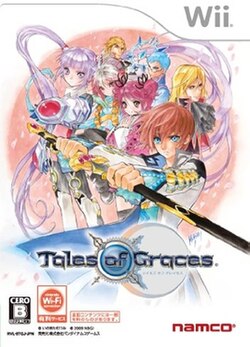

Tales of Graces f Remastered arrives on PS4 like a polite, slightly dusty guest: familiar, earnest, and bringing the exact kind of casserole you remember from 2010. This is the long-running Tales series' twelfth main entry, spruced up for modern hardware with Unity under the hood, quality-of-life updates, and every piece of DLC the original authors ever dreamed up. If you liked the PS3 port back in the day - the one that added Accelerate Mode and an after-story called Lineage and Legacies - this version will make you feel smugly vindicated about owning a PlayStation 4 in 2025. The remaster doesn't attempt to rewrite history. It takes a game that was praised for its combat and criticized for presentation, performs necessary housekeeping, and ships the whole bundle worldwide for the first time with a few new scenes. If you're after a polished JRPG time machine that still smells faintly of Wii-era ambition, this is it. If you were hoping it would narratively reinvent itself into a philosophical treatise on energy crystals, sentient planets, and family drama, lower your expectations to a pleasantly melodramatic place.
Gameplay in Tales of Graces f Remastered is where the game expects applause, and it generally gets it. The core divides neatly into two familiar modes: a realistically scaled 3D field map where you walk, talk, and trigger skits, and frantic 3D battle arenas that employ the Style Shift Linear Motion Battle System. The system is both nimble and occasionally gloriously complicated: four characters in battle, a Chain Capacity (CC) pool that acts like stamina, and an Eleth Gauge that when filled bestows temporary freedom from CC drains. In practice this means combat becomes a satisfying flow of combos, timing, and the occasional 'oh no why is Richard going berserk' moment. Characters have two skill families: Assault Artes (preset combos) and Burst Artes (player-mapped moves), which gives each party member a distinct rhythm. You can set AI behavior for party members and spend long, cheerful minutes tweaking what your teammates do while the game pretends that's part of the adventure. Titles function as both progression and a mild incentive to play specific ways; they unlock attributes and skills as they level up through battle completion. If you enjoy tinkering - equipping titles, optimizing Artes, and pursuing DLC costumes - the remaster bundles all of that DLC and frees you from the trauma of broken regional releases. Quality-of-life updates are the remaster's polite gifts: reduced backtracking where possible, better performance, and convenience options that make the menu systems less combative than they used to be. The PS3's Accelerate Mode is still present in spirit; it won't completely trivialize combat but will save you time when grinding. The after-story, Lineage and Legacies, returns to tie loose ends and add an epidemic-sized pile of monsters to dispatch, which is either 'extra content' or 'more homework,' depending on how you feel about reunion arcs. Overall, the combat still stands as the game's proudest achievement - a technical, robust system that rewards timing and attention rather than button mashing.
Remastered visuals are an honest attempt to reconcile 2010 aesthetics with 2025 expectations. The PS3 version once received praise for graphical upgrades compared to the Wii original; this port takes those upgrades and applies them more consistently, smoothing edges, fixing textures, and making the lighting less apologetic. Character art retains Mutsumi Inomata's stylized designs, which is good because the faces are memorable even when lip-syncing occasionally lags behind ambition. Don't expect a revolution. Some environments still feel small and linear, with the occasional 'cut-and-paste' dungeon layout that reviewers used to grumble about. Invisible walls remain a polite suggestion rather than a hard rule. Animations can be stiff in moments where the game asks characters to emote dramatically; voice acting largely 'works' but won't win any awards for nuance. Music by Motoi Sakuraba and Shinji Tamura is fine background company - the kind that supports scenes without demanding to be streamed separately. In short: the remaster makes the game presentable for modern eyes without pretending it was born for them.
Tales of Graces f Remastered is not a reinvention. It's a respectful restoration, like repainting the front of a classic car while leaving the engine's personality intact. The engine here is the combat: technical, satisfying, and still arguably one of the best in the Tales series. The plot and characters sail comfortably through JRPG tropes - amnesia, political intrigue, sentient planets, and sacrifices aplenty - but the story earns its keep with emotional beats that stick if you let them. There are flaws to point at with all the gentle severity of someone returning a library book late: occasional loading hiccups in the original were a thing reviewers noted; the remaster improves performance but cannot magic away a few of the level design decisions that encourage backtracking. Presentation is mixed - voice work and music keep things serviceable rather than transcendent - but when the party finally unites against cosmic nonsense, the game delivers the kind of earnest payoff fans came for. If you want a modernized ride through a classic Tales combat system, wrapped up with all DLC and a couple of new scenes, this PS4 remaster is a solid purchase. If you were hoping for a narrative overhaul or animation to rival contemporary blockbusters, you're in the wrong timeline. Score-wise I peg it at a 7.8 out of 10: very good, occasionally frustrating, and oddly comforting in the way only a well-aged JRPG can be.
 Tales of Symphonia Remastered on Switch
 Tales of Graces f Remastered on PS5
 Combat Elite: WWII Paratroopers on PS2
 Onimusha: Dawn of Dreams on PS2
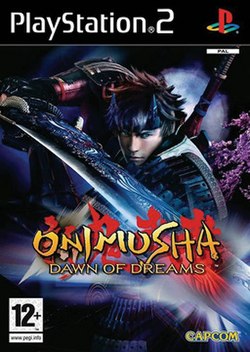 Disney's Chicken Little: Ace in Action on PS2
 Action Man: Operation Extreme on PlayStation
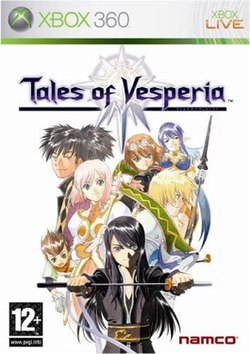 Tales of Vesperia: Definitive Edition on PS4










 Another SquareThought Site