

 Nov 2025
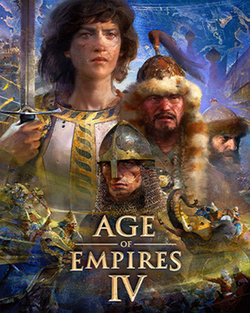

Age of Empires IV: Anniversary Edition has finally marched onto the PlayStation 5, wearing slightly more patches than the original release but still carrying the same medieval backpack full of decisions, dilemmas, and delightful disasters. If you think RTS is just clicking dudes until something explodes, this Anniversary Edition politely hands you a timeline, 18 civilizations, and a tutorial that actually tries to make you less terrible. The console-specific tutorial campaign "The Rise of a King" exists for a reason: the jump from watching YouTube macro gods to commanding peasants with a DualSense controller can be brutal. This review zeroes in on what really matters for players who crave challenge: the kinds of skills AoE4 asks you to learn, the trials it throws at you, and whether those trials feel fair, meaningful, or just maddening.
Age of Empires IV keeps the classic RTS skeleton - gather, build, advance, and hit the other guy until their town center becomes a very expensive rubble pile - but dresses it up with mechanical choices that reward brains over pure reflexes. Instead of the Town Center being the only ticket to the next Age, most civilizations advance by constructing Landmarks: discrete, strategic building choices that force you to commit to a tech direction. Learning when to lock in a Landmark is one of the game's most satisfying challenges. Pick the wrong one and your mid-game feels like you're trying to win chess while someone keeps removing your bishops. The Edition ships with 18 civilizations (ten included in the Anniversary base and more via expansions), each with its own personality. That variety is more than cosmetics; the civ design pushes you to learn different skill sets. Some factions reward aggressive multitasking and early raids, others nudge you toward tight macro and eco efficiency. Success depends on reading your faction's win conditions and then playing both yourself and your enemy like a slightly paranoid prophet. Core skills AoE4 tests you on: - Macro discipline: Villager distribution, constant production, and balanced economy are non-negotiable. The Art of War tutorials have been praised for explaining economy management, and they matter - falling behind on farms or wood is the kind of mistake that snowballs. The game nudges you toward decision-making rather than obsession with minute mechanical optimizations, but you still need to be absolutely on top of queues and resource pipelines. - Strategic timing and landmark choice: The act of aging up is now a strategic commitment. Choosing which Landmark to build becomes a hinge-moment - it determines access to units and upgrades and often dictates your tempo. Good players force timing windows and punish fuzzy choices. - Multi-tasking and map control: Scouting, denying resources, and controlling choke points win games. The campaigns and multiplayer are designed so that every skirmish has larger implications; map control feeds your economy and restricts your opponent's options. - Adaptation and civ literacy: With so many civilizations and frequent expansions, learning matchups is its own meta. Variant civilizations and replacement buildings mean a one-size-fits-all approach fails spectacularly; adaptability is a core skill. - Micromanagement vs. decision-making: AoE4 simplifies some nitty-gritty mechanics compared to older entries in the series, intentionally shifting complexity toward high-level decision-making. That means instead of obsessing over tiny micro-advantages, you're punished for poor strategic choices - but still rewarded for well-timed micro in crucial moments. Campaigns are another place where the game tests you. Single-player missions are balanced so that "every battle feels like it could tip any way at any moment," which keeps tension high and forces the player to think on multiple levels: historical objectives, mission-specific constraints, and resource management under pressure. The Rise of a King tutorial campaign is a neat addition to console players, easing the learning curve without babysitting. Multiplayer is where all the individual skills get combined and not all of them are forgiving. The game has earned praise for the distinctness of its factions - that variety keeps ladder play honest - but also demands a lot from players who want to climb. If you enjoy reading an opponent's strategy and punishing their commitment errors, AoE4 gives you the tools. If you prefer one brute-force build order and expect it to work forever, expect a rude awakening. Expansions only increase the skill floor and the richness of choices. The Anniversary Update added the Ottomans and Malians, and later expansions introduced Byzantines, Japanese, and numerous variants, each bringing fresh mechanics and new timing windows to learn. Every new civ feels like another language to study. The reward is enormous strategic depth; the cost is time and repeated humiliation in ranked games until you stop mis-clicking villagers into danger.
Age of Empires IV runs on the Essence Engine 5.0 and looks like a game that cares more about readable battlefield clarity than pushing photorealism. The art direction favors distinct unit silhouettes and architecture that make tactical reading easier - a deliberate choice that benefits competitive play. Critics have been mixed: some praise the visual and strategic variety across civilizations, while others have called parts of the presentation dated. That criticism mostly matters to people who bought a PS5 to flex ray tracing; for players focused on challenge, the visuals do their job by keeping clutter low and information clear. The soundtrack and historically flavored voiceovers are a nice touch for immersion. Music composers and historically-informed pronunciations help the game feel authoritative, which makes those clutch decisions (and subsequent blunders) feel more dramatic. Performance on console hasn't been an area covered in depth by this document, but the PS5 release includes the Anniversary packaging and the console-friendly tutorial campaign, hinting the developers aimed to bring the strategic experience intact to the DualSense crowd.
Age of Empires IV: Anniversary Edition on PS5 is a serious brain-teaser disguised as a medieval war game. It asks you to master a palette of skills - macro discipline, timing, adaptive strategy, map control, and civ-specific literacy - and then rewards you when those skills converge. The learning curve is real, and the Anniversary Edition's added civilizations and campaigns raise the strategic ceiling rather than flatten it. If you want a game that punishes fuzzy thinking and celebrates cunning, this is your battlefield. If you hoped to lean on one spammy build to carry you to glory, consider it a free lesson in humility. The game isn't perfect: some critics sniffed that it plays it safe and that some visuals feel conservative. Still, the focus on decision-making over mechanical busywork means the challenges feel meaningful rather than arbitrary. For anyone who enjoys improving through careful practice, reading opponents, and turning tiny advantages into crushing tempo swings, AoE4 on PS5 will keep you busy - and frequently humbled - in the best possible way. Score: 8/10.
 PS5 Disc Console vs. PS5 Digital Edition: Which One Should You Get?
 Tomoyo After: It's a Wonderful Life on PS3
 Nobunaga's Ambition: Iron Triangle on PS2
 Time Commando on PlayStation
 Super Time Force Ultra on PS4
 Time Crisis on PlayStation










 Another SquareThought Site