

 Sep 2015
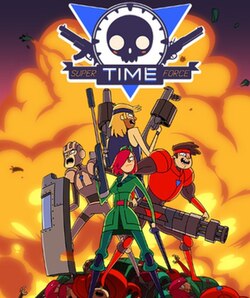

Super Time Force Ultra is Capybara Games' delightfully chaotic answer to "what if Contra learned how to use a time machine?" Released on PlayStation 4 as the Ultra build on September 1, 2015, the game grafts run-and-gun fundamentals onto a time-manipulation core that is as much a design puzzle as it is a gameplay gimmick. The title has been widely praised for its inventive mechanics, pixel-art style and comedic tone, and the PS4 version ships with the Ultra extras (including the Helladeck challenge missions and platform-specific guest cameos). Critics aggregated fairly consistently around the low-80s on review sites for the PS4 release, which is a useful shorthand: it's smart, technically confident, occasionally frantic, and frequently hilarious.
At its technical heart Super Time Force Ultra is an exercise in deterministic recording, layered simulation, and readable chaos. The base rules are gloriously simple: you run through bullet-hell levels with a finite pool of lives (the original systems use a 30-life economy), you die a lot, and when you die you can rewind a timestream and replay that run alongside a ghost recording of your previous play. That rewind/replay loop is not window dressing - it is the mechanical engine that dictates level design, enemy placement, weapon balance, and even score systems. Mechanically, the game requires three tightly interacting systems to be stable: input sampling and replay fidelity, collision detection across temporal layers, and a UI that communicates timeline state without smothering the screen. The replay system records player inputs and position-history so that when a life is replayed those previous actions become deterministic ghost actors. Those ghosts instantiate as autonomous entities that follow exactly what the player did, which cleverly turns deaths into cooperative allies. From a technical perspective this demands precise frame-by-frame recording and playback to avoid desyncs - any floating point drift or non-deterministic randomness in physics would quickly break the illusion. Capybara's implementation keeps those ghosts reliable enough that players can design strategies around stacking ghosts into choke-point carnage. The game supplements the rewind mechanic with auxiliary resources that affect flow and difficulty. Cloxs extend the time limit, shards create slow-motion windows (visible primarily through the Time Out mechanic), and glorbs boost life counts. The shards mechanic is especially elegant from a design standpoint: they aren't normally visible until you engage the Time Out/rewind layer. That forces players to think about the timeline as a resource-rich stratum - it rewards the cognitive shift from "avoid dying" to "use temporal layers tactically." This also changes how enemy wave patterns are constructed. Instead of purely testing reflexes, encounters are designed to provide opportunities where a recorded ally can cover a blind spot or trigger a multiplier chain. Balancing plays out as a neat technical paradox that the developers explicitly addressed during development. Early builds rewarded frequent death (because ghosts made things easier), which penalized expert players who improved and therefore used fewer ghosts. The redesign put time control in the player's hands: upon death you can scrub the timeline, pick a previous life, and branch from there. This restored agency and made death a deliberate tactical choice rather than a punishment. From a systems design perspective that iteration is a textbook case of emergent mechanics forcing a rework of core loops. There are more than a dozen characters per stage, each with unique weapons or special abilities, which adds another layer of systems complexity. The game must manage diverse projectile behaviors, hitboxes, and special effects while maintaining readable on-screen action. Scoring multipliers for consecutive kills across lives creates an incentive loop to chain successful runs and reward players who orchestrate ghost-synchronized takedowns. Ultra also includes the Helladeck - a collection of over 50 challenge missions that extend the run-and-gun formula with bespoke scenarios. These missions lean into the engine's strengths: small, high-density encounters that magnify the tactical potential of rewinding and ghost stacking. For players who enjoy speedrunning and optimization, the Helladeck supplies a laboratory to test the engine. Overall, gameplay is a well-considered blend of low-level mechanical precision (inputs, hit detection, recoil and projectile timing) and higher-level temporal strategy. The tradeoffs are intentional: moments of brilliant control are often separated by overwhelming, glorious screen-filling chaos.
Visually, Super Time Force Ultra favors dense, colorful pixel art that reads well even when the screen is full of ghosts, bullets, explosions and item pickups. The aesthetic choices are faithful to its run-and-gun inspirations, but the pixel work is optimized for modern hardware: sprite sizes, palette choices and layered parallax backgrounds keep the scene legible while packing substantial visual information into each frame. The engine's real challenge is overdraw and collision bookkeeping. Multiple ghost instances replaying previous runs can easily balloon entity counts per frame, and every projectile needs collision checks against all relevant actors. The game avoids this spiraling computational cost by favoring 2D sprite batching, tight hitboxes and predictable AI patterns that can be evaluated efficiently. Developers also make smart visual telegraphing choices: enemy telegraphs, distinct projectile silhouettes and the visibility toggle for shards during Time Out help the player parse action without a tutored gaze. Audio and music, composed by Jason DeGroot, function as both mood-setting and gameplay feedback. The tempo of tracks complements the run-and-gun pacing, underscoring bursts of action and providing sonic anchors when the screen gets hectic. On the PlayStation 4 the Ultra build includes platform-specific cameos - Shuhei Yoshida is a memorable, playful inclusion - and these guest characters are integrated without breaking visual coherence. From a technical QA standpoint, reviewers noted the PS4 Ultra release performs reliably. The combination of intentional pixel density and careful entity management means the PS4 handles the game's peak moments without the stutter or input lag that would otherwise cripple a twitch shooter. That said, the very nature of the title invites visual overload by design: the challenge for players is not the game's performance but its intentionally overwhelming aesthetic layers.
Super Time Force Ultra is a rare breed: a run-and-gun that forces you to think like a programmer and fight like a gunslinger. Its core technical achievement is making time-based replay and deterministic ghost cooperation feel natural and robust rather than gimmicky. Design decisions around timeline control, resource visibility, and scoring multipliers show a careful attention to how systems interact, and the PS4 Ultra package wraps those systems in a polished presentation with extra missions and platform-specific cameos. Its blemishes are mostly design trade-offs. The constant layering of past lives can become conceptually heavy for some players; learning to read and exploit the timeline is part of the fun, but it also raises the cognitive load in longer sessions. The repetition of the run-and-gun loop is intentional and, at times, exhausting - but that's an arguable flavor note more than a technical flaw. If you care about tight input response, clever systemic design, and a shooter that rewards both dexterity and planning, Super Time Force Ultra on PS4 is a smart buy. It sits comfortably in the "innovative and playable" category, earning an 8.2/10 for taking a familiar genre, rewiring its core loop with time travel, and delivering a technically confident experience that still knows how to make you laugh while it blows your carefully constructed strategy apart.
 Prince of Persia: The Sands of Time Remake on PS4
 Time Crisis on PlayStation
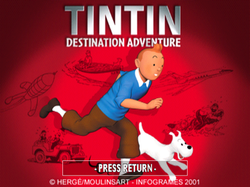
 Tintin: Destination Adventure on PlayStation
 Disney's Chicken Little: Ace in Action on PS2
 One Piece Grand Adventure on PS2
 Taiko no Tatsujin: Dokodon! Mystery Adventure on Switch
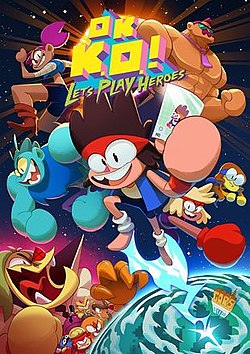
 OK K.O.! Let's Play Heroes on Switch
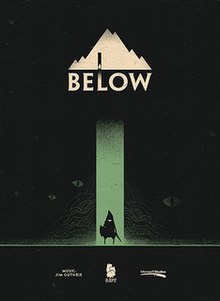
 Below on PS4
 Pirates of the Caribbean: At World's End on PS3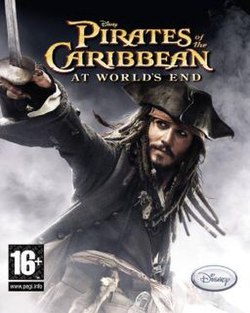










 Another SquareThought Site