

 Jul 2026
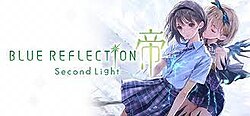

Blue Reflection: Second Light greets you like a polite mystery novel: pleasantly melancholic, slightly damp, and full of teenagers who make very earnest faces when presented with existential questions. You play Ao Hoshizaki, a self-described normal girl who wakes up in a floating school with three other girls, no memories, and a ring on her finger that apparently doubles as a bad life decision detector and a magical girl starter pack. Gust has taken the concept of 'let's role-play therapy and also fight demons' and wrapped it in pastel skirts, heartfelt text messages, and an economy of crafting recipes that somehow make building a swing set feel like character progression. If you want a JRPG that prefers conversational therapy to blood-soaked melodrama, this one politely raises its hand and offers you tea.
The gameplay in Second Light is an odd, endearing hybrid of comfort food and spreadsheet hobby. On the social end, you wander the campus, interact with Kokoro, Rena, Yuki, and the rest of the cast, and choose dialogue options during school scenes that affect friendships. These are the moments where the game quietly scores: dates, messaging via an in-game mobile app, and bonding episodes actually matter because they grant tangible battle support. If you thought teenage awkwardness wouldn't translate into an RPG stat boost, you were wrong. Investing time in conversations and building school attractions with collectible materials turns the base into a buff machine. The attractions aren't just decorative; they increase character stats and become new date locations, which feels like a wholesome bureaucracy where everyone's feelings are a formal perk. Exploration takes place in the so-called heartscapes, parallel dimensions that look like someone rearranged a dream and forgot where they put the logic. You encounter Demons there; combat kicks off when you sneak up on enemies or they notice you like a demon with surprisingly good peripheral vision. The combat system is turn-based but with a twist: each character has an ether meter that fills in real time during battle. Spending ether raises a character's Gears level for that fight. Higher Gears mean a bigger ether cap, faster ether gain, and access to better spells. It cleverly nudges you toward strategic pacing - you can spam low-cost actions or hold out for a cinematic spell that will make your party feel like they deserve a trophy. Crafting is central. You harvest materials from heartscapes, then synthesize items and constructs for school improvement. The loop is pleasantly addictive: go into a heartscape, bring back materials, craft something that buffs your friends, then enjoy the slightly smug satisfaction of seeing your party use those buffs to dispatch the same demons you were just poking at. The game's difficulty leans gentle; Electronic Gaming Monthly noted this, and it's accurate. Battles rarely feel punishing, which means the focus stays on narrative buildup and relationship minigames rather than hardcore optimization. If you are the sort who likes every enemy to be a personal insult to your build, bring a calculator and some willpower. Otherwise, enjoy the graceful rhythm. Mechanically, Second Light borrows a lot from its predecessor while polishing the social-sim bits. Messaging mechanics and dating requests via the app add another layer of mundane intimacy - characters ask for crafted items, you do them, and everyone is slightly happier. The result is a game that makes chores feel meaningful. That rare alchemy of 'make the beds, gain a magic sword' is real here, and it is oddly calming. The narrative's amnesia angle also means that character development is discovery-driven: as Ao and the others recall fragments of their previous lives, the stakes slowly move from cozy to sincere. It's a slow burn, not a firestorm, and it mostly knows and accepts that.
On PS5, Second Light looks like an artbook that learned how to run at 60 frames per second. Mel Kishida's character designs pop in closeups and the art direction keeps everything tender and pastel without slipping into saccharine oblivion. The school and heartscapes are stylized rather than photoreal, which fits the game's mood perfectly: these locations don't need to be believable so much as emotionally evocative, and they succeed. Effects for spells are pretty in a restrained way; when a Reflector uses their weapon, the screen doesn't explode so much as sigh elegantly. Performance-wise, the remaster benefits from PS5 horsepower: load times are short enough that you will actually use the door without composing a short poem about it, and framerate is solid during exploration and combat. There are moments when environmental variety feels limited - heartscapes recycle set pieces - but that's more a narrative choice than a technical failure. Voice work and music (Hayato Asano's score) lean into melancholy and hope, providing a soundtrack that sits perfectly behind your conversations and does not attempt to upstage them. The overall visual package is tasteful, and it wears its aesthetic like a school uniform that fits well.
Blue Reflection: Second Light on PS5 is not a revolutionary JRPG, nor does it try to be. It is, however, a compassionate one. Gust built a game that trusts the player to care about small interactions and rewards emotional investment with gameplay benefits. The combat is smart without being stressful, the crafting and school-building loop is quietly compelling, and the story's amnesia mystery provides just enough momentum to keep you engaged. Reception was generally positive for good reason: critics appreciated the low-stakes difficulty and the yuri-tinged interpersonal writing that gives the girls' relationships weight beyond tropey smiles. If you want flashy action or grimdark stakes, look elsewhere and bring a helmet. If you want a game that treats friendship like an upgrade path and turns the mundane into meaning, Second Light offers that in spades, wrapped in good art and tidy performance on PS5. It earns a respectful 7.7 out of 10 - competent, heartfelt, and pleasantly efficient at being emotionally persuasive without ever waving a banner about it.
 ObsCure on PS2
 Prism: Light the Way on DS
 Combat Elite: WWII Paratroopers on PS2
 Control Resonant on PS5
 Gnosia on Xbox Series X/S
 Predecessor on PS4
 Aiyoku no Eustia on Switch
 Atelier Sophie 2: The Alchemist of the Mysterious Dream on Switch
 Atelier Ryza 3: Alchemist of the End & the Secret Key on PS4
 Atelier Ryza 3: Alchemist of the End & the Secret Key on PS5
 Atelier Ryza 2: Lost Legends & the Secret Fairy on PS4










 Another SquareThought Site