

 Dec 2025
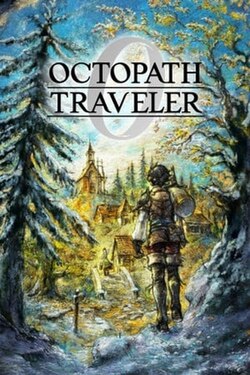

Octopath Traveler 0 arrives like a polite cousin to the original Octopath series: same HD-2D charm, slightly different haircut, and a suitcase full of extra emotional baggage. This prequel - a console adaptation and rework of Champions of the Continent - flips the series' familiar formula into a sprawling, party-heavy, town-building epic. You play a customizable protagonist whose hometown, Wishvale, is reduced to charred foundations. What follows is billed as a "journey of restoration": you recruit over 30 companions, slap down buildings and crop fields on a grid, and slowly stitch a community back together while swapping eight-person parties into and out of turn-based combat. If you like long RPGs (Hiroto Suzuki estimates ~100 hours for the main story) with tactical combat, full voice acting, and a simmering melodrama about second chances, this one's for you. If you don't, leave the town-building to a Sim and go play chess.
Octopath 0 keeps the series' break-and-boost combat and turn-based systems but bulks them up for group tactics. Parties now go to eight members split into a four-person frontline and a four-person backline that you can swap between mid-battle. That mechanical choice matters for the story as much as it does for the fight: characters are not only interchangeable tools but tiny, portable narratives. Over 30 recruitable companions arrive with proper backstories (the mobile source had partial voice work; here the cast re-recorded more natural performances), and the game encourages you to treat recruits like people rather than loot drops. Some companions join as playable fighters; others function as settlers in Wishvale, contributing to the town's growth and unlocking new story beats. This dual role is clever because it ties character arcs directly to the central conceit: restoration. When you recruit a burned-out herbalist and then build them a shop, that process is literal and metaphorical-quests and construction feed each other. Character development is the real engine beneath Octopath 0's pixel-polished hood. Because the game draws from Champions of the Continent, there's a breadth of personalities and histories to explore - more so than in previous entries - and Square Enix expanded narrative content to give these figures proper arcs instead of one-off introductions. You'll meet tragic farmers who must reconcile the loss of their land with the chance to nurture new fields in Wishvale, mercenaries learning to anchor themselves to community, and opportunists who slowly unlearn cynicism as they help plant a row of radishes. The town-building system acts as a narrative meter: progress Wishvale and you see characters soften, reveal secrets, or find closure. This is where Octopath 0 quietly out-works itself. Instead of separate character chapters that rarely overlap, arcs bleed into one another through the shared project of rebuilding. It makes the party feel less like an RPG playlist and more like a rotating cast of roommates. Combat also mirrors character growth. The break/boost loop rewards planning and synergy: using a frontline bruiser to shatter an enemy's guard and following up with a backline spellcaster's boosted nuke is satisfying on a mechanical level and reads like a dialogue beat between characters who learn to trust each other. The front/back swap mechanic becomes narrative shorthand - frontline characters are the ones protecting newly settled civilians; backliners are the strategists who handle supply lines and healing. Random encounters still pop up outside Wishvale and can feel grindy if you neglect progression, but they also act as micro-scenes where relationships get tested. The balance occasionally tips toward long, drawn-out battles (some critics noted the length), but when fights click they create tight, character-driven moments where a recruit's personal ability or the right building unlocks a path forward. Where Octopath 0 deliberately avoids being a gacha port is worth mentioning: the freemium mechanics are gone and storylines have been overhauled to stand alone. Recruiting isn't gambling; it's storytelling. The stakes still feel large because the main arc revolves around loss and reconstruction: your protagonist starts as a blank slate and becomes a nexus for other peoples' stories. That blankness is intentional. It allows players to be the emotional fulcrum who listens, organizes, and occasionally punches a monster. The end result is a game that rewards curiosity: talk to settlers, place the bakery where the grieving baker asks, and watch the next quest unfold. If you like character arcs that blossom slowly through systems rather than flashy cutscenes, this is the Octopath that delivers.
Visually, Octopath Traveler 0 is an HD-2D postcard with a slightly grimmer palette. The developers muted the colors and leaned toward realism compared to the more cartoonish hue of earlier games, which suits a narrative about ash and rebuilding. The world map was painted by Francesca Baerald, whose cartography gives Orsterra a storybook-but-lived-in feel; towns look like places where people have been grinding carrots for centuries. Built in Unreal Engine 4, the PS5 version benefits from faster loading, smoother performance, and the platform's higher building cap-console players on PS5 can place up to 500 buildings in Wishvale, which is a blessing for completionists and compulsive planners. The full voice-over elevates character moments, turning previously text-heavy beats into small theatrical pieces. Yasunori Nishiki's score - already praised in pre-release impressions - continues to enhance combat and town sequences, scoring both the sorrow of loss and the stubborn optimism of planting seeds. A few reviewers noted that battles can feel long visually as well as mechanically, but there's rarely a moment when the presentation undermines the emotional core.
Octopath Traveler 0 is the kind of RPG that sneaks up on your feelings via supply chains and side quests. Its core strength is how systems and storywork are braided together: recruiting a companion isn't merely expanding your combat options, it's adding a person to the town's slow resurrection. The game's ambition - over 30 recruitable characters, parties of eight, and a ~100-hour main story - could have become bloated fan service. Instead, Square Enix and DokiDoki Groove Works use long-form structure to let character arcs breathe. The game isn't flawless; some battles overstay their welcome and random encounters can be fiddly, but the payoff is steady, human-scale storytelling where rebuilding Wishvale becomes shorthand for repairing broken people. If you're the kind of player who likes tactical depth, ensemble casts, and watching communities bloom under your bad zoning choices, Octopath Traveler 0 on PS5 is a joyful, occasionally melancholy, and satisfying trip into Orsterra's past. Consider it a cozy, pixel-street-level sermon on second chances - with really good music and the occasional monster to beat up when feelings get too loud.
 Octopath Traveler II on PS5
 Octopath Traveler II on Switch
 Combat Elite: WWII Paratroopers on PS2
 Control Resonant on PS5
 Gnosia on Xbox Series X/S
 Predecessor on PS4










 Another SquareThought Site