

 Feb 2026
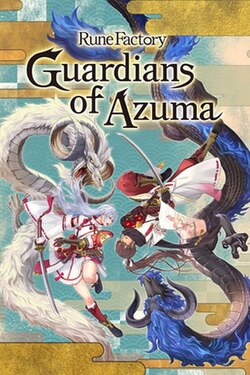

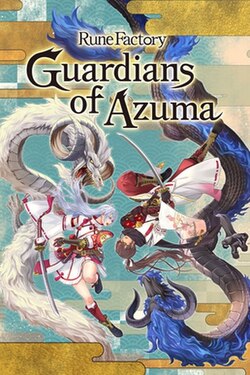
Rune Factory: Guardians of Azuma is the series doing what every long-running JRPG has secretly wanted to do: throw a dragon tantrum, remodel a whole region, and still have time to plant turnips. Developed by Marvelous and helmed by Shiro Maekawa, Guardians of Azuma is a spin-off that blends cozy farming simulation with action-RPG combat, wrapped in a mountain-scented, traditional-Japanese-inspired setting. If you enjoyed tending to crops while occasionally stabbing monsters in the face, this is the game that says "yes, you can have both," with a side of divine drama and a black dragon who thinks emotional manipulation is a hobby. The PS5 port (released February 13, 2026) brings the game to Sony's shiny console, benefitting from stronger performance and slicker presentation. Guardians of Azuma was originally announced as "Project Dragon" and arrived on Switch and PC in June 2025; the PS5 version refines things, but it still carries the same heart: a protagonist who wakes up in Spring Village, loses memories, and slowly becomes the land's mustachioed-well, maybe not mustachioed-Earth Dancer tasked with restoring the gods and cleaning up a celestial mess. Expect charming characters, village politics, shrine repairs, moral choices, and the sort of wholesome chaos that makes you question whether you're saving the world or just avoiding social obligations.
Guardians of Azuma is basically two games in one jacket: "Farming Sim: Cozy Edition" and "Dungeon-Slaying: Anime Energy." The core loop lets you plant crops, harvest, craft, decorate, and assign villagers to chores so you can sneak out to the fields and fight things without guilt. Customizable areas allow you to place farmland, buildings, and decorative items, meaning your village can look like a tasteful shrine town or a chaotic patchwork of scarecrows and questionable feng shui. Combat leans into action-RPG territory rather than turn-based waltzing. You bring along recruited characters (yes, party members fight with you), swap between weapons and skills mid-battle, and use items like Sacred Treasures that boost both combat prowess and day-to-day life. Experience points are earned across activities and are invested in skill trees, giving a modest layer of build customization. If you prefer manager-of-all-the-things energy, you can assign tasks to villagers, which streamlines life and lets the game do the busywork while you hunt for rare seeds or monsters with fashionable horn helmets. Social systems have been expanded: character events feel meaningful, multiple romance options exist regardless of your chosen gender, and relationships genuinely affect the feel of your village. The game encourages bonding not just through stat buffs but through moments - from silly festivals to heavy-handed god-rescuing. Storywise, the protagonist (you choose male or female) crash-lands in Spring Village after a run-in with a black dragon and slowly learns they're an Earth Dancer with a sacred duty: restore Azuma's gods after the Celestial Collapse. The twisty part is that the sibling/other-protagonist you didn't pick becomes the dragon's rider, which makes hugs and boss fights awkward. There's a fair bit of variety in village tasks: repair seasonal shrines, revive gods across Spring, Summer, Autumn, and Winter villages, and handle banana-peel-level political messes like the Tagesanbruch - an organization with empire-building ambitions and a really bad PR team. The game gives you moral choices (save your friend at a cost? nope? okay), festival fights, and dungeons to clear. Critics loved the well-crafted character development and story beats, although some found dungeons repetitive and the late-game progression a little thin once the novelty wears off. If you're the sort who loves long relationships with NPCs, Guardians of Azuma will feed you affection and cozy cutscenes; if you're here for deep dungeon systems, you might want to bring a snack and a shorter attention span.
Azuma looks like someone took a sumi-e painting and said "let's make it playable." The art direction leans hard into traditional Japanese aesthetics - mountain ranges, seasonal zones, and shrines that genuinely want to be photographed for in-game Instagram. On PS5, textures are crisper and performance is noticeably smoother compared to the original Switch release, which matters when you're dodging a wyvern and trying not to accidentally high-five a villager mid-combat. Character design is colorful without being aggressively cute (though it certainly can be), and Tsuyoshi Azuma's art gives NPCs distinct visual personalities that make them easy to care about. Environments change with the seasons, and the contrasts between Spring's misty greens and Winter's stoic whites are well-done. The soundtrack by Noriyuki Asakura suits the mood - bombastic when gods are being dramatic, serene when you're watering crops at dawn. It's the kind of score that makes you feel heroic while also reminding you to check if your turnips are about to wither. There are moments where the visuals feel a bit conservative compared to cutting-edge open-world spectacles: dungeons can be bland, and some animations are functional rather than show-stopping. Still, the PS5's stronger hardware hides many of those rough edges, making the game feel like a polished, cozy tapestry rather than an unfinished sketch.
Guardians of Azuma is the franchise trying on a new outfit and discovering it has pockets for confidence. Marvelous mostly nails the balance between wholesome farming and combat thrills: the social bits are richer than ever, the story has real emotional weight (plus dramatic choices that can make you feel like a suitably conflicted soap opera deity), and the PS5 version is the smoothest way to experience the world. Reception was generally favorable - critics loved the character work and the fresh spin on the Rune Factory formula (RPGFan even called it the best entry yet) - though some outlets pointed out repetitive dungeons and a sense that the systems don't deepen as much late-game as you might hope. If you're an old Rune Factory fan, Guardians of Azuma will probably feel like a warm reunion with a few new friends who brought a dragon. If you're new, think of it as a comfortable crash course in how to run a village, romance a blacksmith, and occasionally punch fate in the face. The PS5 release smooths out performance and gives the visuals the breathing room they deserve, making this the edition to pick up on Sony's console. Score-wise, it earns an 8.5/10 on PS5: not flawless, but deeply enjoyable, emotionally resonant, and just weird enough to keep you invested until the final shrine lights up. Plant your crops, make some friends, and be ready to cry into a compost heap when the plot twists show up - in the best possible way.
 Rune Factory 2: A Fantasy Harvest Moon on DS
 Rune Factory 5 on Switch
 Zero Parades: For Dead Spies on PS5
 Combat Elite: WWII Paratroopers on PS2
 Gnosia on Xbox Series X/S
 Pro Evolution Soccer 2015 on PS4
 Rune Factory: Guardians of Azuma on Switch 2
 God Eater 3 on PS4
 Muteki-ō Tri-Zenon on PlayStation
 Princess Princess on PS2
 Daemon X Machina: Titanic Scion on Switch 2










 Another SquareThought Site