

 Nov 2022
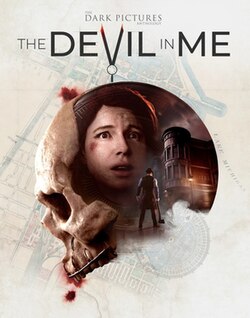

If you like your horror served with a side of moral panic and the faint, nagging feeling that every useful object in a room is either a clue or a death sentence, The Devil in Me is your kind of sleep-ruiner. Supermassive Games' fourth Dark Pictures entry straps five members of a documentary crew into a modern replica of H. H. Holmes' infamous 'Murder Castle' and asks you to juggle split-second decisions, inventory puzzles, and reflex-based QTEs while a very dedicated psycho stalks the halls. On PS5 the game settles into a comfortable place between interactive drama and survival horror: it's less about twitch combat and more about brain-and-heart choices, limpets of platforming, and the tiny personal triumph of not getting crushed by a moving glass wall.
The Devil in Me wears its difficulty on its Victorian sleeve: it's a challenge game, but the opposition is mostly your own decision-making and the universe's love of dramatic timing. The obvious mechanical backbone is the QTE. These moments ask for fast thumbs and even faster reading - miss one and a tense cutscene becomes a funeral montage. But the game is smarter than 'mash-to-live' horror: QTEs are woven into tense escapes and ambushes, so your reflexes matter, but so does anticipation. Where the game makes its biggest mechanical move is the inventory system. This is the first Dark Pictures entry to give characters tools with defined purposes: Kate's pencil for rubbings, Charlie's business card to jimmy drawers, Mark's camera and telescoping mount for long-reach interactions, Jamie's multimeter for fuse boxes, and Erin's directional microphone for hearing secrets through walls. The challenge here is twofold: first, remembering which character carries what when the clock is ticking; second, using those tools creatively in multi-step puzzles that often require cooperation between characters you might not have together at that moment. Exploration gets a taste of platforming this time: running, jumping, climbing, mantling and shimmying push the game into more physical territory. These aren't long Call of Duty parkour segments, but they add an extra layer of skill when a wrong jump means you must watch a premonition turn into reality. The hotel itself plays tricks on you: hallways change, rooms blink into existence, and environmental puzzles sometimes need you to move objects, balance across planks, or squeeze through holes - the sort of old-school adventure-game problem-solving that feels rewarding when you outwit an inanimate object. A signature Supermassive mechanic returns: the black-and-white premonition pictures. White frames warn of danger while black frames show a character's potential death. The skill here is interpretive: reading a grainy tableau and translating it into actionable choices demands observation, pattern recognition, and some cold-blooded risk assessment. The 'bearings' butterfly-effect menu helps track branches, but real mastery happens when you synthesize clues from premonitions, environmental context, and dialogue choices to dodge traps or save allies. Narrative pressure is also mechanical. Decisions come with a visible timer and a brain/heart icon - pick rationally or emotionally. This forced split tests not only taste for roleplay but personality: do you risk a calculated move that might doom a buddy, or act on impulse to preserve relationships at the expense of survival odds? The game punishes impulse in clever ways, but it also rewards bold gambles, so high-level play is about calibrated risk-taking and planning for contingencies. Puzzles range from straightforward tool usage (jam a business card to open a drawer) to multi-step sequences that require swapping characters, revisiting areas, or using items in context-sensitive ways. The added possibility that some items are single-use or character-specific creates resource-management tension. Add the Curator's commentary - a meta-narrator that hints and judges - and you get a game that tests memory, deduction, and emotional composure under time pressure. If you favor co-op, the anthology's multiplayer options add another wrinkle: human partners compensate for your blind spots, but they also introduce unpredictability. Teamwork sharpens the game's cooperative puzzles, making the experience more like a chaotic escape room with a soundtrack that wants to ruin you. Overall, the skills required are a cocktail of reflexes, puzzle logic, situational awareness, memory, and the capacity to make morally uncomfortable choices on the fly.
Built on Unreal Engine 4 and running on PS5 hardware, The Devil in Me paints its hotel in moody, period-tinged aesthetics with occasional modern, neon-tinged inner chambers. The big strengths are atmosphere and readability: lighting and set dressing do the heavy lifting in making each room feel like a potential deathtrap, and animatronics/mannequins are designed to be unnervingly tactile. On PS5 the environments load crisply and the shadows have teeth - useful, since reading visual cues is mechanically important. Facial performances - led by Jessie Buckley as Kate - are solid enough to sell panic and suspicion, which matters when your job is deciding who to trust. That said, the game is not a showcase for next-gen graphical wizardry. Textures sometimes feel conservative and a few mechanical animations betray the game's branching complexity (you'll notice some stiff transitions when a character dies and the scene continues without them). Those rough edges can matter when precise positioning or short visual cues are essential in puzzle sequences or QTEs. Still, the visual language is consistent and functional: you can reliably spot interactive objects, decipher premonition imagery, and use visual storytelling to anticipate traps. In short, the graphics serve the gameplay rather than try to one-up it, which is exactly what a game that asks you to think and react needs.
If you're coming in for jump scares measured in decibels and shotgun upgrades, The Devil in Me will ask you to reassess your priorities: this is a game about choices, timing, and the quiet terror of being the only one who knows which fuse box to check. The PS5 version gives you an atmospheric stage to flex reflexes, inventory smarts, exploratory curiosity, and moral calculus. It's not flawless - the story can be a little Saw-adjacent and some animations undercut the drama - but as a challenge package it delivers. Expect to replay, because the fun is in finding the path where premonitions go unfulfilled and allies survive your questionable leadership. Play it when you want tension that rewards thinking more than button-mashing, and when you're ready to be judged by Pip Torrens' Curator for every ill-advised heart choice. Bring your reflexes, your note-taking habit, and a willingness to do something horrible for the greater good. You'll die a lot. You'll also feel clever and a little guilty every time you pull someone out of a trap at the last second. That's the point.
 Dark Cloud 2 on PS2
 Dark Souls II on PS3
 Dark Cloud on PS2
 Obscure: The Aftermath on PS2
 Tokimeki Memorial Drama Series Vol. 3 Tabidachi no Uta on PlayStation
 Crow Country on PS4
 The Dark Pictures Anthology: Man of Medan on PS5
 Little Nightmares III on Xbox Series X/S
 Until Dawn on PS5
 Until Dawn on PS4
 Directive 8020 on Xbox Series X/S
 Wonderbook: Walking With Dinosaurs on PS3










 Another SquareThought Site