

 Mar 2026
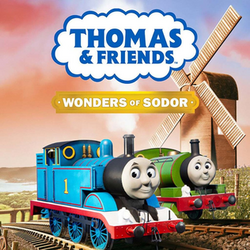

There is something faintly ridiculous and completely irresistible about taking a beloved children's TV property and dropping it, bonnet-first, into a modern train simulator engine. Thomas & Friends: Wonders of Sodor is exactly that experiment. Built by Dovetail Games on Unreal Engine and fashioned from the same codebase that underpins Train Sim World, the game arrives on PlayStation 5 bearing the twin banners of whimsy and railway authenticity. If you grew up tugging a plastic Thomas round the kitchen table or muttering the theme tune in a cramped school bus, this will feel like being invited back into an impeccably restored model set. If you did not, it still has enough earnest charm and train-handling to keep you engaged - even when you find yourself fretting over the orientation of a troublesome truck.
Wonders of Sodor is, at heart, a set of structured vignettes and sandbox exercises that wear children's television clothes over simulation mechanics. There are eight narrated stories - Mark Moraghan supplies the warm, paternal tones - which lean on The Railway Series and the television show for plot beats. Each tale is short enough to keep the attention of the intended young audience yet often long enough to introduce some surprisingly grown-up trainwork: timing runs, coupling and uncoupling wagons, and negotiating points under a schedule. The choice of locomotives is faithful: Thomas, Percy, Gordon, Diesel and Emily are playable out of the box, with James arriving later as downloadable content or bundled in the planned deluxe physical edition. Controls offer two flavours: simplified and realistic. The simplified mode is the game's concession to younger players (and to those of us who remember fumbling with analogue sticks in an era when save states were considered sorcery). It removes a lot of the menu fiddliness and lets you concentrate on seeing the island and following a mission without becoming a locomotive engineer. The realistic option, however, is where Dovetail's simulator heritage shows. It demands attention to throttle, brake management and coupling technique, and it occasionally throws down the gauntlet: shunting puzzles can require patience and proper planning rather than button-mashing bravado. Beyond the main stories are three ancillary modes that give the game some surprising variety. Timetable mode asks you to live a day in the life of a chosen character - the sort of thing that sounds twee on paper but becomes oddly engrossing when you must keep to a schedule and service passengers or freight. Explore mode lets you step out of the cab and wander Sodor in first-person; it is not merely a sightseeing tool but a means to collect hidden items and discover little tableau scenes that reward curiosity. Shunting Challenge is the pure puzzle element: arrange Troublesome Trucks into a specific order with as few moves as possible. The latter is oddly addictive, and I found myself replaying challenges to shave off a move or two, like a very small, very polite speedrun. Not everything is perfect. The user interface can be awkward - menus and prompts feel like an afterthought compared with the polished world - and failing a mission can be an annoying stop-start experience, sometimes forcing a restart that interrupts the flow. Critics have used words like "janky" for the UI, and they are not wrong. Yet the core mechanics are robust: the trains handle believably, the timetable demands discipline, and the game does a fine job of making you care about what should be inanimate locomotives. There is a deliberate tension here between accessibility and simulation. Dovetail mostly pulls it off. Children (or reluctant adults) can enjoy the simplified route and the storytelling, while hobbyists will appreciate the more technical control scheme and the attention to detail in rail operations. The PS5 hardware is an unspoken ally, keeping loading times modest and the presentation steady, which helps when you are juggling schedules rather than waiting at a loading screen.
The visuals are where the game does some of its heavy lifting. Built on Unreal Engine, Sodor is reconstructed with a care that borders on reverence: windmills, harbours, and the rolling countryside look like they were modelled from childhood memories and reference photos in equal measure. The camera rarely needs to show off; the environments are composed with an illustrator's eye - bright, clean and designed so that children will recognise locations instantly, while adults will nod at the accuracy of certain landmarks. On PS5 the frame-rate and draw distance are reassuringly solid. Textures have that slightly glossy, hyper-clean finish common to modern engines, which suits the game's family-friendly aesthetic. Character models - the engines with their expressive faces - are rendered with affectionate detail: paint chips are few, but the silhouettes and proportions are pleasing. The lighting during dawn and dusk scenes gives the island a fairytale glow that pairs nicely with Moraghan's narration. There are moments when the game betrays its simulation pedigree in less flattering ways. UI overlays and instructional text clash with the otherwise calm presentation, and camera angles during shunting can feel stubbornly functional rather than cinematic. These are not fatal flaws, but they are noticeable if you are used to the cinematic polish of today's big-budget titles. For its intended audience, however, the visuals do exactly what they should: they charm, they inform, and they make you want to explore every platform and siding.
Thomas & Friends: Wonders of Sodor is an odd duck - or, more accurately, an oddly successful hybrid. It is part children's adventure, part train simulator and entirely sincere. The game will not unsettle the monoliths of the sim world, nor will it dethrone blockbuster adventures, but it sits comfortably in a niche that very few developers have bothered to occupy: a lovingly made, accessible train experience rooted in a cherished IP. Reception has been mixed in the critics' galleries: aggregate scores place it in the middle of the pack, with OpenCritic showing a roughly split recommendation rate and an average in the high-sixties. These mixed feelings mirror my own: some interfaces are clumsy, and mission restarts can irritate, yet the world-building, the variety of modes and the surprisingly robust simulation underpinnings make Wonders of Sodor worth a look. For the nostalgic, the curious, and the young, this is a rare title that manages to be both instructive and delightful. For those after relentless challenge or AAA cinematic spectacle, it will feel quaint. On PlayStation 5 the experience is smooth and presentable, and at the asking price it is easy to recommend to households with fans of the franchise or anyone who secretly enjoys the gentle satisfaction of lining up a perfectly ordered set of trucks. If you remember spinning a Thomas engine on your knee and promising you'd return it home on time, Wonders of Sodor is the grown-up apology note, wrapped in sensible control options and narrated by a kindly voice. In short: it is earnest, occasionally fussy, frequently charming - just like the railway itself.
 The Jackbox Party Pack 4 on PS4
 Crawl on PS4
 Tintin: Destination Adventure on PlayStation
 One Piece Grand Adventure on PS2
 Taiko no Tatsujin: Don to Katsu no Jikū Daibōken on Switch
 Taiko no Tatsujin: Dokodon! Mystery Adventure on Switch
 Train Sim World 2 on PS4
 Train Sim World 5 on Xbox Series X/S
 Train Sim World 2020 on PS4
 Train Sim World on PS4










 Another SquareThought Site