

 Sep 2026
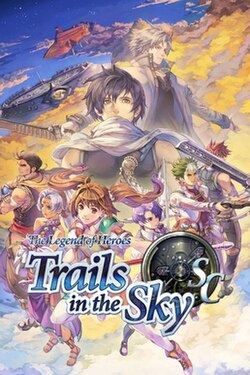

If you enjoy JRPGs where the plot punches you in the gut and the NPCs leave you with more emotional baggage than your high school locker, Trails in the Sky 2nd Chapter (the remake landing on PS5) is the kind of game that will keep your heart and your save file busy for hours. This is not an action spectacle; it is a patient, meticulous unspooling of lives, secrets, and the consequences of lies told for political convenience. The remake promises to bring one of Falcom's densest story sequels to modern hardware, but the real draw remains the same: characters who grow, suffer, atone, and sometimes die in ways that actually matter to the story. If you came for flashy combat, there is some of that; if you came for people who feel like real humans making impossible choices, welcome home.
Mechanically this entry is very much in the Trails line: turn-based battles with tactical positioning, an AT bar, quartz-based magic (aka 'S-crafts and arts' family of systems across the series), and a heavy emphasis on team synergies. The sequel retains the familiar framework of its predecessor while adding chain crafts, which allow up to four party members to combine attacks into satisfying multi-hit sequences. Chain crafts are more than spectacle; they reward party composition and timing, and they turn otherwise routine skirmishes into moments where character relationships are telegraphed through combat. Watching Estelle and Joshua flow into a linked craft after a scene where they nearly lose each other gives the battles an emotional punctuation mark. Exploration and town interaction are just as important as brawls. The Bracer Guild-run missions, sidequests, and town chatter are where Falcom plants the seeds that grow into the big reveal trees later on. The translation undertaking for this series was famously gargantuan - the English script was hundreds of thousands of words - and that weight shows in how natural the character interactions feel. Lines that could have been throwaway are given context and callback; minor NPCs get arcs that mirror or contrast the central players, which in turn amplifies the main narrative. If you want to talk characters: Estelle's arc is a study in stubborn growth. Her search for Joshua is not just a rescue plot; it is an extended interpersonal pressure test. She moves from a plucky apprentice Bracer into someone who learns to carry the consequences of truth and the cost of letting someone shoulder a burden alone. Joshua's disappearance fuels the game's emotional motor. His history with Loewe and their shared trauma in Hamel is not revealed as a flashbulb twist but as a slow-burning confession that complicates him. He's charming, troubled, and his silence becomes a character trait that forces others - especially Estelle - to confront what responsibility looks like when you cannot rely on one single hero to fix everything. Loewe is the sequel's most interesting narrative tool. He begins as a terrifying, efficient antagonist: cool, composed, and lethal. The game peels him away like an onion. His backstory with Joshua in Hamel and his later sacrifice on the Liber Ark make him a textbook redemption arc that refuses to feel cheap. Loewe's trajectory subverts the usual 'former big-bad turns good' trope by rooting his change in guilt, memory, and a genuine attempt at repair. His final acts don't erase past sins, but they do bring narrative symmetry. Weissmann and the Aureole subplot provide the political and metaphysical stakes. Weissmann is the clinical villain who uses ideology and research as a smokescreen; when he fuses with the ancient Aureole and encloses himself behind a barrier, the script asks whether human hubris can ever be fought with heroics alone. Kevin Graham's execution of Weissmann, revealed as a church knight's decisive act, is a tight little moral knot: justice performed by someone who stands for institutional faith raises questions about culpability and the church's complexity in this world. The Liber Ark sequence, with the floating city collapsing, is where gameplay, pacing, and characterization collide. The rescue, the confessions, Loewe shattering the barrier - these moments demonstrate the remake's main selling point: the stakes always land because the characters carry the emotional freight. Pacing is patient. There are long stretches of investigation, travel, and dialogue-heavy scenes that demand an investment in the characters. If you're allergic to slow-burn storytelling, there are moments of combat relief, but the game's strength is in letting relationships simmer until they become real. For players who enjoy witnessing arcs unfold across dozens of hours and who appreciate callbacks that reward attention, this is storytelling at its most generous.
The original PC and PSP versions earned praise for writing and characters while getting side-eyed for dated presentation. The series hasn't relied on cutting-edge visuals historically; its charm resided in composition, spritework, and music. The remake's existence for modern platforms like PS5 implies a visual and technical refresh, and while specifics aren't exhaustively detailed in the source document, the expectation is reasonable: cleaner character portraits, higher-resolution environments, and smoother performance. Those changes matter because this is a game that lives in faces and expressions - being able to read a half-glance on a high-resolution portrait makes the conversations hit harder. The aesthetic is still likely to prioritize readable, expressive presentation over photorealism. That suits the material: Trails games are best when they let dialogue and small animations carry the weight rather than jaw-dropping tech. Audio-wise, the soundtrack and voice work (where present) act as the emotional glue; music cues accentuate revelations and sacrifices. On PS5, loading times should be negligible, which helps the narrative flow - there is nothing worse than being in mid-revelation and having a loading screen remind you that you're playing a game, not starring in a serialized drama. If you come to the remake expecting a complete visual overhaul that masks the original game's age, temper expectations. The real visual upgrade here will likely be polish and clarity, not a genre redefinition. That approach fits the game's identity: the story is the presentation's star.
Trails in the Sky 2nd Chapter on PS5 is a remake aimed primarily at hearts rather than retinas. It preserves the original's deep investment in character arcs - Estelle's maturation, Joshua's haunted silence, Loewe's costly redemption, and the moral complexity surrounding Weissmann and Kevin - while packaging those arcs for a modern audience. The combat improvements like chain crafts add engaging layers of strategy, but they always play second fiddle to the narrative, which is where this game insists you sit and listen. This is the sort of RPG that rewards patience: the payoff of Loewe's sacrifice or the revelation of Hamel's cover-up feels earned because the game spent the time making you care. If emotional weight, meticulous localization, and character-first storytelling are priorities, this is one of the better remakes you'll buy on principle. If you prefer fast-paced spectacle and minimal dialogue, you'll probably find it slow. For players who want a JRPG that treats its cast like people and not quest icons, recommend handing over both your time and a little of your heart. Score: 8.5/10 - a near-classic reborn for a new generation, polished where it counts and stubbornly human where it matters most.
 Trails in the Sky 1st Chapter on PS5
 Iron Sky Invasion on PS3
 Zero Parades: For Dead Spies on PS5
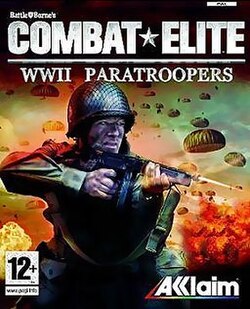
 Combat Elite: WWII Paratroopers on PS2
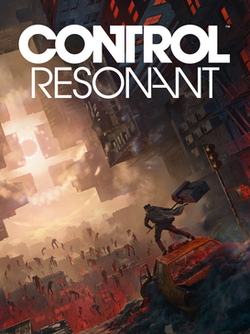
 Control Resonant on PS5
 Predecessor on PS4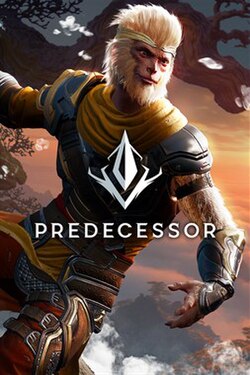
 The Legend of Heroes: Trails Beyond the Horizon on Switch 2
 The Legend of Heroes: Trails in the Sky SC on PS3
 The Legend of Heroes: Trails of Cold Steel IV on PS5
 The Legend of Heroes: Trails of Cold Steel II on PS3
 The Legend of Heroes: Trails Through Daybreak on PS5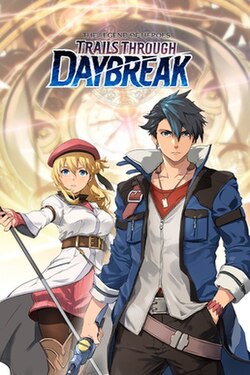










 Another SquareThought Site