

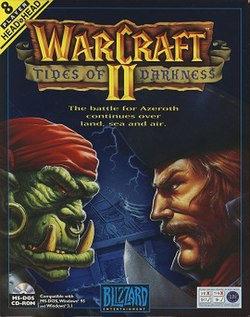

Warcraft II: The Dark Saga arrives on the PlayStation carrying the heavy boots of a PC legend. What began as Blizzard Entertainment's triumphant march across desktop towers in 1995 - a game that defined an era and sold millions - has been squeezed, prodded and retooled for the living-room crowd by Climax Studios and packaged by Electronic Arts. The Dark Saga bundles both Tides of Darkness and the Beyond the Dark Portal expansion into one cartridge‑ish experience, giving console players the sprawling human vs. orc campaigns that kept PC gamers glued to CRTs two summers ago. The question, of course, is whether the soul of a mouse-driven, keyboard-honed real‑time strategy giant survives the migration to a gamepad. The short answer is: mostly. The long answer is what you get when a hit PC strategy game attempts to fit into the simpler, sealable, joystick-in-hand world of the PlayStation.
At its core The Dark Saga is the Warcraft II that made strategy fans sit up and take notes: gather gold, chop wood, siphon oil; raise farms to sustain your hungry ranks; build the tech tree that unlocks dreadnoughts, ogre mages and wyverns; and use fog of war to keep the map from becoming a flat, boring chessboard. Both the Human and Orc campaigns are present, with mission variety that ranges from the familiar 'harvest, produce, assault' formula to missions that demand restraint - rescue operations, escorts and the occasional puzzle of terrain and naval chokepoints. Cliffside fortresses, winter maps where ice becomes a highway for ground units, and the appearance of mission-only heroes (who, if they perish, will ruin your day and your mission) are all intact. Console owners gain a few small but notable conveniences: The Dark Saga introduces auto‑upgrading and auto‑building options, and it increases the number of units you can select at once (a concession to the gamepad's slower unit management). These changes were clearly made with the thumb and patience limits of a living-room player in mind, and they make long skirmishes less tedious without completely removing the need for skill and planning. That said, the PlayStation version omits multiplayer support - a significant loss, especially given Warcraft II's pedigree as a LAN and modem gladiator. Early betas reportedly toyed with link‑cable two‑player functionality, but that feature was removed before release, leaving the console player to duel only against the AI. Speaking of AI, the enemy opponents remain efficient and, in the PS port, mostly faithful to the original: they scout, they probe weak defenses, and they capitalize on resource scarcity. Resource management is still the great equalizer; gold, wood and oil do not replenish, so the map's finite bounty forces players into conflict or careful economy. Naval warfare, oil tankers that build platforms, and aerial units that demand air control are all present, preserving the strategic breadth that made the PC game feel large and tactical. A couple of missions still feel padded - the early campaign can ease you in with missions that border on tutorial - but the late-stage encounters ramp up into the type of multi-front chaos that rewards planning and a willingness to micro-manage soldiers and spellcasters amidst a cacophony of sampled insults and unit chatter.
Console reviewers were divided on the look. The PlayStation version is recognizably Warcraft II: sprites, charming critters, flaming roofs and icy lakes are all there - but the SVGA splendour that PC owners bragged about has been tempered for the hardware. Expect a drop in resolution and a simplification of some tiles and animation frames; magazines of the day sniffed 'downgraded' graphics, while one or two outlets called the visuals impressive for a console translation. The soundtrack and sound effects, however, hold up admirably: the thud of a catapult, the cough of an oil tanker, rousing orchestral stabs and those little sampled quips when you nag a unit into obedience give the game its personality. Interface adaptations are less forgiving. Mapping the RTS command wheel to a D‑pad and face buttons forces compromises - cycling groups, issuing move/attack orders and using spells is inevitably slower than mouse‑driven point‑and‑click - but Climax added sensible shortcuts like expanded group selection and the auto‑functions to reduce tedium. In short, the game looks and sounds like Warcraft II, but it frequently feels like a smaller, quieter cousin; the PlayStation simply cannot reproduce the breadth of information a desktop setup presents at a glance.
If you came into this review as a PC die‑hard, the verdict is simple: stick with the original. The DOS/Windows/Mac releases retain the map editor, native mouse controls, and multiplayer facilities that turned Warcraft II from a good strategy title into a cultural touchstone. The Dark Saga for PlayStation is best judged on its own terms. As a console package it succeeds in bringing an enormous strategy epic into the living room with minimal damage: both campaigns are included, the AI is serviceable, and the added automation features smooth out some controller-induced frustrations. The lack of multiplayer is a glaring omission - a sacrifice that will sting if you bought the game to rekindle modem or LAN rivalries - but for single‑player campaign fans who only own consoles it remains one of the better attempts to adapt PC strategy to the couch. Those who appreciate late‑90s strategy design, who enjoy careful resource planning, a varied unit roster and campaign missions that sometimes demand more than brute force, will find The Dark Saga rewarding. It isn't a perfect transplant; controls are compromise, visuals are softened, and the social heart of the original has been left on the desktop. The console port is earnest, playable and occasionally brilliant - a commendable relic from a time when developers were still figuring out how to make PC classics behave on consoles. Score: 8/10.
 Dark Cloud 2 on PS2
 Dark Souls II on PS3
 Nobunaga's Ambition: Iron Triangle on PS2
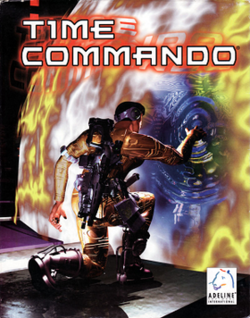
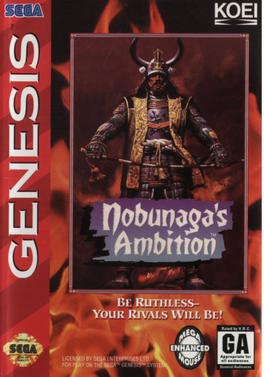 Time Commando on PlayStation
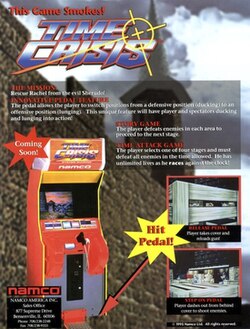
 Time Crisis on PlayStation
 Prince of Persia: The Sands of Time Remake on PS4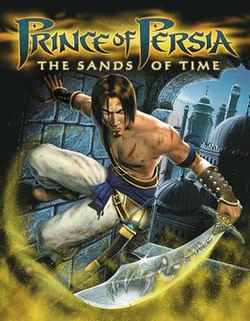












 Another SquareThought Site