

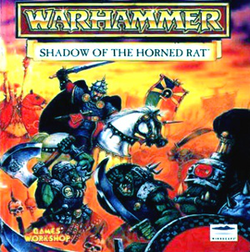

Shadow of the Horned Rat arrives on PlayStation bearing an ambitious design pedigree: a real-time tactics adaptation of Games Workshop's Warhammer Fantasy, originally crafted for PC by Mindscape. The concept is immediately attractive to anyone who has ever rolled dice, painted tiny soldiers, or imagined shouting "hold the line" with the conviction of a caffeine-fuelled dwarf. Unfortunately, the port translates a lot of the original's strengths and quirks into a console package that exposes technical friction points. This review dissects how the game's systems - interface, battle simulation, resource accounting and audiovisual feedback - behave on the PS1 hardware, and why those behaviours shape the player experience one way or another.
On paper the PlayStation version preserves the PC's core loop: a single-player campaign in which you run a mercenary company, choose missions, pick units, manage reinforcements, and resolve tactical battles across 3D battlefields. The campaign is linear with branching choices: optional contracts earn crowns (currency), and those choices change what units you gain and what fights you face. This is a solid high-level design because it mixes strategic meta-management with real-time battlefield decisions. Technically speaking, however, much of the enjoyment depends on the fidelity of the interface and the responsiveness of unit control - two areas where the PS1 release struggles. The mission flow has several discrete technical stages. First comes the briefing: objectives, advance and completion fees, penalties for breaking mission-specific constraints and bonuses for performance. This is followed by unit selection, which is a deterministic fee-driven combinatorics problem - every unit you pick deducts a hiring fee, and replacing killed soldiers after battles consumes crowns depending on unit experience. The game models two replacement states for losses: injured soldiers are unavailable for the next fight but recover; killed soldiers must be replaced in a town and increase hire costs as unit experience grows. This model is mechanically elegant because it produces meaningful mid- and long-term choices: do you keep your elite but expensive veterans in the fight, or rotate cheaper inexperienced units and risk lower battlefield effectiveness? On the battlefield you get mechanics familiar to strategy veterans: formations, charges, varied unit archetypes (infantry, cavalry, ranged, artillery, magic users, specialised troops), terrain modifiers and reinforcement timing for enemies. There are two deployment modalities worth flagging for their technical implications. When you deploy normally you have a Deployment Phase and a bounded deployment area; when ambushed, the game skips this and uses your marching formation as the starting setup. This requires players to think about not just tactical engagement but also macro-level marching dispositions. The boost system - a temporary strength buff you can apply to a unit - is a limited-use resource that enforces prioritisation during fights, but it must be used sparingly to avoid overcommitting. Magic and item systems are implemented with measurable resource accounting. Magic units gain spells with use, each spell costing a quantifiable amount of power tracked by a HUD meter. If the meter is empty, spellcasting is disabled. Magic items behave like bounded-use modifiers: some last temporarily, others for a whole battle, and some are targeted activations. This is straightforward to audit while playing on a PC with a mouse, but on the PS1 the technical problem emerges in information presentation and control mapping: selecting target units and monitoring the magic meter requires fast, accurate input and clear iconography. Reviewers at the time criticised opaque menu icons and clumsy selection mechanics on the console. Where the PC interface allowed for relatively quick inspections and unit-specific commands, the PlayStation's visualization and control precision made those operations slower and error-prone. Unit progression is represented as skulls, from one skull (inexperienced) to four (elite). Experience increases combat effectiveness but also increases replacement costs - a simple feedback loop that rewards careful micro and penalises reckless attrition. Post-battle debriefings provide kill counts, losses split into injured vs killed, and experience gains, which is useful for players who enjoy numerical audits. All of this is coherent in design, but technical execution on PS1 - especially indistinct unit visuals and loading latency - weakens feedback. When it's hard to tell one unit from another on-screen, the meaningful decision-making that the mechanics enable gets muddied: you cannot easily assess who needs reinforcement, who scored kills, or who to boost next when the iconography and on-screen models lack clarity.
The game uses 3D battlefields on PlayStation that are intended to evoke terrain complexity and tactical depth. From a systems perspective the 3D environments enable line-of-sight, elevation effects and obstacles that should meaningfully alter unit AI and pathfinding decisions. Next Generation's PC review praised the 3D battlefields for inspiring thoughtful strategies, and that core remains visible on the PS1. In practice, the PS1 suffers from two interrelated issues: low model detail and ambiguous palette/texture choices that make unit silhouettes hard to parse during combat. Reviewers called the PS1 graphics "indistinct and undetailed," a problem for any tactics game where unit identification is integral to decision-making. Loading behaviour is another technical sore spot that carried over from the PC: long load times were noted as a complaint. On the original PlayStation hardware, frequent and lengthy loading sequences between deployment, battle and debriefing phases interrupted the sense of flow. The HUD and menu icon design also come under fire: unclear icons and cramped status displays create cognitive friction. From a UI/UX engineering standpoint the console port could have benefited from redesigning menus for D-pad navigation, enlarging icons, and adding clearer unit overlays. The port did not sufficiently adapt those elements, so players had to wrestle with imprecise selection and interpretation of on-screen data instead of focusing on tactics.
Technically, the PS1 edition of Shadow of the Horned Rat is an earnest attempt to cram a relatively deep PC real-time tactics experience onto console hardware that demanded different UI and rendering trade-offs. The underlying systems - reinforcement accounting, experience-driven economics, deployment vs ambush start conditions, a limited boost mechanic, and spell-power resource management - are all thought through and form an interesting, interconnected simulation. The execution on PlayStation, however, exposes the game's brittle points: imprecise unit selection, unclear menu icons, and visual indistinction that hampers readouts you need to make tactical calls. Load times and the absence of console-optimised interface fixes exacerbate the problem. If you approach this PS1 port as someone curious about Warhammer's tactical DNA, you'll find moments of strategic satisfaction, and the narrative/mission structure still provides meaningful choices. If you expect the snappy, polish-driven console experience standard even in the mid-'90s, the technical compromises will grate. For historical curiosity and design study, Shadow of the Horned Rat is a useful case of what happens when a PC-focused tactical game is ported to a controller-centric platform without a ground-up UI rethink. For players looking for slick, immediately accessible console tactics, this one lands in the "try-before-you-buy-on-emulation-or-GOG-for-the-PC" category. Consider the PS1 release a sandbox of clever systems hampered by interface and presentation issues - eminently replayable for those willing to look past the scratches, but maddening for anyone who wants their orders obeyed instantaneously and their units easy to tell apart.
 Sonic X Shadow Generations on PS5
 Sonic X Shadow Generations on Switch 2
 Nobunaga's Ambition: Iron Triangle on PS2
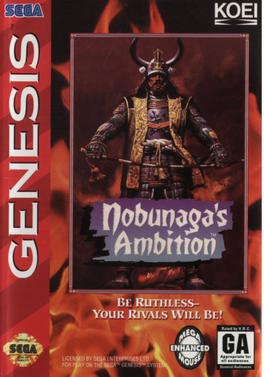 Time Commando on PlayStation
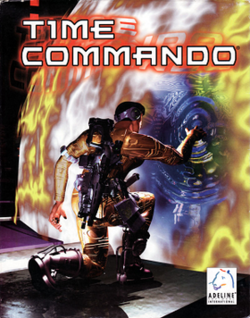 Time Crisis on PlayStation
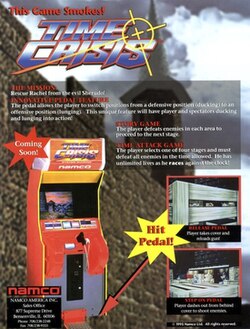 Prince of Persia: The Sands of Time Remake on PS4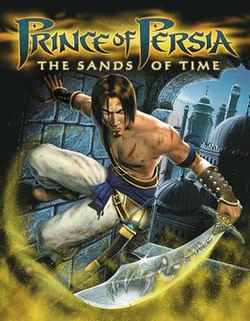
 Cyberspeed on PlayStation












 Another SquareThought Site