

 Mar 2021
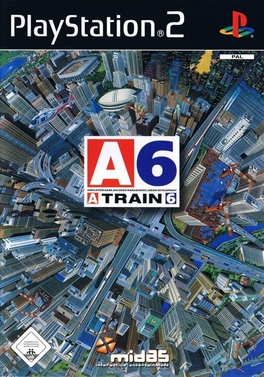

If you like spreadsheets, trains, and the faint, masochistic pleasure of watching a carefully planned urban economy either bloom or implode, A-Train: All Aboard! Tourism on Switch (now carried over in spirit to Switch 2) is here to give your strategic patience a full workout. This latest, portable-friendly entry in Artdink's venerable series sticks to the franchise's strengths: it hands you keys to an empty map, a pile of cash (or debt), and the unhelpful freedom to either build an efficient transit empire or accidentally catalyze a commuter apocalypse. Unlike arcade racers where reflexes and drift angles win races, A-Train rewards a slower, more methodical mind. This is a cerebral simulation; the challenge is not dodging bullets but balancing budgets, reading growth cues, and predicting where a station will coax apartments, shops, and hotels into existence. If you enjoy thinking five moves ahead while a pixelated city hums along, welcome aboard. If you answered 'no' to that sentence, at least you'll still enjoy designing timetables that ruin someone's commute in exquisite detail.
A-Train's core loop pits logistics against urban planning. You shuttle passengers and building materials, and each cargo type affects the city differently. Hauling people is the cash cow: it fills seats, pumps revenue into your coffers, and keeps trains running. Transporting building materials, meanwhile, is the slow-burn investment. Drop enough materials in the right places and the game's growth algorithms will auto-develop neighborhoods, sprouting houses, roads, and eventually commercial centers. Mastering the interplay between immediate profit and long-term development is where the real challenge lives. This edition ships with scenario-driven tasks and open-ended modes. Scenarios are excellent for players who like clearly defined goals and escalating difficulty spikes - the series has a tradition of including tutorials, mid-range challenges, and 'extremely hard' scenarios that veterans adore. Expect to juggle day/night cycles where daytime is the operational grind and nights are when you tinker with schedules and future plans. The steep learning curve is almost a feature: earlier entries and reviewers famously warned that many players get discouraged by the complexity, and that warning still applies. Learning to read the economic signals (ridership numbers, regional attractiveness, and construction triggers) takes time, and the AI city-building tends to reward a patient, iterative approach. Skills in demand are diverse. Financial literacy is first - you will borrow, invest, and bleed cash unless you learn to control costs and prioritize profitable routes. Spatial reasoning is huge: track placement, station spacing, and network topology determine how fast people move and which areas grow. Timetable design is an underrated puzzle: good schedules reduce congestion and increase throughput, bad ones create long waiting stacks and angry pixels. Micromanagement and macro-planning need to coexist; zoom in to optimize a troublesome station, then zoom out to ensure your expansion doesn't bankrupt you. The UI nudges players into experimentation. A map editor and scenario tools (a hallmark of the series) mean you can craft bespoke challenges - or impose cruel little tests on yourself. For newcomers, the five tutorial-style scenarios found in older titles (and the helpful mission structure here) ease you in, but don't be surprised if your first dozen attempts feel like controlled chaos. Veterans will delight in fine-tuning rolling stock: trains come in classes like commuter, suburban, express, and freight. Choosing the right train for the right job is a tactical decision with long-term consequences. Adaptability is tested often. Unexpected development, changing passenger flows, and the constant tug-of-war between building materials and population growth mean you must be ready to reroute, repurpose stations, and reassign trains at a moment's notice. In short: this game is brain training for planners with a sense of whimsy and a tolerance for spreadsheets disguised as transport timetables.
A-Train wears its heritage on its sleeve. The franchise's isometric, tile-based presentation inspired later city-sims and still helps you parse complex information quickly. This edition modernizes visuals without ditching that classic clarity - tracks, trains, and buildings are readable at a glance, which is more important here than photorealism. When A-Train transitioned through the series it flirted with full 3D engines (A-Train 5 and beyond), and those lessons show up as optional camera tweaks and prettier models in higher zoom levels. Character touches are present too: the Switch version introduced a new secretary designed by Yuji Himukai, lending the UI a slightly friendlier, anime-tinged personality. Animation of city growth - houses sprouting into shops and hotels - provides a satisfying feedback loop for planned investments. If you're playing on Switch 2 hardware, expect smooth scaling and snappier load times compared to the original Switch, but the game's strength remains readable, utilitarian art rather than eye-popping spectacle. That's fine: visual clarity matters when you're deciding whether to place another freight spur or buy a new express train.
A-Train: All Aboard! Tourism is essentially a gym membership for your strategic brain: it won't hold your hand through every set, but if you show up ready to sweat through balance sheets and timetable puzzles, the gains are pleasant and lasting. The game's challenges are its selling point - the steep learning curve and demand for diverse skills (financial planning, spatial logic, timetable engineering, and adaptability) separate casual city-builders from committed transit obsessives. Some players will find the pace glacial and the interface initially impenetrable; those same players will be rewarded once they learn to read the city's signals and nudge growth in the right direction. If you want instant gratification, this isn't your stop. If you crave complex cause-and-effect, layered systems, and the smug satisfaction of watching a population cluster precisely because you placed a freight line there three in-game years ago, then buy a ticket. The score reflects a game that does what it promises extremely well, with a few accessibility dents for newcomers: 7 out of 10. It's a solid pick for anyone who enjoys management sims that ask more of your brain than your reflexes, and for those who secretly enjoy turning chaos into punctuality, one station at a time.
 Nintendo Switch
 Nintendo Switch 2
 MLB The Show 22 on Switch
 Pro Evolution Soccer 2015 on PS4
 Derby Stallion 04 on PS2
 MotoGP 19 on Switch
 Power Pro Kun Pocket 13 on DS
 Dragon Quest III HD-2D Remake on Switch
 Dragon Quest III HD-2D Remake on PS5
 Triangle Strategy on Switch
 A-Ressha de Ikou 2001 Perfect Set on PS2
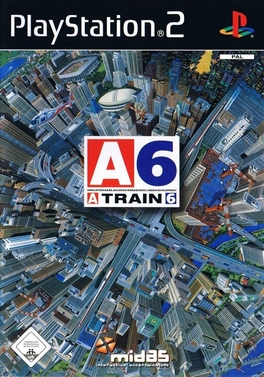 A-Ressha de Ikou 2001 on PS2










 Another SquareThought Site