

 Jun 2022


There are two kinds of video games: those that demand you to win, and those that demand you to listen. Milky Way Prince: The Vampire Star belongs to the latter, and it arrives on Nintendo Switch with the quiet confidence of a late-night radio programme. Developed by Eyeguys and designed by Lorenzo Redaelli, this is a compact, semi-autobiographical visual novel that turns its lens on a bruised relationship between two young people, Nuki and Sune, and refuses to flinch when the subject grows awkward, intimate and painful. The result is not an action-packed spectacle; it is a measured, adult experience that treats mental health with uncommon tenderness. If you bought the Switch for portability and the ability to read games while pretending to check messages on a crowded train, this is the sort of title that rewards that exact behaviour.
Milky Way Prince wears the visual novel label unashamedly. Gameplay consists primarily of reading, observing character portraits and backgrounds, and making choices at key junctions. There are no reflex tests, no inventory puzzles, no boss battles demanding the kind of dexterity that used to make 90s magazines hand out sweatbands. The pleasure here is conversational and literary: you inhabit the space between lines, you choose responses, and those responses bend the emotional tenor of the story. This is not a branching labyrinth of dozens of wildly divergent endings. The focus is narrower: a portrait of two people in and out of phase with each other, with the narrative examining how affection and instability can coexist. Choices steer the warmth and openness of interactions, and the consequences are psychological rather than gamified. The writing is the engine; it pulls you forward with sentences that often prefer implication to exposition. That can be a virtue and occasionally a frustration. On the one hand, the restraint prevents melodrama and invites reflection. On the other, players expecting clear-cut feedback on every choice will sometimes feel the game is coy about its bookkeeping. The pacing is deliberate. Some chapters unfold like short stories, others like long confessions. The Switch is a forgiving platform for this kind of experience: you can sink into it during a single session or nip at it in commuter-sized increments. Save states and chapter markers are polite and unobtrusive; the UI keeps out of the way. This is a single-player exercise in empathy and close reading, and the designers know their audience. There are moments of dark humour, and moments of quiet cruelty, and the game rarely trades emotional complexity for easy resolution. Content-wise, the game deserves praise for the sensitivity with which it treats mental health. Critics have noted, and rightly so, that the narrative avoids caricature-there is no easy conflation of illness with villainy. Instead, the story examines how psychological fragility affects relationships, how care can be both a balm and a burden. That frankness is one of the game's chief virtues; it can also make certain beats uncomfortable in the best possible way. If you come to games for escapism only, this title will insist on dragging you back toward the harder, human stuff.
Visually, Milky Way Prince adopts an aesthetic that leans toward moody and thoughtful rather than flashy. Presentation is accomplished and atmospheric: character portraits and backgrounds are used with restraint, creating a stage for dialogue rather than a theatre of distraction. The art serves the narrative by emphasising tone and posture, letting silences breathe. Contemporary outlets described the game as moody and remarkable, and that assessment holds up on the Switch screen. Colours are muted when the scene asks for it and bloom into warmth at the rare moments of tenderness. This is not a title that will be used to sell the Switch's graphical horsepower. There are no polygonal fireworks, no texture showcases. Instead it is an illustration-led experience where visual flourishes are purposeful and economical. Sound design complements the visuals: a subtle score and ambient touches underline emotional beats without ever trying to tell the story for the characters. It is the kind of audiovisual design that 1990s reviewers would have called tasteful restraint-no needless crescendos, no ostentatious effects-just the right music at the right time, and the occasional visual metaphor that lingers in the mind after the screen goes dark.
In an era when many developers attempt to dazzle with spectacle, Milky Way Prince is stubbornly small and intimately ambitious. It is a visual novel that reads like a series of confessions, and it benefits from being treated as such. This is the work of a designer willing to mine personal material for universal resonance, and the result is often moving, sometimes raw, and occasionally frustrating for players hoping for more explicit branching or traditional 'game' mechanics. Critical reception has been mixed but generally respectful: a Metacritic score around the high 60s for the PC release, with outlets such as Eurogamer calling it the first steps of a future master and Rock Paper Shotgun praising its nuanced portrait of mental illness. Some reviews praise the writing and emotional depth, while others found the mechanical thinness and tonal heaviness less to their taste. On the Switch, the game arrives with all the intimacy intact and benefits from the console's portability. If you approach it as an author-driven narrative rather than a joystick-driven one, you will find a work that rewards patience and reflection. For a 1990s-style verdict: this is not a blockbuster, nor does it aspire to be. It is a small, serious piece of interactive fiction that asks you to care about broken people, and that is a rare and commendable ambition. If you are prepared to listen, to sit through uncomfortable silences, and to carry the conversation home with you, Milky Way Prince is worth your time. If you need immediate gratification in the form of action or spectacle, look elsewhere. Either way, the game is honest in its intentions, and in a marketplace full of grand promises, honesty is itself a small miracle.
 Way of the Samurai 3 on PS3
 Theatrhythm Final Bar Line on Switch
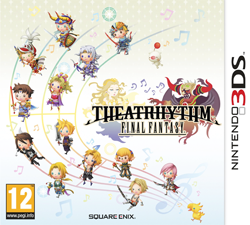 Root Film on PS4
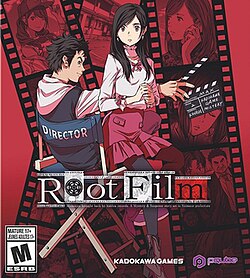 Tokimeki Memorial Drama Series Vol. 3 Tabidachi no Uta on PlayStation
 Princess Princess on PS2
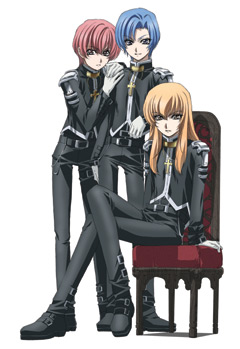 Oshiete! Popotan on PS2










 Another SquareThought Site