

 Apr 2022


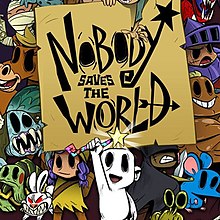
Nobody Saves the World wears its weirdness like a developer hoodie: comfortable, slightly stained with snacks, and proudly emblazoned with 'I made this.' DrinkBox Studios' shapeshifting action-RPG drops you into a top-down world as Nobody, a literal blank-slate protagonist armed with a wand that turns them into 18 distinct Forms. On Switch the game arrived months after its PC/Xbox launch, carrying the same DNA that won critics over: a bright, cartoon-leaning aesthetic, dense build-combinatorics and procedurally generated dungeons wrapped around a tight core of action-RPG systems. The Switch port is the one most of us want to tuck into on the sofa, and while it's not a blind technical showcase for the hardware, the underlying design choices - Form system, ability-mixing, dungeon modifiers, and a rather unforgiving respawn model - make this title interesting more for its mechanical engineering than for any elaborate graphical tricks.
At its heart Nobody Saves the World is a systems-driven toybox. The Form system is essentially a modern, action-focused take on a Job system: you start each Form with two basic skills and a set of base stats, then unlock additional abilities and passives as you level that Form. The important technical takeaway is modularity - abilities are designed to be composable, and the game intentionally exposes those hooks. Once you can mix-and-match skills between Forms (the game allows certain Forms to inherit or share perks), you get emergent combos that feel less like pre-baked classes and more like player-authored builds. From a mechanical-design perspective the decision to gate some of the deepest interactions behind Form progression is a smart one. It forces players to toggle playstyles instead of core-souping a single overpowered configuration. DrinkBox also layers dungeon modifiers on top of the procedurally generated maps; these modifiers force you to adapt the build meta rather than brute-force the same solution everywhere. Reviewers noted (and for good reason) that these modifiers often scuttle a player's preferred loadout and reward experimentation. That's an elegant piece of systems design because it uses level-affordances to drive engagement, instead of simply throwing more enemies at you. Procedural generation in Nobody is pragmatic rather than aspirational. The overworld and dungeons reuse handcrafted room templates and enemy sets, then stitch them together with loot, traps, and hidden keys. This hybrid approach keeps layout variety high while preserving handcrafted encounter pacing. The game uses a star currency and experience to gate access to 'legendary' dungeons - a predictable risk/reward loop: explore to earn Stars, spend Stars to tackle denser, mechanically more demanding content. The legendary dungeons act as difficulty scalers and testbeds for build creativity. Combat is tight and responsive, leaning on a classic top-down perspective and arcade-friendly input windows. Each Form has a signature attack and passive that define playing identity; the real depth emerges when you graft abilities from one Form onto another. This open-ended ability-synthesis is where the game shines technically: the engine needs to handle cross-Form synergies, balance overlapping passives, and permit emergent interactions without breaking encounter design. DrinkBox mostly pulls this off. There are moments in late-game where certain synergies become dominant - a common issue in open-systems design - and critics pointed out that the endgame starts to feel sparser in new Forms and mechanical surprises. That critique is accurate: once you've unlocked and experimented across most Forms (about 15 hours is a common completion estimate), the novelty curve softens unless you deliberately chase challenge modifiers. The multiplayer option (co-op both local and online) was a design pivot for DrinkBox - their first multiplayer after Guacamelee. It's a practical add-on that multiplies interaction patterns: players can coordinate Form synergies in real-time, creating combination playstyles that the single-player loop kind of teases but can't fully realize. The documentation suggests Microsoft nudged DrinkBox to include online co-op; design-wise, it's a net gain insofar as encounters scale in interesting ways with more players. One technical niggle reported by reviewers is the autosave behavior: some found it punishing or inconsistent, especially in combination with the respawn rules. The game's choice to place the only dungeon respawn point at the pre-boss area (instead of more frequent checkpoints) ramps up tension but also increases penalty for mistakes, which some reviewers and players found frustrating when the autosave didn't align with expected safe-points. Balance-wise, the challenge system and optional modifiers do a lot of heavy lifting. Hardcore Gamer praised the way challenges encourage experimentation - that's emergent difficulty by constraints rather than by simply inflating enemy HP. The trade-off in that approach is pacing: you either adapt continuously (which is fun) or you grind familiar configurations (which becomes stale). The best use-case for the game's systems is a player who loves tinkering; if you hate switching loadouts mid-dungeon, the design repeatedly nudges you out of your comfort zone.
Nobody Saves the World leans fully into a cartoon-inspired visual language. The animations are a highlight rather than a technical flex: frames and expressive reactions give the characters weight and personality, which reviewers likened to something out of a Cartoon Network show. On Switch, that prioritization pays off - because the art style is stylized, it doesn't demand photoreal fidelity, which keeps asset complexity manageable and preserves clarity during hectic combat. The UI is clean and communicates Form stats, active abilities, and modifiers without overwhelming the screen; that's an important technical victory in an action-RPG with many moving parts. Procedural generation presents an additional graphical challenge - namely, preventing rooms and tile sets from looking repetitive when stitched together at random. DrinkBox mitigates this through varied enemy art, trap decoration, and treasure placement. The visual design also supports gameplay: unique silhouettes for enemies and Forms make telegraphing attacks and reading encounters fast, which is crucial when mix-and-match abilities change how threats must be prioritized. Audio complements the visuals: Jim Guthrie's score brings a light, occasionally strange tone that matches the game's aesthetic, and it's worth noting how well sound queues are used in combat to help the player parse hit confirmations and ability activations.
Nobody Saves the World is a thoughtful piece of mechanical engineering dressed up in a goofy sweater. Its core contribution is a modular Form system that rewards experimentation, and the procedural+dungeon-modifier combo keeps encounters fresh enough to justify repeated playthroughs. DrinkBox's decision to make builds openly composable creates delightful emergent moments, even if the endgame can run low on new Forms and a few dominant synergies slip through the net. On Switch the title is perfectly playable and preserves what made the game charming on other platforms: tight combat, expressive animation, and a systems-first approach to RPG progression. If you're the kind of player who loves to dismantle a game's systems and reassemble them into something absurdly effective, Nobody is a minor masterpiece of design reward. If you prefer a steady linear upgrade curve or hate swapping loadouts, some of the game's pacing and autosave/respawn choices will grate. Overall, the Switch version is an excellent way to experience DrinkBox's eccentric design philosophy on the go - and with the Frozen Hearth expansion adding more Forms and challenges, there's even more sandbox to tinker with. Technical execution supports the design more than it dazzles: that's a compliment here, because the design is what matters. Score: 8.5/10.
 Nobody Saves the World on Xbox Series X/S
 Harvest Moon: One World on Switch
 Tennis World Tour on Switch
 Combat Elite: WWII Paratroopers on PS2
 Onimusha: Dawn of Dreams on PS2
 Disney's Chicken Little: Ace in Action on PS2
 Action Man: Operation Extreme on PlayStation
 Guacamelee! 2 on PS4
 Tales from Space: Mutant Blobs Attack on Switch
 Nobody Saves the World on PS5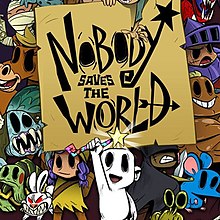










 Another SquareThought Site