

 Jan 2024
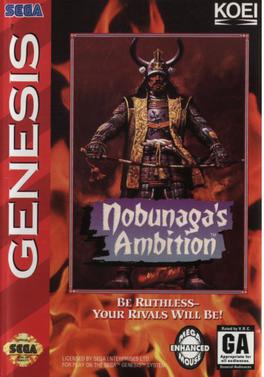

Nobunaga's Ambition is a series that has been quietly building empires and testing friendships since 1983, which means it has had enough time to perfect both taxation policies and passive-aggressive diplomacy. Nobunaga's Ambition: Rebirth for the Nintendo Switch is the latest attempt to package centuries of Japanese feudal intrigue into a handheld-friendly experience. If you're expecting explosive action, you will be disappointed. If you're expecting to spend gloriously long stretches moving rice and men around on a map while muttering about flood control, this is where you sign your name in blood - or, more practically, sign in with your Joy-Cons. Rebirth leans hard into the series' DNA: seasonal turns on the strategic map, day-by-day battles, and an astonishing menu of administrative options that let you run an economy, raise armies, arrange marriages, and make life miserable for peasants in the most efficient ways. The game feels like someone took a decades-old grand strategy manual, dusted it off, and then politely asked it to work on a console. The result is familiar, sometimes infuriating, often rewarding, and serenely uninterested in holding your hand.
At its core, Rebirth is textbook Nobunaga: select a daimyo, pick one of several historical scenarios and then proceed to micromanage the slow, deliberate collapse or consolidation of Japan depending on how drunk on power you become. The scenarios echo the series' tradition - short-term skirmishes and long 'Road Towards Unification' campaigns - so you can either be a short-burst warlord or a patient bureaucrat who wins by attrition and spreadsheets. The game measures time thoughtfully. On the political map, a turn equals a season; in battle, a turn equals a day. This seasonal pacing means winter is not just an aesthetic decision but a real gameplay concern. Supply and morale systems punish thoughtlessness: armies that march without stores turn into expensive ornaments, and peasants who lose faith will remind you by rebelling at the least convenient moment. Rebirth preserves the series' deliciously granular choices. You can transfer soldiers between fiefs, raise taxes, cultivate rice, invest in flood control, train troops, recruit ninja, spy on rivals, arrange non-aggression pacts, broker marriages and, if diplomacy fails, remind someone that lead and cannonballs solve some social problems. Each action has trade-offs. Increase taxes and your coffers swell; increase taxes too much and your peasants will invent protest songs. Send rice to a starving province and it will love you until it doesn't. Combat is tactical rather than twitchy. Battles play out on a hex-like battlefield and reward planning: positioning, supply lines, and the judicious use of command units all matter. Victory conditions vary - destroy the enemy commander, force a retreat, or simply outlast them - which means you can win by bravery, cunning, or sheer administrative competence. The interface gives you many levers to pull; Rebirth's success is measured by how well you can juggle them without accidentally turning your realm into a glorified rice charity. Accessibility has been nudged forward without betraying the franchise. There are helpful tooltips, scenario presets, and quality-of-life features that make the Switch a decent vessel for this kind of slow-burn strategy. Still, the core appeal is unchanged: this is a game about systems, not spectacle. If you like the idea of playing an economic governor who occasionally orders people to charge uphill, Rebirth is an agreeable companion. If you need explosions every eight minutes, consider a different hobby. Multiplayer and AI are serviceable. The AI respects historical strategies and will exploit slack governance; it is patient and occasionally brutal in a comforting, inevitable way. Multiplayer, when it works, turns the game into a sociological experiment: who will be the friend who betrays you for a single castle? The user interface on Switch is competent, if sometimes fiddly with the Joy-Con. Docked mode with a Pro Controller is the recommended way to avoid accidental clicks while signing an edict that will doom a province.
Visually, Rebirth behaves like a dignified historian rather than a flashy warlord. The map is functional and readable: provinces, supply lines and troop icons are clear, with enough stylistic flourish to make things pleasant without distracting from decisions. Unit models and battle animations are restrained - think elegant chess pieces with armor rather than cinematic warriors leaping in slow motion. This is not a Call of Duty production; it is a living map where numbers and positions matter more than particle effects. Character portraits and UI art retain Koei's classical aesthetic: stern generals, placid courtiers and the occasional noble who looks like they regret all their life choices. It helps that the game's visual clarity supports its strategic depth - the important bits are visible at a glance, which is crucial when you're balancing taxes, training, morale and that one nagging rebel faction you forgot existed. On Switch hardware, performance is steady. Load times are reasonable and frame rates are stable whether you are cruising the campaign map or watching a siege unfold. The handheld screen scales the UI adequately, though some text can feel small if you insist on playing with the brightness set to 'mysterious dusk.' Overall, the graphics do the job: they communicate information efficiently and occasionally remind you that feudal Japan can be quietly beautiful.
Nobunaga's Ambition: Rebirth is not trying to reinvent the wheel; it is trying to polish a very old, complex wheel until it rolls exactly the way you want it to. The game takes everything that made the series enduring - the seasonal turns, the tangled relationship between economy and military, the menu of political options - and packages it into a Switch-friendly experience. It is calm, sometimes stubborn, and often unnervingly realistic about how tedious empire-building can be. If you are already a fan of Koei's grand strategies, Rebirth will feel like coming home to a house that has gained a few modern conveniences (tooltips, better UI, handheld portability) but still smells faintly of ink and old willpower. If you're new to the series, expect a learning curve: the game rewards patience, note-taking and a willingness to let your plans age like a fine sake - or, less romantically, a pile of unpaid taxes. There are moments when Rebirth's devotion to depth keeps it from being instantly lovable: the interface can be dense, and the pacing will frustrate anyone who wants immediate gratification. But for players who enjoy the slow, delicious work of constructing a nation - brick by bureaucratic brick - it provides a satisfying sandbox of historical consequence. It won't hold your hand; it will, however, hand you the ledger, and that is exactly the point. Score: 7/10.
 Nobunaga no Yabou Online: Souha no Shou on PS2
 Nobunaga no Yabou Online on PS2
 Coloball 2002 on PS2
 Nobunaga's Ambition: Iron Triangle on PS2
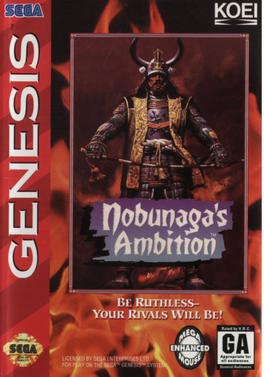 Nobunaga's Ambition: Rise to Power on PS2










 Another SquareThought Site