

 Nov 2017
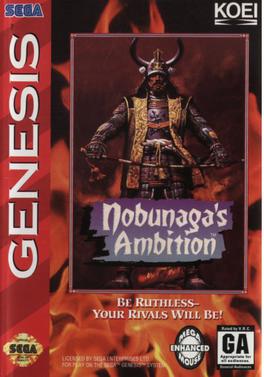

There are games that ask you to shoot, jump, or mash buttons until your thumbs file for divorce. Then there are games that ask you to become an administrator, a tax collector, a diplomat, and occasionally a general - all in the space of a season. Nobunaga's Ambition: Taishi is the fifteenth entry in Koei Tecmo's venerable series, a sequel to 2013's Sphere of Influence and the first mainline release overseen by the newly formed Kou Shibusawa division. On the Nintendo Switch it presents itself as a stern, measured study in statecraft and warfare set in the Sengoku period, the sort of title that lets you conquer Japan with a spreadsheet as readily as with a sword. If you enjoyed the cerebral pacing of 1990s grand strategy - the type of affair that treated maps and numbers like sacred relics - Taishi will feel comfortingly familiar. This is not a flashy blockbuster designed to hold your hand; it is instead a strategic sandbox where scenarios begin in different years (1560, 1571, 1582 among the series' typical choices) and you decide whether you will unseat rivals with diplomacy, marriage, economic strangulation, or open warfare. The game's ambition - pardon the pun - is not merely territorial. It wants you to balance rice, gold, crops, peasant loyalty, and the temperament of your vassals until a working polity emerges or collapses in a peasant revolt.
Taishi inherits the classic Nobunaga blueprint: turn-based grand strategy on a seasonal map and daily progression during battles. Each turn is a season in which you allocate resources, shuffle troops, tweak taxes, invest in flood control, or cultivate lands. Battles play out in a more granular fashion: a campaign resolves into individual engagements in which victory conditions range from routing the enemy, killing their commander, to grinding them down until their supply lines fail. The available options on the campaign layer are exhaustive enough to make a medieval accountant blush - transfer soldiers between fiefs, redistribute rice or gold, recruit soldiers or ninja, send spies to gather intelligence, arrange marriages to soothe rival daimyo, and even pass a turn to let the court stew in its own politics. What lifts Taishi above a mere menu-driven exercise is how the elements interact. Increase taxes and expect an uptick in coffers paired with a drop in peasant loyalty that, if ignored, can explode into rebellion. Invest in flood control and your productivity rises but perhaps at the cost of short-term expenditures. Train the army and your forces gain fighting efficiency; neglect them and you'll discover that veteran troops are a far better investment than expensive generals with poor logistics. The player can also hand administration of a fief to the computer if micromanagement becomes too onerous - a useful concession for Switch players who might be playing in short bursts. For those who remember Koei's approach in the 1990s, Taishi is recognizably in the same family: domestic and military strategies are inseparable, and fielding armies is pointless without a functioning economy and loyalty at home. The strategic depth is the game's charm and its challenge. Newcomers should brace themselves for a steep learning curve; the interface, while polished compared to the earliest PC days, still presumes the player wants to think and plan more than watch cutscenes. Diplomacy and internal administration can be as satisfying as the clash of katana - sometimes more so - because the game rewards foresight and cruelty in equal measure. Multiplayer options and scenario selections allow replayability: you can attempt the 'Battle for the East' in 1560 one session and try the 'Road Towards Unification' in 1582 the next, with different political landscapes and rivals to outwit.
If you are seeking eye-popping visuals you will be disappointed, but do not mistake modest presentation for carelessness. Taishi's map screens and unit portraits are functional, clear, and designed to convey information rather than dazzle. When the camera pans across provinces it feels like flipping through a well-annotated history book: pretty enough to keep you oriented, never so flashy that it distracts from the decisions it asks of you. Battles use an uncomplicated, readable display where unit statistics and terrain matter more than spectacular particle effects. This utilitarian aesthetic is a conscious design choice reminiscent of the series' earlier outings on 16-bit consoles and PCs. The Switch's portability actually complements the visual restraint - its simple menus and clean icons translate well to a small screen. On a docked television the art will not embarrass modern franchises, but it never aims to compete. For players who came for substance over spectacle, Taishi's graphics are perfectly adequate; for those expecting modern production values, the game looks like something that prefers brains to bling.
Nobunaga's Ambition: Taishi is a serious, old-school grand strategy game in the best sense: complex, sometimes punishing, and intellectually satisfying. It will reward patience, planning, and a willingness to engage with systems rather than rely on reflexes. On the Nintendo Switch the game's portability and the option to let the AI administer fiefs make Taishi a practical companion for long commutes or late-night plotting sessions. There are limits. The learning curve is steep, the presentation conservative, and players expecting a modern, cinematic historical drama will find the package a tad austere. Yet for anyone with a hunger for the kind of strategic complexity that earned the series its laurels in the 1990s and beyond, Taishi delivers a genuine dose of feudal-statecraft. It is not a game for the impatient, nor for those who measure fun purely in explosions per minute, but for the strategist it is a worthy campaign: meticulous, stubborn, and ultimately triumphant when your taxes are balanced and your enemies are begging for mercy. Recommended for fans of historical strategy and players who remember - fondly or not - the era when a good manual and a map were worth their weight in gold.
 Nobunaga no Yabou Online: Souha no Shou on PS2
 Nobunaga no Yabou Online on PS2
 Nobunaga's Ambition: Iron Triangle on PS2
 Coloball 2002 on PS2
 Nobunaga's Ambition: Rise to Power on PS2










 Another SquareThought Site