

 Oct 2025
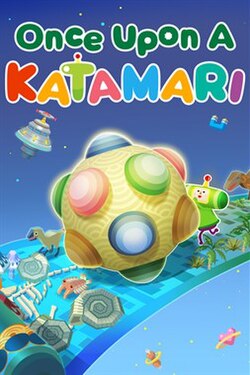

There are some franchises that read like a cheeky footnote in the history of games and others that announce themselves with the confident squelch of a wet rubber ball. Katamari, for those of us who have kept a foot half in the last century's game magazines, has always belonged to the latter category. Once Upon a Katamari marks the series' return to proper home consoles for the first time since Touch My Katamari in 2011. Released by Bandai Namco Entertainment and announced in a mid-2025 Nintendo Direct, this new entry plants the Prince squarely back in the business of rolling up the world - and apparently the timeline - after the King of All Cosmos once again leaves the cosmos in tatters. If you expect a radical reinvention, this isn't it. If you expect Katamari's particular mixture of absurdity, tidy mechanics, and the quiet terror of watching a timetable slip through your fingers, then you are in the right place.
The core conceit of Katamari remains beautifully simple and stubbornly specific: you nudge a sticky orb across a playfield and it accrues things. The once-mundane becomes fodder for a growing mass; the humble paperclip becomes a satellite. Once Upon a Katamari adheres to this formula with the sort of reverence usually reserved for national monuments and sandwich recipes. Players control the Prince as he rolls a katamari over hundreds of objects, watching the ball balloon in size as it absorbs items in its path. Objectives are measured against a target size within a set time limit, and the frantic calculus of what to pick up and when is where the game's tension originates. Where this installment attempts to distinguish itself is in the framing device. The King of All Cosmos has, predictably, destroyed the earth and the stars, and the Prince is dispatched to roll a katamari across time to restore the sky. It's a tidy narrative peg: you are not merely collecting clutter for clutter's sake but reassembling the heavens. The time-travel framing lets stages play with scale and epoch - expect levels that toy with domestic interiors one moment and astronomical oddities the next - and it offers designers a convenient excuse to mix and match object palettes. The result is the familiar Katamari sandbox with a slightly more cinematic cover story, which gives the designers permission to be playful without dismantling the game's DNA. Controls on the Switch feel faithful to the series' tradition: you get a pair of sticks (or equivalent touch schemes if you prefer), and the game trusts that these simple inputs are enough to produce moments of genuine mastery. Rolling is straightforward; steering a growing, unwieldy katamari is not. There are exquisite, accidental moments when a katamari snaps around a corner and swallows a tidy procession of objects like a vacuum suddenly turned sentient. There are also maddening minutes when your orb catches on geometry or a stubborn table leg and your precious seconds evaporate. Time limits remain the central governor of skill and stress. The game balances exploration against urgency: loiter too long admiring the visual gag of a tiny toy car glued to a doorknob and you will find the target slipping away. Conversely, a rushed, scattershot approach will leave you with a bloated mess and a poor grade. This tension is the series' heartbeat. Multiplayer is available, which introduces competitive and cooperative spins on the katamari loop. While I put most of my hours into single-player campaigns for this appraisal, the presence of multiplayer nods to Katamari's social potential - that gleeful cruelty of seeing a rival swallow your best prey. Once Upon a Katamari does not pretend to be an encyclopedic reinvention. It is, rather, a well-tailored continuation. If you cherish the oddball logic of object sizing, the steady build of a rollicking orb, and a game that rewards both pattern recognition and nimble joystick work, you'll find much to like. If you sought modern systems-heavy complexity, expect restraint. The designers have doubled down on clarity of purpose: collect, grow, and meet the clock.
Visually the game reads as a direct descendant of prior Katamari entries: colors are generous without ever tipping into gaudiness, models are stylized and obedient to silhouette over photoreal fidelity, and the heads-up display is unobtrusive. Bandai Namco seems to have kept the clean, slightly surreal aesthetic that made the series visually distinctive in the first place. The choice to release on contemporary platforms including Switch, PS5, Xbox Series X, and Windows suggests that fidelity and performance scale across hardware, but the Switch build I played leaned into the platform's strengths: crisp colors, smooth frame pacing in docked mode, and a satisfying tactile feel when handling the katamari with the Joy-Con sticks. Because the game trades on visual whimsy, object design deserves praise. Hundreds of items are, as the press notes indicated, present and accounted for, each animated with a little personality. The sense of scale shifts with satisfying drama as smaller items aggregate and begin attracting progressively larger things. Lighting and shader work are competent rather than showy - this is a title that prefers charming composition over GPU benchmarks. Loading is unobtrusive, and levels transition quickly enough that the game's momentum rarely suffers. It is worth noting that Once Upon a Katamari's aesthetic decisions are not attempts at photoreal spectacle so much as curation. If you remember how the series looked in the early aughts and hoped for a sentimental refresh rather than a techno-upgrade, this one understands your taste. The visuals serve the gameplay without ever making the gameplay serve the visuals, which is the right order for a Katamari game.
There is a pleasingly old-school honesty to Once Upon a Katamari. It does not try to be all things to all people; it is a meticulously maintained toy that does what the Katamari series has always done best. Bandai Namco has delivered a new home-console adventure that honors the franchise's history while wrapping it in a light, narrative sheen about restoring the sky across time. The single-player campaign offers the familiar rush of building mass against a ticking clock, while multiplayer provides extra longevity and mischief. For those weaned on modern complexity, the game's restraint might read as conservative. For everyone else who remembers thumbing a magazine and reading about clever, singular design, this is a respectable return. Once Upon a Katamari does not reinvent the wheel; it polishes a beloved rubber sphere and hands it back to you with a wink. That wink, in 2025, still manages to make you grin. Score: 8 out of 10 - a buoyant, accomplished entry that reminds us why we loved rolling in the first place.
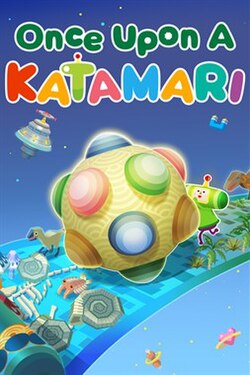 We Love Katamari Reroll+ Royal Reverie on Xbox Series X/S
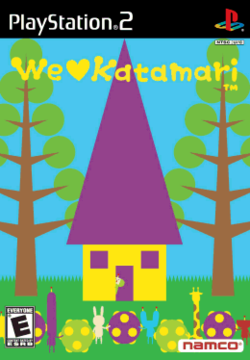 Katamari Forever on PS3
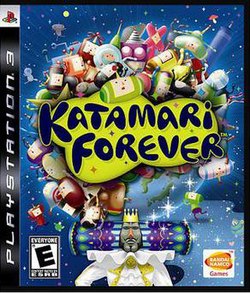 Disney's Chicken Little: Ace in Action on PS2
 Onimusha: Dawn of Dreams on PS2
 Puzzle by Nikoli 4: on PS4
 Twinbee Taisen Puzzle Dama on PlayStation
 Ace Angler on Switch
 Gundam Versus on PS4
 Crayon Shin-chan: Ora to Hakase no Natsuyasumi – Owaranai Nanokakan no Tabi on Switch
 Tales of Symphonia Remastered on Switch










 Another SquareThought Site