

 Jul 2021
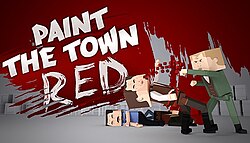

Paint the Town Red is the video game equivalent of being politely invited to a bar fight and then discovering the bar is made of Lego and the drinks are made of red paint. Created by the tiny but ambitious team at South East Games, it started life as a six-day game jam project and grew into a voxel-strewn sandbox of blunt instruments, flying limbs and an alarming lack of subtlety. The Switch version tries to bottle that chaos for handheld consumption. The boxy characters ragdoll convincingly, the environments get progressively bloodier, and somewhere in the options there is the faint echo of a level editor that the Switch apparently left at home. It's fun, messy, and occasionally frustratedly incomplete - like a pizza with great toppings and a sad crust.
The core loop is simple and reliable: you walk into a room, somebody yells something mildly insulting, then you proceed to remove their face from their skull with whatever is handy. It's first-person mayhem with a bizarrely tactical soul. Melee is the star - punches, an occasional uppercut that happens when the RNG decides you deserve it, and a gratifying array of weapons and traps scattered around levels. Hit detection and the voxel physics sell the violence in a way that feels cartoonish and sincere at the same time; when someone gets walloped, their limbs react and small blocks of red physics obey Newton's better judgement. Modes try to keep things varied. Scenarios is a sandbox mode where you can toggle modifiers - top-down cameras, NPC allies, extra special attacks - and basically design the exact kind of chaos you want. Arena is pure wave-based gladiatorial nonsense with traps and progressively meaner opponents, good for short bursts of "I only meant to check notifications" playtime. Beneath is the most ambitious mode, a roguelite-ish campaign where you pick a class (Warlock, Spectre, Brawler or Vanguard), fight Ancient Gods and slowly unlock upgrades. Beneath is the one place where the game's fight systems and pacing click into something that feels like progression that matters. Unfortunately the Switch edition is a slightly trimmed down carnival. Important perks of the PC release - most notably the level editor and Steam Workshop support that let people dump infinite player-made levels and textures into the game - are either missing or handicapped on console. That's not a moral failure, it's a technical one: the developers openly admit the Switch's memory limits and voxel-hungry engine make a straight port tricky. What this means for you as a player is a shorter, more repetitive diet. Early unlocks are slow, special moves take a wholesome amount of time to acquire, and without the custom content pipeline the same handful of arenas can feel like rewatching your favourite fight scene until your thumbs fall asleep. Combat has its moments of brilliance. The voxels mean body parts react, and the physics-driven messiness creates emergent slapstick - someone trips, a bottle goes flying, a chain reaction of violence unfolds and you briefly feel like a director. But the difficulty balance can be mean. On standard settings a single enemy with a blade can remove a large chunk of health in one swing; without modifiers the game sometimes rewards parrying with death. The developers included modifiers specifically to address this, which is helpful - if you remember to use them. The lack of multiplayer and cross-play on Switch is understandable from a development perspective (different netcode and consoles are needy), but it does remove a layer of mayhem you might have been imagining while watching gameplay trailers. The level editor does exist in the game's design lore and is a highlight on PC: texture and music packs, uploadable workshops and the creative chaos that follows. On Switch it's a tease rather than a feature. For players who primarily want portable, pick-up-and-smash action, the Switch edition still delivers the core thrill. For anyone hoping to mod, share or become a chaotic architect, the Switch release can feel like getting the ingredients for a cake and being told you can only look at the recipe.
The graphics are deliberately blocky and unapologetically voxel-y, which is the game's aesthetic decision and also a clever dodge around having to be photorealistic. Unity fuels it, and the voxel approach is more than cosmetic - it's how the game sells its surgical splatter. When a character is hit, the affected bits visibly react in ways that are oddly satisfying, like watching a poorly animated action figure go through a midlife crisis. On the Switch, visuals are competent rather than showy. The charm of the voxel gore survives the port, but there's a noticeable lack of polish compared to the PC version. Textures can be sparse, distant objects pop a little, and there are rare but reported bugs - clipping through floors and the occasional game-over that feels less dramatic and more like software politely asking to be left alone. Performance is stable most of the time, but don't buy this for a graphics showcase; buy it because seeing a disco explode into cubic confetti never gets old.
Paint the Town Red on Switch is a perfectly blunt instrument. It will entertain in short bursts, especially for players who enjoy ragdoll physics, improvised weaponry and the small, ruthless satisfaction of turning a crowded bar into a crime scene. It scratches the itch for chaotic first-person melee on the go, but the Switch edition is undeniably the pared-down cousin of the PC version. The lack of the level editor and community-made content, slower progression, and occasionally unforgiving vanilla difficulty make this version feel like a great concept that ran into cartridges' memory limits. If you mostly play handheld and want something quick, violent and oddly tactical, pick it up when it's on sale. If you crave endless variety, user-made chaos, or the full Beneath experience with all the trimmings, the PC build is where the party really happens. Either way, South East Games did an admirable job converting a six-day jam idea into a full game worthy of its headline: messy, loud, and likely to leave red footprints on your conscience. Final call: fun, flawed, and recommended with reservations - like lending your friend your favourite hoodie and hoping they won't bleach it with creative cocktails.
 Concrete Genie on PS4
 The Unfinished Swan on PS4
 ChromaGun on PS4
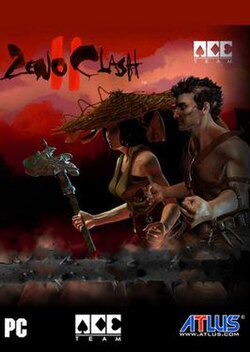
 Zeno Clash II on PS3
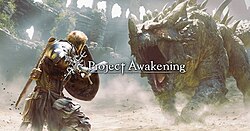
 Project Awakening on PS4
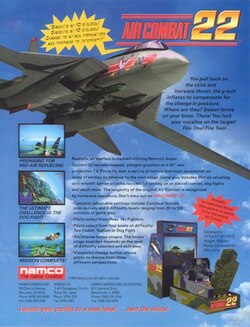
 Arcade Archives 2: Air Combat 22 on Xbox Series X/S
 Star Ocean: Integrity and Faithlessness on PS4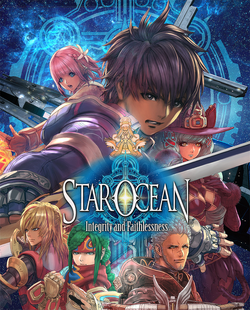










 Another SquareThought Site