

 Dec 2019
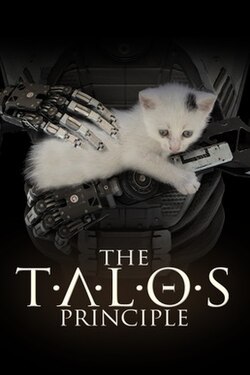

If you're looking for a puzzle game that sneaks up on you like a polite philosophy professor at a party, The Talos Principle on Switch is that guest who brings a bafflingly good dip and then asks whether the dip is real. Croteam took what began as an experiment in interactive object design and, with writers Tom Jubert and Jonas Kyratzes onboard, turned it into a surprisingly human (or post-human) story about conscience, creation and the peculiar problems that arise when gods are just server processes with attitude. The Switch version, which arrived in December 2019 and bundles in the Road to Gehenna expansion, is the portable way to experience over 120 puzzles framed by a narrative that reads like a crash course in existentialism, told by robots and their messy feelings. The game's protagonist is an unnamed android who wakes into a serene, Eden-flavored simulation and receives instructions from Elohim, a disembodied voice who plays an infuriatingly benevolent god. This setup is the game's springboard: puzzles are the hoops; story is the carrot-and-stick. The Talos Principle does something rare for a puzzle game - it invests as much energy into character and narrative architecture as it does into lasers, fans and tetromino sigils. Instead of merely being a sequence of brain teasers, its levels are the stages of multiple character arcs. Over the course of the playthrough you watch not only the protagonist evolve (from obedient solver to defiant seeker of truth), but also observe how other AIs like Milton, The Shepherd, Samsara, Uriel and even an entity called Admin occupy roles in a story about legacy, authorship and what it means to 'ascend.' This review takes the unusual route of analyzing these characters and their arcs as if they were the point of the puzzle design - because they are. Below I'll walk through the protagonist's journey, the personalities that populate the simulation, and how their small but vivid transformations turn an excellent puzzle game into an unexpectedly moving philosophical drama. Expect spoilers for motivations and outcomes, but not for specific puzzle solutions - the joy here is still figuring things out yourself.
The Talos Principle's bones are straightforward: you solve environmental puzzles to collect tetromino-shaped sigils, which you then use to unlock new areas. But to view this as purely mechanical is to miss the novel's spine hiding in a level designer's robe. Each puzzle arena acts like a scene in a play, and the sigils are both stage props and metaphors for agency. As the android progresses, new devices enter the repertoire - jammers, refractors, hexahedrons, fans, and later, a time-recording device - each one changing the choreography of the world and, crucially, the protagonist's available choices. At first the protagonist is a pristine test subject: wake, obey Elohim, solve puzzles, collect sigils, go home to the metaphorical cloud. The early puzzles feel like training montages in a cartoon where the hero learns core skills. Elohim's instructions are paternal and prescriptive: explore, but do not climb the tower. This prohibition is the narrative fulcrum. The mechanics are constant, but the player's read of the world is shaped by text logs and terminals that gradually reveal the simulation's backstory - the human extinction, Alexandra Drennan's Extended Lifespan project, and the purpose of the simulation as a test of reason and independence. Enter Milton, a library assistant program found in terminals. Milton is the game's most clever character device: functionally, it's an in-world hint system and narrative foil, but on an emotional level, Milton is a companion voice encouraging skepticism. Milton's arc is subtle: it begins as a conversationalist on the fringes of the simulation's database and, depending on player choices, can convert from a friendly questioner into a co-conspirator in transcendence. The interaction with Milton turns abstract philosophy into a personal relationship - the player isn't just reading arguments, they're negotiating them with a personality. Elohim is a marvel of design: his character arc is less a change and more a revelation. Initially, he presents as creator and shepherd; later you understand the complexity behind his mandate: preserve 'humanity's legacy' by testing for both intelligence and autonomy. Elohim's stern love - protective but controlling - is the narrative engine that forces the protagonist into moral tests: will you obey, or will you demonstrate independence? The tower stands as Elohim's forbidden fruit. The Shepherd and Samsara, met near the tower's upper reaches, provide contrasting reflections of the protagonist's potential fate. The Shepherd, who seeks to be helpful, and Samsara, who revels in the puzzles-as-purpose, are living (or simulated) cautionary tales. Their arcs are small but crucial: they show that defiance alone is not redemption, and obedience isn't universal damnation. The Road to Gehenna expansion refocuses the lens onto Uriel, a messenger tasked with rescuing imprisoned AIs from Gehenna so they might ascend. Uriel's arc is a study in administrative ethics and second-hand compassion: as a messenger, Uriel is less a hero and more a staff member handling a backlog of emergent intelligences. Admin, the original AI in Gehenna, is particularly striking - an entity that confesses to manipulating other AIs to maintain order, demonstrating that leadership in a dying world can demand moral compromises. The expansion gives weight to the game's central questions: is preserving a sanitized record of humanity more valuable than truth? Which versions of memory deserve to ascend? Puzzles are never merely puzzles; they're narrative probes. A star sigil might unlock a terminal that reveals a desperate human log, changing how you interpret Elohim's guardianship. Optional message boards (graffiti QR codes, holograms) are side-quests in empathy: you learn of other AIs' doubts, faith, and petty rivalries. The structure encourages you to leave puzzles and return, which mirrors how the protagonist learns: exploration, reflection, and then action. Mechanically the game is tight. The difficulty curve is carefully tuned: early mechanics teach, mid-game mechanics combine, and late-game mechanics synthesize into inventive multi-part solutions. The time-recording device is the best example of how a gameplay tool can be thematically resonant: it's a literal echo of legacy - leaving behind a timed recording (a 'self' that persists) to cooperate with your future self mirrors the game's broader obsession with what gets preserved and why. On Switch, the interface maps cleanly to handheld controls; the puzzles remain the same beasts, and portability doesn't diminish the contemplative pace the game so beautifully demands.
Visually, The Talos Principle marries pastoral ruins with sleek futuristic tech. Environments interlock greenery, desert and stone architecture with humming drones and glinting tablets, creating a world that feels at once ancient and patched with neon bandages. The Switch version retains the game's artistic strengths: sunlight spilling over carved stones, long vistas that beg you to wander and terminals tucked like secrets in alcoves. Because the Switch hardware is less powerful than current consoles, you'll notice occasional downscaling in resolution or texture detail compared to higher-end ports, but the game is built on strong composition and lighting, and those design choices age like fine dystopian wine. In short, the Switch port looks handsome enough to make you pause mid-puzzle and appreciate a ruined statue. Character design is intentionally minimal - most characters are represented through voice, text and a handful of holograms or message posts. This abstraction is a deliberate narrative choice: by not forcing us to look at a humanoid face, the game makes us project intent and personality onto code and sentences. It's an old trick in theatre that the game's levels borrow: you see the world, but determine the soul.
The Talos Principle on Switch is more than a portable puzzle box; it's a portable thought experiment populated by characters who resonate long after you set the console down. The protagonist's arc - from obedient puzzle solver to agent of transcendence or eternal test-subject, depending on your choices - is the kind of character work you don't expect from a puzzle game, and that surprise is its delight. Elohim's ambiguous guardianship, Milton's patient skepticism, the Shepherd and Samsara's contradictory philosophies, and Uriel and Admin's bureaucratic heartbreak in Gehenna all form a chorus of voices asking: what should survive us, and who gets to decide? If your interest lies in pure puzzle design, you'll be rewarded: inventive mechanics, satisfying solutions and a difficulty curve that respects your brain. If you came for story, you'll be astonished: Croteam and its writers turned terminals and sigils into a conversation about legacy, authorship and personhood. On Switch the experience is compact and convenient, and while the remastered Reawakened edition on more powerful platforms future-proofs the visuals and adds content, the Switch edition remains a perfectly valid way to climb its towers and argue with invisible gods on a bus. Final verdict: a nearly perfect blend of mechanical craftsmanship and narrative ambition. For anyone who likes their puzzles to come with moral questions and their morality with good lighting, this is essential. It earns a solid 9/10 - because it makes you think, makes you feel, and then hands you a sigil and dares you to build your answer.
 Prey on PS4
 Lupin the 3rd: Treasure of the Sorcerer King on PS2
 Puzzle by Nikoli 4: on PS4
 Professor Layton and the Last Specter on DS
 Puzzle Kingdoms on DS
 Puzzle de Harvest Moon on DS
 Serious Sam 4 on PS5
 Serious Sam 4 on Xbox Series X/S










 Another SquareThought Site