

 Nov 2025
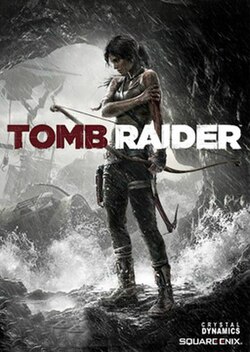

Read this like you're holding a glossy 1990s games mag: the reviewer's cardigan is on, the scanner is warm and the author insists that games used to come on discs and not on an 'overpriced subscription'. Tomb Raider: Definitive Edition is the polished, slightly ostentatious rebirth of Lara Croft that first staggered onto PlayStation 3, Xbox 360 and PC in 2013. Its origins are rebooted here - a survival tale that trades the stiff, polygonal adventurer of the mid-'90s for a battered, inexperienced archaeologist who learns the lesson all gaming heroes eventually learn: cliffs are murder, cliffs with bad dialogue scripts are worse. This Switch port, delivered by Aspyr and released in November 2025, packages the core game, its DLC and the visual enhancements of the Definitive Edition into Nintendo hardware. For anyone who missed the initial salvo that reintroduced Lara to a new generation - or for those who enjoy playing blockbuster single-player adventures on a handheld while pretending their commute is actually an 'expedition' - this release is the easiest way to get aboard the Endurance and its associated calamities.
Tomb Raider plays like a textbook third-person action-adventure with an emphasis on survival and exploration. Crystal Dynamics adopted a hub-and-spoke structure: camps and paths thread through Yamatai, the foggy, myth-steeped island where the plot contrives storms, cults and inconvenient supernatural phenomena. Gameplay funnels you from quiet scavenging and zipline traversal into abrupt, cinematic moments - a rhythm that the 1990s reader would recognise as 'set pieces punctuated by puzzling'. The game is not shy about quick-time events; if you enjoy pressing the right button at the right time to prove you are, in fact, still flesh and not a badly animated corpse, there is plenty to do. Combat borrows liberally from the contemporaneous Uncharted mold but gives Lara a respectable toolkit: a bow with free-aim for patient takedowns, salvaged firearms for when patience has expired, and a satisfyingly stiff melee system for when fists are the only reasonable currency left. Survival mechanics are woven into the loop: salvage materials to upgrade weapons, earn XP by hunting and completing challenges, and allocate skill points for stealth, hunting or combat proficiency. The Survival Instinct feature - a tidy little highlight system that pins useful objects and enemies in sharp relief - is a modern convenience that saves many aimless wandering sequences from becoming tedious. Exploration is the game's heart. Optional tombs provide delightful detours, often built as compact, clever puzzles that reward observation more than trigger-finger reflexes. These challenge tombs are where the designers remembered the 'treasure' in Tomb Raider: obscure routes, satisfying mechanical puzzles and those delicious moments when you finally find the secret chamber. Side-quests and collectables extend the runtime without overstaying their welcome; the difficulty curve encourages players to scavenge and upgrade rather than brute-force every encounter. Multiplayer, an odd appendage to what is at its core a single-player emotional arc, exists here because the market demanded it. The modes - Team Deathmatch, Private Rescue and Cry for Help - pitch scavengers against survivors in small-scale map contests. Historically, these competitive modes were the least loved part of the package; critics at the time found them patchy and tacked-on, and that assessment largely holds. On Switch, your mileage will depend on your tolerance for multiplayer that feels like a vestigial organ: functional, but not the reason to buy the game. There is a tonal friction in Tomb Raider that sparked debate: the narrative clamps down on Lara's vulnerability while the gameplay rewards efficient killing. Some reviewers felt the disconnect between story and player choice undermined the emotional throughline. The game, however, offers multiple approaches - stealth, evasion, or direct confrontation - and is at its best when it forces the player to choose how Lara hardens herself. That choice is the point; it is the origin story, after all.
When Tomb Raider first arrived it impressed critics with lush environments, convincing animation and a cinematic sheen unusual for the series. Definitive Edition tightened that sheen: higher-resolution textures, better lighting and new control features were the headline acts. On PlayStation 4 and Xbox One the Definitive Edition pushed 1080p and a mostly stable frame-rate; the developers unlocked things on PS4 so performance could breathe between 32 and 60fps, while Xbox One stuck to a rock-steady 30fps. The Switch port arrives as a later chapter in the game's life, and it is important to say this plainly: the game's art direction carries it. Motion-capture grounding for Lara - and Camilla Luddington's vocal performance - gives the character an expressive realism that the 1990s polygonal models could only dream of. The team recorded fine facial detail and full-performance capture; the result is an avatar who frowns properly when things go poorly and scowls like a person who has misread an ancient runic inscription and paid the price. Jason Graves' soundtrack is a quiet triumph, layering percussion and orchestral swells to create atmosphere rather than merely underline the obvious. Any modern port to Switch must juggle fidelity and performance. Aspyr's work here aims to preserve the cinematic moments and the tomb interiors while making practical compromises on resolution and particle density when the console is pushed. Expect occasional texture pop-in, less dramatic draw distance in handheld mode, and some smoothing of effects that were designed for more powerful GPUs. Those are engineering realities, not design failures: the underlying visual composition - framing of cliffs, weather, and the eerie shrine rooms - remains intact, and that matters far more to the experience than a few fewer bloom effects.
Tomb Raider: Definitive Edition on Switch is a graceful, occasionally bruised reissue of Lara Croft's origin tale. It is strongest as a single-player expedition: character work, tomb design and environmental storytelling are top-tier for the genre. If you are chasing multiplayer thrills, the original critics were right to be lukewarm; that component feels like a marketing afterthought rather than an essential addition. On Switch the game is also a testament to how good design can survive technical downsizing: art direction, motion capture and soundtrack carry the adventure even when the hardware trims some visual fat. Buy it if you have never played the 2013 reboot and you want a complete, narrative-driven adventure on the go. If you already own the Definitive Edition on a more powerful console, the Switch version is a pleasant, portable way to revisit Yamatai rather than an essential upgrade. In the language of old print reviews: Tomb Raider survives the voyage. It is not flawless, but when it works - and it does more often than not - it offers some of the most satisfying tomb-raiding this generation has seen. Score: 8.5 out of 10.
 PS5 Disc Console vs. PS5 Digital Edition: Which One Should You Get?
 Tomoyo After: It's a Wonderful Life on PS3
 Talisman: Digital Edition on Xbox Series X/S
 Tintin: Destination Adventure on PlayStation
 Disney's Chicken Little: Ace in Action on PS2
 One Piece Grand Adventure on PS2
 Taiko no Tatsujin: Dokodon! Mystery Adventure on Switch










 Another SquareThought Site