

 Dec 2020
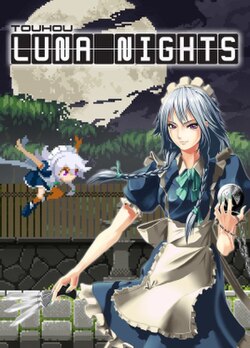

In an age when pixel-perfect pastiche can be mistaken for retro laziness, Touhou Luna Nights arrives like a carefully restored arcade cabinet - polished, purposeful, and unapologetically precise. The game puts Sakuya Izayoi, the Scarlet Devil Mansion's maid with an unhealthy relationship to pocket knives, into a parallel-world mansion where time is both a weapon and a resource. What begins like a straight-faced love letter to the Metroidvania template soon reveals itself as something rarer: a compact, well-tuned action game that understands the value of restraint. This is not a sprawling epic; it is a measured tour de force that borrows the rhythms of shoot-'em-up grazing and blends them with platforming and exploration, producing a cocktail that is at once familiar and stubbornly original. I approach Luna Nights as a reviewer trained on the crusty pages of the 1990s: skeptical of trends, reverent of mechanical elegance, and suspicious of anything promising 'open world' when it really means 'more walking.' The Switch port released in December 2020 carries over the strengths of the original - the time-stop knife ballet, the twitch-tight combat, the gorgeous spritework - and packages it for handheld or docked play with a confidence that feels like a seal of quality. This review will examine how Luna Nights plays on Switch, how it handles the Metroidvania checklist, and why its relatively short length is both its most honest flaw and an argument for its design choices.
At its mechanical core, Luna Nights is gloriously simple: Sakuya can throw knives and, crucially, stop time. These are not decorative abilities. Time stop modifies space, choreography, and risk calculus. Enemies freeze mid-pattern, bullets and hazards become stepping stones, and a once-messy gauntlet becomes a puzzle of timing and resource management. That ingenuity is the game's heartbeat. Resource management is lean but meaningful. Time manipulation and special moves drain an MP meter that regenerates only slowly; HP does not refill on its own. Recovery comes from vending machines tucked into the mansion or from the Touhou tradition of grazing - flirting with an enemy's bullet to siphon back health and magic. The risk/reward loop here is delicious: dance perilously close to death for a chance to keep momentum. It elevates the act of combat beyond mere pattern memorization into a dance with consequences. Progression follows Metroidvania conventions in miniature. Defeating enemies yields gold and experience; gold funds upgrades at a shop run by Nitori (or so the map suggests), while experience improves Sakuya's parameters and purchases new weapons and techniques. The upgrade curve is intentionally measured - some reviewers noted that status improvement feels slow, and that's fair - but this pacing keeps the player engaged with combat rather than becoming a damage-sponge who one-shots everything after a single stat grind. Boss encounters are where Luna Nights sings. The cast reads like a tally of Touhou royalty - Meiling, Marisa, Patchouli, Remilia, and the Flandre twist - and each boss fight feels calibrated to the time-stop kit. Bosses teach you to use the same tools the game gives you, but they also punish sloppy execution. Additions like the Cirno boss (later patched in) and the Reimu final-boss update turned what was a satisfying finale into a more canonical, teeth-clenched endgame for series fans. Difficulty is well-balanced; it is not cheap, but it can feel chaotic when screen space and bullet patterns collide. When chaos ensues, the fault is rarely with the idea and more often with crowded level geometry. Map design is efficient if not always sprawling. The mansion is large enough to encourage exploration and backtracking, but small enough that completionists won't need to mortgage a house to finish it. One common criticism is unnecessary backtracking on a map that can feel too big for a six-hour main run - and that is accurate. The game's refusal to bloat itself into 20+ hours should be read as a design choice rather than a budgetary failure. You get a sharp, intense experience rather than filler corridors. Quality-of-life improvements came after launch: a dash, boss rush mode, extra boss fights, and achievements. These additions broadened the game's replayability and gave speedrunners and completionists some toys to play with. On the Switch specifically, controls are responsive whether using Joy-Cons or a Pro Controller, and the game's pick-up-and-play nature suits handheld sessions admirably. If you want a long expedition through a castle, Luna Nights will not satisfy; if you want a condensed, brilliantly composed trial of skill, it will.
The sprite work in Luna Nights summons the best instincts of 16-bit artistry and then refines them with modern frame rates and effects. Each character animation is a small act of devotion to movement: Sakuya's knife tosses, the way enemies flinch, and bosses' multi-stage telegraphs are all rendered with loving attention. Reviewers across the board praised the animations - and deservedly so; this is some of the finest sprite animation in recent indie memory. Visual clarity is mostly excellent. Important telegraphing frames are readable, enemies and projectiles are generally distinct, and environmental hazards are not obfuscated by needless particle vomit. A handful of rooms, however, suffer from cramped geometry that makes busy scenes feel claustrophobic; that's when the combat can tip from thrilling to maddening. The music is a remixed, chiptune-laced homage to Embodiment of Scarlet Devil, and the soundtrack is at once nostalgic and invigorating - it pushes fights forward without ever overstaying its welcome. On Switch hardware the presentation holds up: sprites remain crisp in docked mode, and the game runs smoothly in handheld mode. There are no major visual compromises compared to the original PC version, and the soundscape translates cleanly through Switch speakers. If you approach Luna Nights looking for pixel nostalgia, you'll find fidelity; if you expect photorealism, you will have the wrong address.
Touhou Luna Nights is the kind of game that would have earned a respectful nod from any 1990s print reviewer and a grudging 'recommend' from their editor. It knows what it is: a tight, design-forward Metroidvania with action roots, not an hours-long quest to colonize your free time. Its strengths are clean mechanics, inspired use of time manipulation, and sprite animation that evokes classic eras without copying them slavishly. Its weaknesses - chiefly, relatively short length and occasional level design bumps - are real but hardly fatal. If you are fond of precise combat, inventive mechanics, and the odd Touhou cameo, the Switch version of Luna Nights is an easy purchase. For completionists it offers extras and a boss rush, but the core appeal is the intensity of the experience. It is a reminder that smaller games can be bracing and complete; like a perfectly executed boss fight, it leaves you breathless and wanting more. Score: 8.5/10 - a compact classic that prizes craft over quantity, and does so with a smile that would have made any old-school reviewer put down their squirt bottle of tempera paint and pay attention.
 Touhou Luna Nights on PS5
 Touhou Gouyoku Ibun ~ Sunken Fossil World on Switch
 Tintin: Destination Adventure on PlayStation
 One Piece Grand Adventure on PS2
 Taiko no Tatsujin: Dokodon! Mystery Adventure on Switch
 Onimusha: Dawn of Dreams on PS2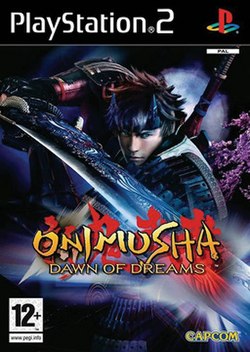
 Record of Lodoss War: Deedlit in Wonder Labyrinth on Switch
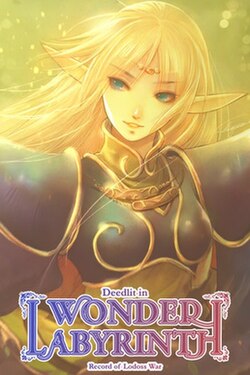 Record of Lodoss War: Deedlit in Wonder Labyrinth on Xbox Series X/S
 Record of Lodoss War: Deedlit in Wonder Labyrinth on PS4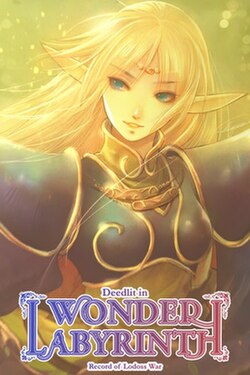










 Another SquareThought Site