

 Aug 2018


Victor Vran arrives on Switch like a polite vampire at a barbecue: stylish, eager to bite, and oddly appropriate for its surroundings. The Overkill Edition port brings Haemimont Games' demon-hunting action-RPG to Nintendo's hybrid console, and does so with a design that rewards mechanical curiosity. If you care more about how the gears of a game mesh than about voice-acting quips, Victor Vran delivers a tidy, modular toybox of systems. The game places you in Zagoravia as the eponymous demon hunter and lets you tinker with weapons, powers, and modifiers rather than lock you into a rigid class. The result is a build-focused ARPG that emphasizes reaction-based combat, jump-enabled spatial design, and a remarkably transparent difficulty-scaling layer.
Victor Vran's core loop is deceptively straightforward: explore district-sized zones, clear monsters, complete five discrete challenges per area, and loot currency/weapons/powers. What matters are the mechanical primitives beneath that loop. Combat is explicitly reaction-driven - dodge and position matter - and unlike many isometric ARPGs, Victor includes a jump mechanic that is both combat-relevant and level-design relevant. From a technical standpoint, that single addition changes how encounters are designed: enemies and hazards are arranged with verticality in mind, and the jump creates a third axis for both player agency and enemy telegraphs. It prevents the combat from collapsing into a simple 'spam-left-click-and-click-a-pot' rhythm and forces the player to manage space more intentionally. From a systems architecture perspective, the game avoids hard class archetypes. Victor has no fixed character classes; instead, progression is largely modular. Weapon classes each expose one basic and two special attacks. These attacks are combinable for bonus effects, which encourages experimentation across loadouts rather than strict min-maxing of a single tree. On top of weapons there are demon powers (spell-like abilities), consumables such as potions and bombs, and the 'Destiny cards' and outfits that grant passive modifiers. That layered approach-active abilities, consumables, passive cards-creates emergent synergies without requiring a sprawling skill-tree UI. For a technical designer, that's an elegant solution: reduce cognitive overhead while preserving depth. Difficulty and encounter tuning get another technical twist through Hex items. These are effectively local mutators that let players tweak an area's difficulty by applying buffs to its enemies. They act as a clear risk/reward lever: higher difficulty via Hex items means stronger enemies but better rewards. This is similar to modern 'affix' systems used in live-service ARPGs, but implemented as persistent, player-controlled modifiers. From a balancing viewpoint, Hex items make it trivial for players to self-select into more challenging content and for designers to create discrete reward bands tied to those choices. Level design is split between broad outdoor districts representing Zagoravia and enclosed dungeons. Each area contains five specific challenges that act as mini-objectives; they serve both pacing and gating functions. The map structure is large but segmented, which allows encounter density to be tuned per segment. That makes the player feel like they are traversing a coherent city while giving designers discrete chunks to tune loot tables, enemy spawns, and special encounters. The inclusion of cooperative multiplayer layers on top of this clean segmentation - zones and dungeons play well in drop-in co-op because challenges are self-contained, avoiding the spaghetti-synced mission states that plague many ports. On input and control architecture, Victor Vran was designed with direct, responsive inputs in mind: weapon attacks, two specials, dodge and jump are mapped to concise inputs. This keeps the skill ceiling approachable but allows technical mastery via movement, timing of dodges, and combo linking. The decision to give each weapon a small, consistent kit also reduces the need for convoluted hotkey remapping or menu juggling mid-combat - an important consideration on a handheld where access to a full keyboard is absent. Additional content like the Motörhead Through the Ages and Fractured Worlds DLC broaden the encounter and loot variety without upsetting the underlying systems. They feel like modular expansions that slot into the existing mechanical framework rather than tacked-on rule changes, which is the right move for maintaining the game's balance integrity.
Visually, Victor Vran trades photorealism for stylized gothic-fantasy aesthetics-think caricatured Gothic architecture, grotesque demons, and a palette that blends moody shadows with occasional neon alchemy. The art direction supports gameplay: enemy silhouettes are readable, telegraphs are clear, and environmental cues for platforming and vertical traversal are unambiguous. Readability like this is a technical victory; it reduces player frustration in combat where reaction and positioning are central. The Overkill Edition's assets appear to be the same art pipeline as the original, adapted for Switch. The interface is clean and the UI conveys the modular systems (weapons, demon powers, Destiny cards, Hex mutators) without overwhelming the screen real estate on a handheld. Because the design emphasizes concise ability kits and passive modifiers, the HUD stays relatively lightweight-critical for maintaining visual clarity during hectic fights. The result is an experience that looks purposeful on the Switch screen and communicates mechanical information efficiently.
Victor Vran on Switch is a mechanically confident action-RPG that rewards systems-minded players. Its lack of fixed classes is a feature, not a bug: the weapon-based kits, demon powers, Destiny cards, and Hex mutators compose a compact but expressive toolkit. Design choices such as the jump mechanic and area-based challenges give the game a distinctive spatial rhythm, while the Hex system provides an elegant difficulty-reward lever. The Overkill Edition port brings this framework to Switch, and the platform-appropriate UI and segmented level design make cooperative and handheld play tidy and approachable. Critics generally agreed-the Switch Overkill Edition scored well on aggregators-and for anyone who enjoys tinkering with builds, risk-reward toggles, and responsive combat, Victor Vran is a technically thoughtful and fun slice of demon-slaying. It won't reinvent the ARPG wheel, but it shimmed on a few clever bearings that make the wheel feel exceptionally tight.
 Vampire Hunter D on PlayStation
 Valfaris on Switch
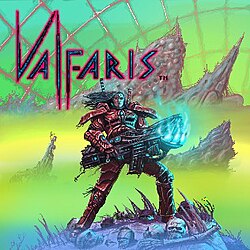 Combat Elite: WWII Paratroopers on PS2
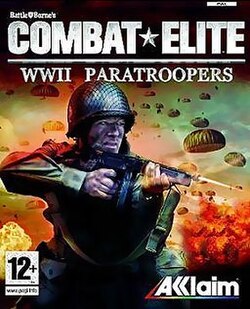 Onimusha: Dawn of Dreams on PS2
 Disney's Chicken Little: Ace in Action on PS2
 Action Man: Operation Extreme on PlayStation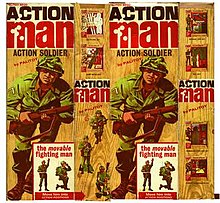










 Another SquareThought Site