

 Apr 2023
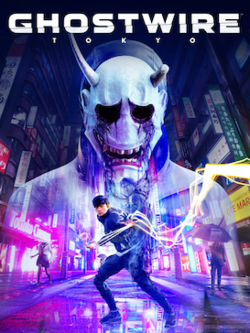

Ghostwire: Tokyo arrives wearing a neon Hannya mask and a trench coat full of contradictions: it wants to be eerie and elegant, punchy and thoughtful, a haunted postcard of Shibuya and a character study wrapped in an action loop. On Xbox Series X/S the game finally shed its timed exclusivity shackles and rolled into Microsoft's ecosystem alongside the Spider's Thread update, which broadened the canvas a touch. But what makes Ghostwire sing - and sometimes falter - is not just the glowing particles or the ghostly set pieces. It's the cast: a possessed teenager, a sardonic spirit detective, a sister who exists both as memory and moral compass, and a villain whose grief is as monstrous as his spells. This review digs into the emotional plumbing of those characters and how their arcs are wired to the gameplay, while still being honest about the game's repetitive beat and occasional mechanical flatness. If you like your action with ritualized hand gestures, melancholic urban loneliness, and moments that actually make you care for NPCs, Tango's supernatural stroll through Tokyo is worth the ride.
On paper Ghostwire's combat is karated-up sorcery: the player gestures Kuji-kiri style to fling elemental spells from a first-person viewpoint, mix in a parry and a takedown system, and voilà - you've got a spooky ballet of fists and fire. That structure is serviceable, and at times genuinely kinetic: the animation and presentation sell an intoxicating impression that you are doing something physically ritualistic, even when the underlying systems lack combo depth. The game's mission-based, linear missions sit inside a tightly-packed Shibuya that feels more curated than sandbox, and that curatorial instinct extends to the storytelling. Ghostwire is, ultimately, a character-first game masquerading as an action-adventure. Akito Izuki is our playable protagonist: he wakes from a car crash kind of alive but with the right hand permanently rented by a wry, dead investigator called KK. That possession is more than a gimmick; it's the engine of Akito's arc. He starts closed-off - not a brooding anime loner, but a kid emotionally numbed by loss. The spirit KK sticks around like a podcast co-host who has seen the city die and has sarcastic takes on human stubbornness. Their relationship forms the best beats of the story because it's a slow burn from convenience to mutual dependence. Gameplay supports this: KK's knowledge unlocks mechanical guidance, the safe house provides narrative as well as practical upgrades, and the act of reclaiming souls literally maps onto reclaiming Akito's agency. Mari Izuki - Akito's sister - is the emotional fulcrum. Comatose in the hospital and then used as ritual bait by the antagonist, she's both victim and revelation. The game uses memory doors and a final interior sequence inside Hannya's monstrous host to take players through Akito and Mari's shared history. Those passages are where the narrative beats transform from JRPG melodrama into something quieter and more resonant: we learn why Akito withdrew, how Mari's depression and eventual decision tie into survivor's guilt and family trauma. The gameplay's quieter moments - exploring memory-rooms, choosing to listen to scraps of voicemail, tracking down spirits trapped in cages - are the parts where character growth actually happens. It's not flashy, but it's the most honest thing in the game. KK's arc deserves separate praise because Tango resisted the obvious route of making him a flat mentor. He's haunted by his own failure - he was part of a team that tried to stop Hannya and failed - and the puppets made from his body are a gruesome literalization of that failure. When the game uncovers KK's past family photos or forces him to stare at his dead wife's traces, his sarcasm drops away. Gameplay mirrors this, not through combat changes but through stakes: when KK is sealed away in an early twist, the player feels those stakes in the subsequent mechanical limp of being less informed and less powerful. It's a neat tonal trick: the game punishes you narratively and mechanically for the antagonist's cunning. Hannya, the masked occultist who summons the fog and steals souls, is a rare antagonist motivated by love so corrosive it becomes monstrous. His desire to resurrect his family by tearing down the living-dead barrier is tragically human. The reveal that his allies are puppets fashioned from the bodies and spirits of those he loved gives his monstrosity context. The final fight - a giant amalgamation of grief and ritual - is melodramatic in a videogame way, but it's earned because the game built Hannya's motive through small revelations (photos, rituals, shrines) rather than shouting it from a rooftop. Side quests in Ghostwire oscillate between clever tonal experiments and padding. Some of them lean into weirdness and give you characters who live long in your memory; others recycle the 'go cleanse a gate' structure until it loses its bite. That repetition is woven into the experience: spirit-cleansing is satisfying the first handful of times, and then the loop becomes obvious. Combat criticism lands here too: while presentation sells the fantasy, the skill tree and enemy variety lean conservative. Boss encounters often lack the tactical depth you crave after mastering the motion of gestures and parries. Still, the game's focused map and mission structure give the character beats space to land without endless fetch quests, and the Spider's Thread update on Xbox adds new areas and cinematic bits that expand the story a little - not a sequel, but thoughtful DLC that respects the characters.
Ghostwire dresses Tokyo in a neon funeral suit and it's a look that mostly works. The Unreal Engine 4 backbone gives the city a dense, lived-in texture: alleys are cramped enough to build tension, overhead signage becomes spectral billboards for the Hannya's propaganda, and fog shaders make the whole place feel like a haunted Instagram filter. Enemy design is a highlight. Visitors and yokai are sculpted with an eerie imagination; many are practically art pieces that make combat feel like an exorcism-themed gallery stroll. Boss design aims big - sometimes too big: the spectacle is there, but the encounters don't always exploit spatial drama the way their visuals promise. Technical polish on Xbox Series X/S is better than the rougher PC launch impressions, and the Spider's Thread update helped by adding polish and new content. Still, the game's core presentation occasionally runs into repetition: many of the map's landmarks are reused as mission stages, and the cleansing-gate mechanic is a little too eager to repeat canned set-pieces. That said, the lighting and particle work are stellar when the game leans into mood. Memory sequences and inner-world doors are where the art direction truly excels - they break the city's neon rhythm with quieter, surreal imagery that underscores the characters' emotional states. Subtle touches like KK's spectral glows, the way Mari's memory rooms are faded and intimate, or the Hannya-mask motif cropping up in digital signage contribute to an aesthetic that's both consistently stylish and narratively purposeful.
Ghostwire: Tokyo on Xbox Series X/S is less a flawless exorcism and more a moving séance: sometimes cluttered, occasionally mechanically thin, but often emotionally charged. Tango Gameworks made a game that trusts its characters - Akito's slow thawing, KK's guilty conscience, Mari's quiet tragedy, and Hannya's grief-fueled monstrosity are the reasons the game matters. Combat and the loop around cleansing gates can feel repetitive and undercooked for players hunting deep systems, yet the city's atmosphere and the story's human center reward those who came for the narrative. If you want a tight, short story-heavy action title with memorable characters and a strong aesthetic, Ghostwire earns a place on your shelf. If you wanted a deep action playground with infinite enemy permutations, it may only haunt you briefly. Either way, the game stumbles into being oddly affecting - and that's rarer than you'd expect from a first-person ghost story. Score: 8.2/10.
 Tokyo Highway Battle on PlayStation
 Tokyo Dark: Remembrance on Switch
 Tintin: Destination Adventure on PlayStation
 One Piece Grand Adventure on PS2
 Taiko no Tatsujin: Dokodon! Mystery Adventure on Switch
 Onimusha: Dawn of Dreams on PS2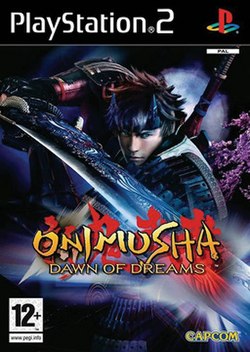
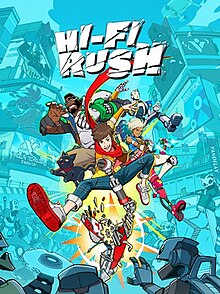
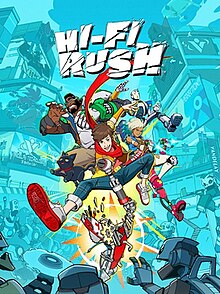 Hi-Fi Rush on Xbox Series X/S
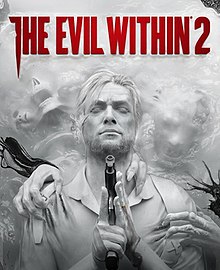
 The Evil Within 2 on PS4
 The Evil Within on PS4










 Another SquareThought Site