

 Sep 2026
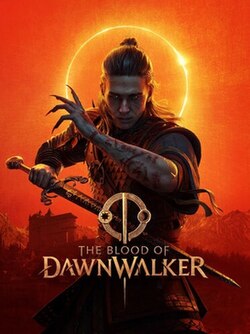

If you enjoy brooding men with mysterious diseases, medieval politics that could have used a better HR department, and the occasional wall-climbing bite of vampirism, The Blood of Dawnwalker is here to politely ask for your attention and then feed on it. Developed by Rebel Wolves and directed by Konrad Tomaszkiewicz (yes, that Konrad - the one who left CD Projekt and decided smaller teams sounded less dramatic), this gothic action RPG sets you in the fictional 14th-century Vale Sangora, a place with too many vampires and not enough sunlight. You play Coen, a Dawnwalker who is part human, part vampire, and wholly occupied with saving his family while slowly poisoning himself with silver. The set-up is bleak in that tasteful, historically ambiguous way that means lots of mud, moral choices, and candles. The game claims to be a "narrative sandbox" - which is developer-speak for "you will make decisions and the world will sulk or applaud depending on how you act." It also promises a clear daytime/nighttime split in how you play, an unusual 30-day clock mechanic that only ticks when you do important things, and nonlinear quests that let you get into trouble in more than one way. If you like agency and the consequences that come with it, congratulations: that's the point.
Day and night are not cosmetic here; they're the mood ring for the entire game. During daylight, Coen is primarily a swordfighter. Combat looks intentionally weighty: the directional blocking system asks you to pick one of four directions to attack or parry, which is a polite way of saying timing and positioning matter. Hit enemies, build activation charges, spend them on Hex magic or dramatic execution moves. The result is a loop that rewards care and aggression in roughly equal measure: be sloppy, and the game reminds you with a sword to the ribs; be thoughtful, and you get to watch an enemy's health bar die in style. When night falls, the rules change like a bouncer with a vampire-themed dress code. Coen's vampiric side unlocks traversal and stealth toys: walking vertically on walls, a Shadowstep teleport for getting out of awkward conversations (or into locked courtyards), and claws that make the combat feel twitchier and more visceral. Biting enemies grants health - which is mechanically elegant and narratively ironic, since feeding is both survival and social faux pas in Vale Sangora. You will be asked to decide, repeatedly, whether to knock someone unconscious or take them out entirely to sate your thirst. The moral tension is not subtle, but it's honest. Skills are handled across three distinct trees, offering a standard spread of active abilities and passive bonuses. Nothing revolutionary there, but the choices feel meaningful because so many quests can be approached multiple ways. Want to solve a problem with conversation as a daytime human? Fine. Want to slip into the shadows and feed on a guard at night instead? Also fine, provided you don't get caught. The time mechanic nudges you into making those calls: you have 30 days and nights to reach your goal, and only plot-moving actions advance the clock. Exploration doesn't age you. This is an interesting balance - it lets the world feel open and safe to wander while still pressuring you when it matters. Quests often come with an hourglass that tells you how much plot-time they'll cost. It's a small UI flourish that keeps the player honest without being patronizing. The structure overall encourages planning rather than mindless fetch-quests: choose your jobs, prioritize who to help or hurt, and watch the kingdom react. The result is a sandbox with teeth: your decisions ripple outward and can change the political and social landscape of Vale Sangora. Length is reported at 50 to 70 hours, which is about right for a game that wants you to live a month in someone else's tragedy. There are multiple difficulty levels, so whether you want your commute narrated by a fussy vampire or merely prefer tactical swordplay, the game can oblige. The development pedigree - a team with veterans from The Witcher and Cyberpunk, and a director who wanted smaller teams after big-studio burnout - shows in the confident design choices. That said, ambition is a double-edged broadsword: a game that mixes non-linear narrative, a time system, and day/night gameplay loops needs tight balancing. If Rebel Wolves pulls that off, this will feel like a rare breed of RPG that respects your schedule and your appetite for moral messes.
Built on Unreal Engine 5, The Blood of Dawnwalker leans into gothic atmosphere like it's trying to win a 'Best Dreadful View' award. Vale Sangora is visually coherent - Carpathian mountains meet moody villages and castles that could host either a coronation or a siege, depending on your mood. Lighting is a central design note: daytime scenes are dusty and human, nighttime is more dramatic and vampiric. The day/night contrast isn't just storytelling; it's a gameplay cue. Visual effects for Hex magic and execution moves favor grim, ritual flair over neon nonsense, which is a stylistic choice that suits the setting. Traversal animations - wall-walking, Shadowstep - are expected to be showy, and they look planned rather than slapped on. Character models keep that Eastern European weathered look that suggests a lifetime of poor dentistry and worse decisions. Environmental detail is where the game hopes to live: small villages feel used, fortresses feel strategically sensible, and the world map (included in some collector editions) looks like something you could consult while plotting a rebellion. On Xbox Series X/S you should expect high-fidelity textures and moody ray-traced lighting where it matters; whether you play on performance or visual mode is a menu choice, not a moral statement. The game's art direction does the heavy lifting: it's less about photorealism and more about consistent tone, which is exactly what a gothic fantasy needs.
The Blood of Dawnwalker is ambitious in the way a serious student volunteers to lead the group project: it knows more than it has friends to prove it to. The day/night gameplay split, the time-aware quest system, and the moral weight of vampirism create a compact, thoughtful sandbox where choices matter and consequences feel earned. Rebel Wolves' team of veteran devs gives the project a mature backbone, and Unreal Engine 5 helps the whole thing look suitably gloomy. If you want to nitpick: non-linear narratives and complex systems can fray at the edges, and a 30-day clock-even a selectively ticking one-will annoy perfectionists who like to see everything before making decisions. There are risks in marrying so many systems. But the premise is good, the tools are in place, and the studio has the chops to pull it off. Buy the standard edition if you're cautious, the Eclipse Edition if you like soundtracks and comics, and the collector's edition if you enjoy owning things that remind you you once loved a video game enough to pay for a statue. Score: 8/10. The Blood of Dawnwalker deserves your attention and maybe a little of your blood, but only if you're okay with difficult ethics and satisfying swordplay. It's not perfect, but it's promising - which, for an RPG in 2026, is practically a virtue.
 Nights of Azure 2: Bride of the New Moon on Switch
 Blood Bowl 3 on PS4
 Combat Elite: WWII Paratroopers on PS2
 Onimusha: Dawn of Dreams on PS2
 Disney's Chicken Little: Ace in Action on PS2
 Tokyo Xanadu eX+ on PS4










 Another SquareThought Site