

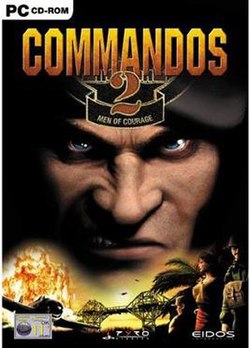

Commandos 2: Men of Courage arrived on consoles carrying the pedigree of a PC classic and the ambition of a game that wants you to think like a chess player with a Swiss Army knife. On PlayStation 2 the game remains the same grimy, brilliant little espionage puzzle box it was on PC - a squad-based, real-time tactics experience where every mission is a brain-teasing dance of timing, disguise and well-timed body-dragging into a pond. If you enjoyed being silently proud of yourself for sneaking past three guards and then immediately losing a whole hour to a single careless body lying under a lamppost, this is the kind of game that understands your weirdness. The console port, however, is where the word "ambition" trips over a controller layout. The core of Commandos 2 is shot through with demanding mechanics: nuanced character roles, inventory tetris, strict enemy sightlines, and an AI that was advanced for its time. For the PS2 player that means two things. One: you will learn a lot of useful skills - planning, timing, patience, pattern reading and creative improvisation. Two: the controls are fiddlier than on PC, which can make that steep learning curve feel like climbing Everest in flip-flops. This review digs into the challenge aspects and the player skills Commandos 2 forces out of you, with the kind of dry humor befitting a game that rewards calm and punishes hurry.
Commandos 2 is less a shooter and more an obedience school for stealth nerds. You command a small, specialised team - the original six commando archetypes improved with new tricks, plus three newcomers (a Thief, a Seductress and a dog named Whiskey). Each character is a tool: the Green Beret can clamber across telephone poles and swing along cables; the Sniper can roost on high posts; the Spy bristles with deception and a syringe that can daze or kill depending on doses; the Diver throws knives and brings a grappling hook for acrobatics; the Sapper has a mine detector and can dismantle explosives; the Driver handles heavy vehicles and can set traps; the Thief squeezes through holes and picks locks; the Seductress distracts with lipstick when disguised and can snipe when not; Whiskey transports items (and provides canine distractions). Missions hand you a subset of these specialists and expect you to use them like an orchestra conductor with a death wish for sloppy playing. The game structure is a lesson in escalation: two training stages, ten story missions and nine bonus missions unlocked by finding bonus-marked books during missions. Objectives are layered - main goals and secondary tasks - and briefings give you a roadmap, but much of the map's secrets come from exploration. Interior spaces, underwater sections, and complex outdoor compounds appear throughout, and each environment hides opportunities and hazards (wild animals show up sometimes, and Gestapo are nastier than your average sentry). The maps are puzzles in three dimensions. A rooftop route might be perfect until a patrol rotates or an off-duty officer decides to sunbathe in exactly the wrong place. The game expects you to notice patrol rhythms and to keep mental (or physical) notes on guard routes. Line-of-sight is the game's heartbeat. Enemies display visual cones and change color: blue for suspicious, orange for interested, red for confirmed. This visual language teaches you to respect sightlines and to plan manoeuvres that exploit blind angles. If spotted, the consequences are harsh: commandos are shot on sight instead of being taken prisoner. Alarms persist for a while and cause guards to search the area that triggered them. That permanence turns every small mistake into a tense decision tree: do you risk a rescue attempt under alarm conditions, or start over to avoid cascading complications? Inventory management is another layer of challenge. Items occupy grid spaces and larger equipment takes more room - so you learn to pack like a tactical backpacker. You can salvage enemy rifles and submachine guns from fallen foes to broaden your options, and equipment includes binoculars, flamethrowers, molotovs, rope ladders, smoke and gas grenades, canned food and first aid kits. The Driver can mount and use vehicles; tanks and armoured cars require specific crew (Driver + Sapper for tanks), so cooperation and role assignment are mandatory for certain objectives. The synthesis of limited inventory, role-specific abilities and environmental puzzles forces prioritisation. You can't take everything; you must choose the right tool for the right moment. The three new characters drastically affect how you approach problems. The Thief opens doors and squeezes through tight routes that let you bypass heavy traffic. The Seductress introduces a social stealth element: distraction by charm (limited; she can't fool officers) and the ability to take high-value kills at range when not disguised. Whiskey, the dog, is small but tactically useful for shuttling items and barking to create diversions. Using them well calls for multi-threaded thinking: while you use one commando to lure a pair of guards, another should already be positioned to intercept or progress an objective. Tactical patience is the biggest skill the game demands. Mission timing often requires chaining actions: knock a guard out, hide the body (you can hide bodies in water or among reeds), use the Spy to draw other guards away, then climb poles with the Sniper or Green Beret. In bigger scenarios you'll be juggling multiple squads: lure guards into a corner, set a non-lethal trap with the Driver, send the Thief to crack a supply crate, then rotate a sniper into a new perch. The game's camera system (you can use multiple cameras to survey an area) supports this, but only if you take the time to use it. Hasty play results in alarms, wasted resources and a quick return to the last save. Console-specific friction is where the PS2 experience hurts. The original PC controls were point-and-click precise; the PS2 controller's analogs and button mapping feel less intuitive for selecting multiple units, toggling inventories, and issuing micro-commands. Reviewers at the time largely agreed that the console controls made an already steep learning curve feel steeper. That doesn't mean PS2 players can't master it - it's just slower and more frustrating. You end up fighting the interface as much as the Nazis, and that's a test of patience in its own right. Another design choice that amplifies the challenge: many objectives rely on discovery. Clues uncovered mid-mission can add secondary tasks. That means sometimes you finish one objective only to unlock another, which can forcibly extend a mission and test your resource planning. In practice this makes the game feel more organic and less on-rails, but also increases the chance that you'll be caught off-guard. Finally, the AI. Guards investigate sounds, respond to suspicious objects, and perform believable routine behaviour. They were advanced for their era and that sophistication is precisely why Commandos 2 demands better planning and pattern recognition from the player. This is not a run-and-gun engine; it is a slow-burning, high-satisfaction stealth simulator where victories are earned through observation, memorisation and clever use of each commando's kit.
On PS2, Commandos 2's graphics are competent rather than showy. The environments are detailed enough to read at a glance - houses with exploitable interiors, docks with crates to hide behind, and lush jungle segments that hide paths for the Thief. Character models and animations do the job: the game clearly communicates who is who and what actions they're performing, which matters more than pretty lighting when your main concern is whether that guard will look up from his cigarette in two seconds. The original PC version was praised for a level of environmental detail and clear UI communication; on PS2 some of that sharpness softens due to the platform's limitations and the HUD adjustments for a TV display. The visual clarity of enemy sightlines and the inventory grid remains serviceable, but the camera controls feel less flexible than with a mouse. For a game that relies on information and visibility, the port's modest graphical compromises sometimes make discerning long sightlines or small objects a little more awkward, which feeds into the overall challenge.
Commandos 2 on PS2 is a love letter to methodical stealth and cunning improvisation, but the handwriting is a bit smudged by the console translation. If you crave tense puzzles where timing, roles and resource management win the day, this game will reward you with some of the most satisfying triumphs in tactical gaming: single-run rescues, perfectly timed assassinations, and the intoxicating calm of a mission completed without alarms. You'll learn to plan like a general, think like a locksmith, and babysit a dog with military-grade patience. If you lack time, tolerance for fiddly controls, or the inclination to save-scum until the perfect plan clicks, the PS2 version will frustrate you. The console's control scheme makes a game that was already intentionally demanding feel punishingly fiddly. For players committed to the challenge, this is still a compelling experience: it teaches and sharpens real skills - observation, sequencing, prioritisation, spatial thinking, and patience - in the way only a harsh but fair strategy title can. Score summary: the PS2 port is competent but compromised. It keeps the design brilliance of Commandos 2 intact, but control friction and the steeper console learning curve lower the fun-to-frustration ratio. Treat it like a puzzle you intend to master rather than a shooter to blitz through, and you'll get a lot of mileage from it. Treat it like a casual pick-up-and-play PS2 game, and the game will happily punish you for the mistake. Either way, it's an education in how to win wars by being very, very careful.
 Commandos 2 - HD Remaster on PS4
 Commandos: Strike Force on PS2
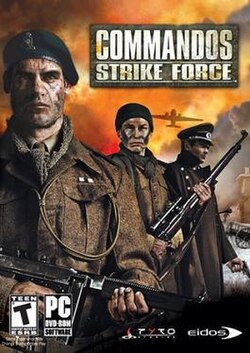 Nobunaga's Ambition: Iron Triangle on PS2
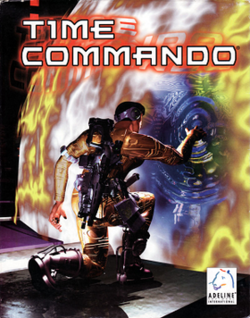
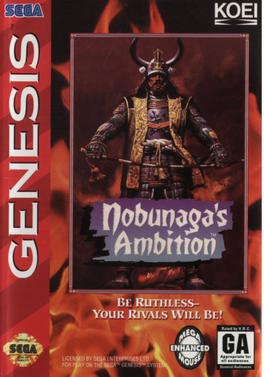 Time Commando on PlayStation
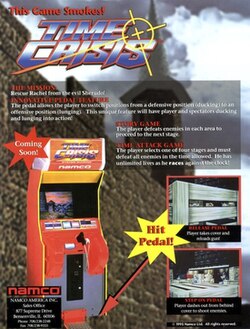
 Time Crisis on PlayStation
 Prince of Persia: The Sands of Time Remake on PS4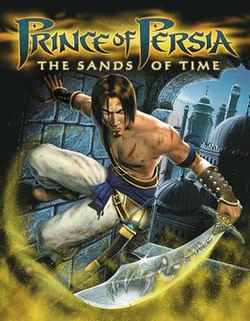
 Planet 51 on PS3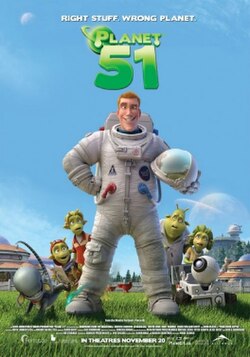












 Another SquareThought Site