

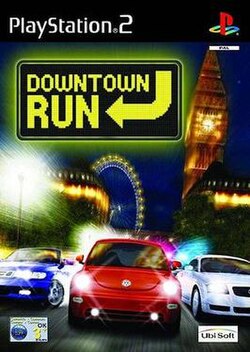

Downtown Run (marketed in North America as City Racer) arrives wearing the twin badges "racing" and "vehicular combat" and is the sort of mid-2000s arcade racer that tries to be both a pick-up-and-play time sink and a mildly technical driving toy. Ubi Soft Bucharest shipped it across consoles and PC in 2003, and while the game's DNA is clearly arcade-first - think aggressive power-ups, short ovals of city streets, and rubber-banding opponents - it still invites a technical inspection. On PS2 this means looking at how a six-year-old console handles dynamic traffic, collision math, asset streaming and split-screen insanity, because that's where the game's mechanical and rendering compromises show up most plainly. This review digs into those nuts-and-bolts areas: systems design, physics fidelity, resource constraints, and how all that affects whether Downtown Run is merely a nostalgia snack or an actually enjoyable racer.
Under the hood Downtown Run is a compact design: a roster of licensed-looking cars, multiple modes, and a power-up economy that leans on classic arcade tropes - boost pickups, projectiles, and traps to slow rivals. The available documentation describes "many different cars, game modes and tracks," and the gameplay loop centers on collecting power-ups to increase your winning chances or sabotage opponents. That design choice sidesteps deep tuning of vehicle attributes and instead lets power-ups be the primary balancing lever. From a technical perspective the handling model is decisively arcade. Steering input maps to a responsive, high-sensitivity lateral acceleration model rather than a tire-simulation system; braking is functionally instant rather than modulated by complex weight transfer. What this gains in immediacy it loses in predictability for skilled players who look for consistent drift or simulation-grade under/oversteer behavior. The collision system favors robustness over nuance: contact with opponents and static geometry produces clear, gamey reactions meant to communicate "you got bumped," but it lacks secondary physics like body roll, nuanced torque transfer, or complex deformation. On PS2 this is a pragmatic decision - a full physics stack with accurate collisions and deformable meshes would have strained CPU cycles and memory budgets. AI and difficulty scaling lean on rubber-banding, a common bandage for ensuring close finishes on limited track designs. When you pull ahead the AI subtly receives speed buffs and spawn-favoring behaviors; when you're behind, opponents play more aggressively. That keeps races tight but compromises a sense of fairness if you prefer precise, skill-based overtakes. Power-up placement and respawn timers are tuned to reinforce that dynamic, which can be fun in a party setting but feels artificial in single-player time trials. Modes-wise the game supports single-player and local multiplayer, with split-screen on consoles assumed given the era and the game's multiplayer focus. Local multiplayer pushes the engine harder - two-player split-screen doubles draw and calculations and is where frame pacing and LOD systems get their most strenuous test. On single-player the engine can devote more cycles to AI pathing and draw distance, but the core trade-offs remain the same: simpler physics and tighter asset streaming to keep load times and memory footprint manageable. Progression systems are straightforward: win races, unlock cars and tracks, and iterate on routes. The power-up economy provides emergent gameplay - well-timed boosts, well-placed mines, and targeted projectiles can turn a race in seconds - and that keeps the incentive loop short. For players seeking tight mechanical mastery, Downtown Run's emphasis on pick-ups over driving nuance makes it feel more like a party racer than a precision instrument.
Graphically Downtown Run is textbook early-2000s multi-platform engineering. The PS2 build shows the compromises typical of squeezing a game out of the console's Emotion Engine and Graphics Synthesizer: relatively low-poly car models with simplified reflection passes, medium-resolution diffuse textures, and a heavy reliance on baked lighting to fake depth. The cover art hints at licensed vehicles (Saab 9-3, Volkswagen New Beetle, Audi TT), and the in-game models capture enough silhouette fidelity to be recognizable while keeping vertex counts down. Draw distance and streaming are the most obvious places where console constraints become visible. Downtown Run uses fogging and LOD swaps aggressively to hide the city's streaming limits; buildings and traffic will pop into view when you crest hills or turn corners. This is a conscious resource-management strategy - reduce far Z-buffer costs and texture memory usage by collapsing geometry at distance - and while it avoids hard pauses or long load times, it can break immersion via noticeable pop-in. Particle and decal systems are modest but serviceable: tire smoke, small dust kicks, and explosion sprites convey impact without taxing the fill rate excessively. The PS2's lack of programmable shaders compared to later consoles means dynamic reflections and per-pixel effects are limited; instead the renderer uses environment maps and precomputed specular highlights. Frame-rate behavior is generally stable in single-player, though split-screen and heavy traffic moments expose the PS2's limitations with occasional dips and uneven frame pacing. Those dips are not catastrophic, but they are noticeable to players sensitive to input latency. UI and HUD are clear and functional: lap counters, minimap, and power-up icons are readable in the heat of the race. Sound design is utilitarian - engine samples and collision thuds provide necessary feedback but do not reach for realism - which aligns with the arcade-first design philosophy. Overall, the visual and audio package does more with less, and while it doesn't push the PS2 to its artistic limits, it demonstrates competent engineering to balance aesthetics with performance.
Downtown Run on PS2 is a competent arcade racer that reveals its technical pedigree in the places you'd expect: compact physics, aggressive LOD and streaming, and AI that leans on rubber-banding to keep races exciting. If you approach it as a party game - short races, power-ups, and local multiplayer - it succeeds. If you're hunting for deep vehicle simulation, precision handling, or cutting-edge visuals, you'll be left wanting. Metacritic aggregates reflect this split: the Windows port earned "generally favorable" reviews (around 79/100), while the GameCube release fared more mixed (about 58/100), which fits the pattern of platform-specific performance differences and audience expectations. My score, 6.5/10, captures that middle ground: enjoyable in short bursts, technically solid for its constraints, but ultimately a mid-tier racer whose best moments are shared with friends on a single couch. For PS2 collectors or anyone nostalgic for early-2000s arcade racers, Downtown Run is worth a rental or a cheap purchase. For players chasing technical sophistication or long-term single-player depth, this one is best admired as an example of pragmatic engineering rather than a technical triumph.
 Mr. Run and Jump on Switch
 Neon Abyss on Switch
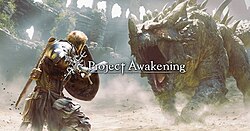
 Project Awakening on PS4
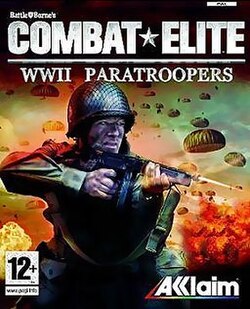
 Combat Elite: WWII Paratroopers on PS2
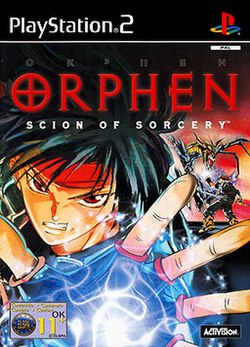
 Orphen: Scion of Sorcery on PS2
 Monster Hunter Stories 2: Wings of Ruin on Switch












 Another SquareThought Site