

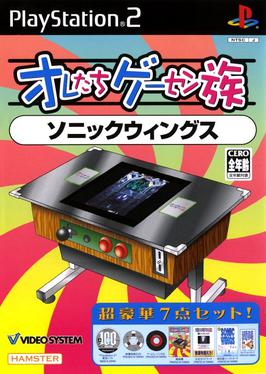

In an era when shelves groaned under the weight of polygonal fantasies and CD-ROMs promised near-cinematic epics, Hamster Corporation quietly shoved a little slab of 1981 into the PlayStation 2 tray and called it Oretachi Gēsen Zoku: Scramble. Marketed as the first volume in a lovingly packaged series of emulated arcade reissues, the release is less about pushing technological boundaries than about preserving a very specific arcade memory: the clang of quarters, the neon-on-metal smell of a game center, and the cold, immediate challenge of a quarter-budgeted life. This offering brings Konami's Scramble - an early side‑scrolling arcade shooter - to the home stage, unchanged at its core and wrapped in a collector's kit that feels like it was designed by someone who still keeps flyers from arcade openings.
Scramble itself is modest in ambition and relentless in its intent. The original 1981 arcade board distilled the shooter down to essentials: pilot your craft through a horizontally scrolling landscape, avoid terrain and enemy fire, manage a fragile resource economy, and press on. On the PS2 disc you get an emulated cabinet experience - the same pixel patterns, the same sound cues - presented without modern concessions such as save states or difficulty rebalancing. For purists, that is a blessing: you play Scramble the way the coin-op designed you to play it - short bursts, a steep curve, and the unmistakable satisfaction of learning routes and enemy timing. Mechanically, Scramble rewards memorization and cold calculation. Levels are linear but punctuated by distinct hazards: pockets of grounded turrets, clusters of aerial enemies, and sections that punish careless altitude control. The challenge clip of the 1980s - cheap, unequivocal, and efficient - remains intact. If you've never experienced an early Konami shooter, Scramble's appeal is in its clarity. There are no bright tutorial windows, no progression systems; you pilot, you shoot, and your skill is the only currency. That said, modern expectations will chafe. The game is short by contemporary standards and the difficulty can feel unforgiving without the tactile feedback of an arcade joystick. Hamster's emulation is presented as part of a package rather than as a solitary digital download. For ¥2,000 you receive the PS2 CD-ROM with the emulated title, a miniDVD of trailers and a 'Masterplay' video showing expert runs, a mini CD with original and arranged music, a small instruction booklet with arcade PCB notes, a mini strategy guide, a replica display card and a reproduction collection card. The extras are the psychological salt that makes the gameplay palatable: seeing a Masterplay is the closest thing to standing beside a skilled veteran in a smoky arcade and learning the safe lanes through fire. The strategy guide and extra documentation add historical context, turning what might be a brief, repetitive experience into a small museum exhibit you can keep on your shelf. Where Scramble falters for the modern player is in its longevity. One can admire the historical importance - this is part of the DNA of side‑scroll shooters - but admiration does not substitute for playtime. Once you learn the enemy patterns and buy the mental map of each stage, there's a diminishing return unless you're motivated by high-score chasing or by the collector's value of the physical extras. Multiplayer is non-existent; the series here is focused on fidelity rather than reinvention. For arcade historians and longtime enthusiasts the experience is rewarding. For younger players raised on save-anywhere, checkpointed campaigns, and unlockable progression, Scramble may present itself as an elegant relic rather than a sustained entertainment.
Viewed through the lens of 2005 hardware, Scramble's visuals are modest without being offensively primitive. The PS2 does not samurai-sword the original into something it never was; instead, the emulation preserves the low-resolution sprites, simple palettes, and the deliberate layering of foreground and background that gave early shooters their charm. Konami's original art direction is evident in the clarity of hostile sprites and the readable hazards strewn across levels. Where detailed graphical critique would normally concern frame rates or texture fidelity, here the conversation is about authenticity: do the pixels match the cabinet? Hamster's transfers largely do. The sprite edges are crisp, and scrolling is faithful; there's little of the shimmering or scaling oddities that sometimes plague poor emulations. Audio follows the same philosophy. The PS2 edition bundles original soundtrack material and arranged versions by the group Super Sweep on a mini CD - a small, indulgent flourish that will make any collector grin. The in-game sound effects remain simple beeps and blips, but they are iconic. They carry the exact character you want from a machine of Scramble's vintage: economical, functional, and oddly catchy. The included 'Masterplay' video on the miniDVD even gives you the chance to compare how the game looks and sounds in an expert's hands, which doubles as a tutorial and a reminder that high-score culture once lived or died on a single life. Graphical purists seeking widescreen filtering or optional upscaling should not expect a buffet of display options. Hamster's philosophy is preservation over gloss; what you see is what you'd have seen in a coin-op cabinet. For a 1990s-style reviewer writing in the present, that is both a virtue and a limitation. It's a virtue because the package treats the game with respect. It's a limitation because casual modern players might interpret 'respect' as 'neglect' and dismiss Scramble's visuals as dated rather than deliberately conserved.
Oretachi Gēsen Zoku: Scramble is an exercise in preservation and curation rather than reinvention. It's a respectful transfer of a Konami arcade classic onto PlayStation 2, wrapped in a charmingly tactile set of extras that read like a small shrine to the golden age of game centers. If you are the type who keeps postcards from arcade openings, who still remembers strategies for squeezing an extra quarter's worth of play, or who wants to experience an early chapter of shooter evolution on your modern display, this package will warm your chest and cost you far less than a trip to a well-stocked cabinet. If, on the other hand, your idea of a good time is twenty hours of unlockables, narrative justification for every explosion, or multiplayer bragging rights, Scramble will feel like a museum curio: fascinating, sometimes thrilling, but ultimately short. For what it is - an authentic, well-packaged reissue - Hamster earns plaudits. The PS2 release captures the original's feel, the physical extras sweeten the deal, and the price is reasonable for collectors in Japan. As the first volume of a 19-game series, Scramble sets the tone: fidelity over fanfare. That approach will delight historians and frustrate the impatient, but either way it preserves a piece of arcade history that might otherwise have vanished into the static. Score: 7/10 - recommended for collectors, arcade nostalgics, and students of the medium; optional for everyone else.
 Press Your Luck on PS3
 Oretachi Game Center Zoku: Trio the Punch on PS2
 Game Dev Story on PS4
 Oretachi Game Center Zoku: Rabio Lepus on PS2
 Oretachi Game Center Zoku: Time Pilot on PS2
 Oretachi Game Center Zoku: Quarth on PS2
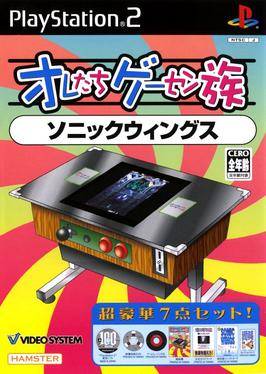 Oretachi Game Center Zoku: Nekketsu Koukou Dodge Ball Bu on PS2












 Another SquareThought Site