

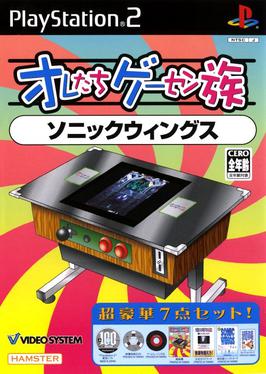

Oretachi Geesen Zoku was Hamster's love letter to the Japanese arcade basement, a PS2 series of single-disc emulations that bundled an original arcade ROM, a miniDVD of trailers and a 'masterplay', a mini CD of music, and lovingly printed ephemera for ¥2,000 a pop. Volume 4 in that series is Konami's Time Pilot, the 1982 multidirectional shooter that lets you pilot a little fighter plane through history while racking up high scores and looping your way past flocking enemy patterns. This release is not a remaster or reimagining; it is an emulation package aimed at preservationists and collectors, combining the raw arcade experience with a handful of archival extras. For a technical-minded player who cares about accuracy, packaging and how faithfully an old PCB behaves under modern silicon, Time Pilot on PS2 is an interesting specimen: straightforward, occasionally stubborn, and surprisingly charming in how it preserves the quirks of early 80s hardware.
At its core, Time Pilot is a compact exercise in arcade design economy. Each level is a self-contained arena with wraparound movement and a single objective: survive long enough to fight the epochal boss and progress to the next time period. The original arcade used a relatively simple control scheme - eight-way movement plus a fire button - and the PS2 emulation preserves that minimalism without adding modern conveniences such as checkpointing, save states or cheat toggles. From a technical viewpoint, that makes the game a pure test of emulation fidelity: input mapping, frame pacing and hitbox consistency are the only layers between you and the original ROM logic. Movement and responsiveness feel like the designers intended when the emulation chain is clean. Multidirectional shooters depend on pixel-perfect collision windows and consistent scrolling; any mismatch in the emulator's timing or the console's output can manifest as weird deaths or missed strafes. Hamster's package aims to be faithful rather than 'improved', and for players who measure emulators by whether enemy bullets originate from the exact pixel the PCB did, this PS2 disc is satisfying. The handling of wraparound screen logic is preserved, so strafing enemies off one edge and catching them on the other behaves identically to how old arcade cabinets performed. That said, because this is an emulation-on-console environment rather than a native arcade board, there are still variables to watch: display scaling, television lag and controller polling can introduce subtle latency compared with an original CRT cabinet. Enemy placement and spawn logic in Time Pilot are refreshingly deterministic. Understanding these patterns is the game: a taxonomy of flight lanes and priority targets emerges after a few deaths, and the arcade score curve is designed to reward memorization and risk. From a systems perspective, that deterministic behavior is a good match for the disc format; it means the emulation need only reproduce the original timing to an acceptable degree for the learning loop to remain intact. The Masterplay video included on the miniDVD is an excellent technical resource in this regard. Watching a human expert negotiate the same spawn patterns provides a real-time comparator for whether an emulation run 'feels' correct. If you care about extras, the PS2 release bundles a mini CD with original soundtrack material and arranged versions by Super Sweep, plus a small instruction booklet and a strategy guide. Those items are not gameplay features, but they matter for historic preservation: the booklet's PCB info and the replica display card let a student of arcade hardware cross-reference the emulation against known specifications. In other words, Hamster supplies the raw ROM plus enough reference material to evaluate its authenticity. For a technical player, that is rare and welcome. Weaknesses are also structural. The obvious omission is modern quality-of-life: no rewind, limited difficulty options and no native rollback-based netcode (not that you would expect multiplayer here). The PS2 era hardware and the disc format put a ceiling on what Hamster could provide in terms of dynamic enhancement. If you approach Time Pilot expecting modern polish, you'll be disappointed; if you approach it as an archival artifact, you'll appreciate the fidelity and the curated extras.
Graphically, Time Pilot is a time capsule, and the PS2 disc preserves that capsule without attempting cosmetic surgery. The arcade's sprite sheets and tile maps are presented at their native resolutions and then scaled to fit a PS2-era output. The emulation's scaling algorithm is conservative: it avoids heavy filtering that could blur pixel art, favoring a sharper, more 'CRT-like' look when displayed on a modern television. That choice keeps hitboxes visually coherent - a critical technical point, because filtering can make precise dodging ambiguous when sprite edges and collision boxes no longer line up. There are three display concerns to think about as a technical player. First, the original arcade expected a 4:3 CRT with scanlines and phosphor persistence; a modern 16:9 LCD will inevitably change perceived motion. Hamster does not emulate scanline persistence, so the sense of speed is altered slightly, and small sprites can look jittery when upscaled. Second, the translation from arcade color palettes to the PS2's output is handled conservatively; colors look authentic but may not match an original cabinet's CRT bloom. Third, frame pacing on PS2 hardware is generally stable for these 2D titles, but an external display's input lag can undermine the tight timing the arcade expects. For purists, playing on a low-latency display or with a CRT is the only way to match the original feel fully. Textures, when present, are faithful to the original bitmaps. There are no reworked backgrounds or enhanced particle systems - what you see is what the arcade had. From a technical standpoint, that's a deliberate preservation decision and the correct one for archival re-releases. The miniDVD's Masterplay footage also serves as a visual baseline to compare sprite fidelity and motion; it's an excellent tool for verifying that the graphics pipeline hasn't introduced frame dipping or palette shifts.
Oretachi Geesen Zoku: Time Pilot on PS2 is a focused archival release masquerading as a budget retro purchase. If you are a player who enjoys modern convenience features, this will feel bare-bones: no widescreen remastering, no rebalanced difficulty, no save states and no modern control refinements. Conversely, if your tastes lean toward technical fidelity and preservation, the package is smartly constructed: it ships the original ROM, tangible reference material about the arcade PCB, a soundtrack CD and a masterplay video which collectively let you audit the emulation against the source. Scoring it requires balancing two audiences. For casual retro players attracted to nostalgia and instant accessibility, I'd give this a solid 7 out of 10 because the experience is genuine but spartan. For preservation-minded players and emulation hobbyists, the release is more valuable: the combination of accuracy and reference material nudges it up to roughly 8 out of 10. Combining those perspectives yields a final, pragmatic score of 7.5. The verdict is simple: buy Time Pilot on PS2 if you value authenticity and want a curated slice of arcade history in a physical package that respects the hardware. If you want shiny modern enhancements and comfort features, look elsewhere - but know that what Hamster preserved here is technically honest and, for the right audience, worth the price of admission.
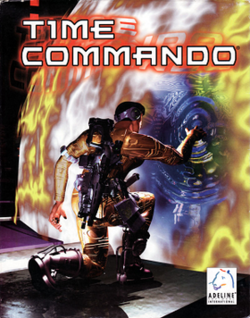 Coloball 2002 on PS2
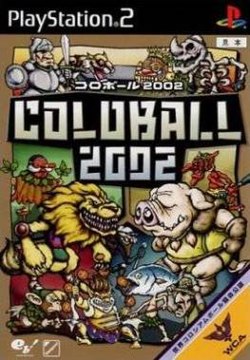 Press Your Luck on PS3
 Oretachi Game Center Zoku: Trio the Punch on PS2
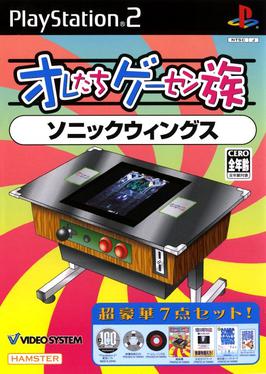 Time Crisis on PlayStation
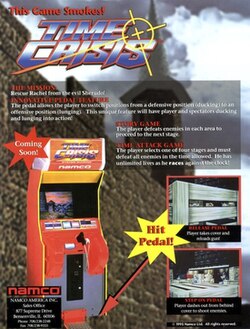 Oretachi Game Center Zoku: Rabio Lepus on PS2
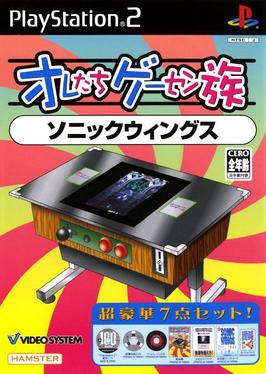 Oretachi Game Center Zoku: Nekketsu Koukou Dodge Ball Bu on PS2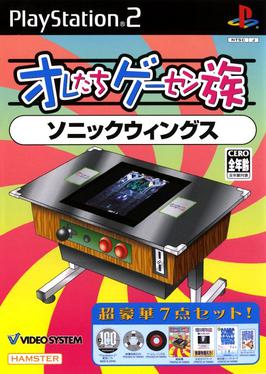












 Another SquareThought Site