

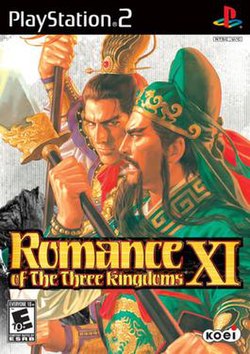

If you think video games are supposed to hold your hand, blink pretty lights, and reward you with loot boxes for clicking shiny things, then Romance of the Three Kingdoms XI on PS2 will feel like being assigned medieval homework by a merciless professor who drinks strategy tea for breakfast. This is deep, deliberate, and unapologetically slow-turn grand strategy rooted in Chinese history and the long-running Koei tradition of 'if you don't read the manual, expect to perish.' Released for PS2 in late 2006/early 2007, RTK XI is not interested in instant gratification. It wants commitment. It demands pattern recognition, patience, and an ability to tolerate menus that lead you into deliciously complex rabbit holes. For players who enjoy chess but with diplomacy, logistics, and emperors who throw tantrums, the game is a sprawling, rewarding test of skill.
Romance of the Three Kingdoms XI tests you in ways that are more intellectual marathon than twitch reflex. The core loop is deceptively simple: manage cities, recruit and develop generals, research technologies, expand territory, and crush - or be crushed by - neighboring warlords. The catch is how many interconnected systems hang off each of those verbs. Success is less about a single glorious battle and more about incremental mastery over administration, supply lines, relationships, and a mountain of menus. The learning curve is honest-to-goodness intimidating. Critics called it 'intimidating' and warned of tedium, and they weren't wrong; the early hours are a slow burn. You navigate city facilities, balance resources, and assign officers to roles where their personal stats and affinities matter. The Power-up Kit, which is baked into console releases in some regions, layers on even more complexity: new city facilities, the ability to combine neighboring facilities, and over 50 new general abilities to research across attack, defense, administration, and strategy. That means you not only need to know what to build, but when to merge buildings, which research tree to prioritize, and how individual general abilities will alter your long-term strategy. RTK XI rewards long-term planners and penalizes the impatient. Macro skills are paramount. You need solid resource management: understand what each city produces, how to use national research topics like 'Internal administration' to boost your empire, and when to funnel supplies to front-line camps. The game's logistics elements are subtle but critical - one of the Power-up Kit's welcome features allows you to assign troops to transport supplies to specific camps, turning sieges from abstract timers into carefully orchestrated operations. If you ignore supply, your best-rolled army will melt like ice cream in a sunlit tent. Micro-level tactical skills remain important because battles, duels, and special strategies still decide whether your meticulously planned expansion actually succeeds. Battles are turn-based affairs where unit types, terrain, and the interplay of special strategies (spearman trap effects, cavalry captures, fortress bonuses) matter. The drum tower and fortress mechanics are examples of how small strategic decisions change outcomes: higher drum tower range increases duel success odds, while fortresses improve status recovery and defensive resilience. Duels themselves add tension to sieges and field battles; the Power-up Kit even exposes a 'duel success rate' so you can start making cold, calculated bets on the lives of your generals. Personality management is another skill. Generals have traits and must be assigned roles that suit their stats and temperaments. An administrator shoved onto the frontlines is wasted potential; a warrior put in charge of grain distribution is a disaster waiting to happen. The editor and scenario options let you tinker extensively: add new characters, tweak cities, or load preset battle scenarios. For players who enjoy optimization, this is candy. For everyone else, it's homework you can customize until it becomes enjoyable. AI behavior and pacing are part of the challenge package. Improved AI in the Power-up Kit makes opponents more ruthless in exploiting your mistakes, and increased status recovery rates and strategy effects change the tempo of engagements. However, the game deliberately moves at a measured pace; GameSpot and IGN pointed out that menu shuffling and slow tempo will probably chase off fans of faster, flashier strategy games. If you can stomach slow diplomatic rounds, painstaking research choices, and the occasional administrative minigame, the payoff is enormous. Campaign scenarios stretch for dozens of hours - commentators noted the game packs hundreds of hours of playtime - so this is not a weekend fling but a relationship that will test your commitment. Skills you develop while playing RTK XI: patience; long-term strategic planning; resource allocation; personnel management; tactical battlefield awareness; familiarity with historical units and matchups; and menu fluency. It's almost a study in humility: you'll misallocate resources, lose beloved generals in rash duels, and learn the hard way what a poorly timed merge of city facilities costs you. But each failure sharpens your judgment for the next campaign. The Power-up Kit's 'Super' difficulty setting is where the game truly becomes masochism-for-brains, demanding near-perfect execution and ruthless prioritization. Where RTK XI shines is in how rewards compound. Incremental advantages accumulate into insurmountable leads when you master the small systems. A city with optimized facilities, backed by an administrator who has researched complementary abilities, becomes a production machine. An army supplied precisely and led by a general whose traits mesh with their equipment and role becomes unstoppable. That emergent depth is the game's biggest draw, and the part that turns long, slow campaigns into satisfying epics.
Graphically, RTK XI on PS2 doesn't pretend to be a next-gen spectacle; it wears its era like a disciplined uniform. A number of 3D models were borrowed from Dynasty Warriors 4, which gives the characters a familiar, slightly dated look - serviceable but not jaw-dropping. On the battlefield, animations are functional and readable: you can tell when an engagement is going your way without the need for flashy particle effects. City screens and menus are dense with information rather than visual flair, which fits the design philosophy: usability over cinematic flair. If you're buying this for eye candy, you're buying the wrong product. If you want clarity, readable unit models, and an interface that prioritizes data over vanity, the visuals do the job. The PS2 version's presentation sometimes leans on the stodgy side, but the voice options and occasional orchestral score (notably included in some premium packages) add character. Ultimately, graphics are the least of RTK XI's concerns - it's the brainy systems under the hood that matter.
Romance of the Three Kingdoms XI on PS2 is a niche masterpiece for people who treat strategy the way some treat long novels: a slow, immersive read where character and system development is the point. The game punishes impatience and rewards meticulous planning, personnel savvy, and a willingness to sit through slow-turn diplomacy. It will bore players who want immediate thrills, but for those who relish complexity and long-form campaigns, RTK XI offers rich strategic challenges that compound into addictive mastery. If your idea of a good time involves maps, spreadsheets disguised as menus, and occasionally sobbing over a lost general in a duel, this is your battlefield. If you want to jump into combat and press X to win, try a different era. For the rest of us, RTK XI is a demanding, often delightful test of strategic skill - and an excellent crash course in how patience becomes power.
 Warriors Orochi 3 on PS3
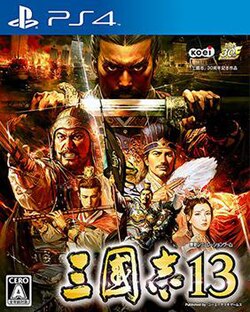
 Romance of the Three Kingdoms XIII on Switch
 Ultimate Marvel vs. Capcom 3 on PS3
 Coloball 2002 on PS2
 Nobunaga no Yabou Online: Haten no Shou on PS2
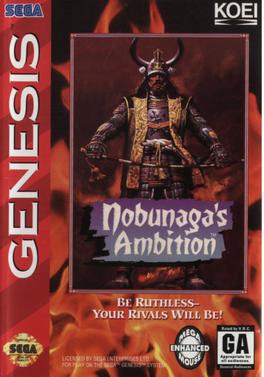 Nobunaga's Ambition: Iron Triangle on PS2
 Warhammer Age of Sigmar: Storm Ground on PS4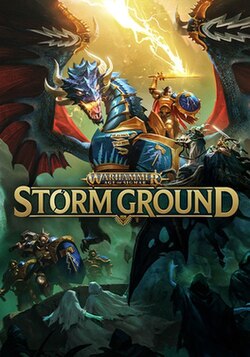
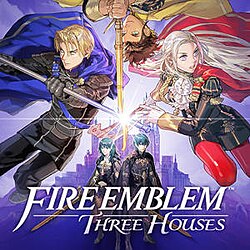 Nobunaga's Ambition: Taishi on Switch
 Hyrule Warriors: Age of Imprisonment on Switch 2
 Aoki Ookami to Shiroki Mejika: Genchou Hishi on PlayStation
 Daikoukai Jidai II on PlayStation
 Wild Hearts S on Switch 2












 Another SquareThought Site