

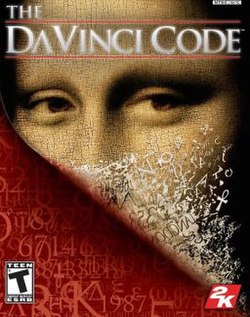

If you've ever wanted to feel like a brooding Harvard symbologist while also wondering why video game combat still sometimes works like a reluctant piano recital, The Da Vinci Code on PS2 is your oddly specific ticket. Based on Dan Brown's novel rather than the movie, this adaptation leans hard on puzzles, exploration, and a devotion to the book's conspiratorial tone. The packaging promises intellectual sleuthing and atmospheric locales; the execution mostly delivers on the puzzle side and treats action like a belated afterthought. For players interested in challenge and mental gymnastics, there's a surprising amount to chew on - provided you can tolerate stiff animations, a temperamental melee system, and the occasional bug that makes you want to tap the game on the back like it's an antique radio.
The Da Vinci Code is built around three gameplay pillars: searching, puzzles, and melee - though 'pillar' might be generous for the last one. If you love detective-y stuff, the searching and puzzle-solving sections are where the meat is. You stroll through faithful recreations of the Louvre, Saint-Sulpice, Rosslyn Chapel and Château Villette in third person, and when the environment hints that something's interesting you zoom into a first-person inspection mode to scrutinize paintings, documents and hidden devices. That switch rewards players who have patience, a steady hand with the analog stick, and an obsessive appetite for details. Spotting a clue can involve scanning the scene, recognizing symbolic patterns, identifying an anagram hidden among displaced numbers, or simply refusing to accept that the game developer didn't hide anything in that glowing bit of texture. In short: observational skills, pattern recognition, and a willingness to read (and re-read) are your best friends. The puzzle suite ranges from substitution and numeric ciphers to full-blown cryptex riddles that demand a mix of lateral thinking and textbook cryptography. The game even had Charles Cecil of Broken Sword consulting on puzzles, and it shows - many puzzles feel genuine rather than slapped-on fetch tasks. Expect to rearrange numbers into Fibonacci-informed anagrams, interpret inscriptions under blacklight, and link art-historical clues to real-world symbols. Deductive reasoning and basic knowledge (or curiosity) about art and religious iconography get a reward here: the puzzles are satisfying when you crack them, and the difficulty curve leans toward the thoughtful rather than the twitchy. If you enjoy turning over every pixel like an archaeologist with a magnifying glass and an unhealthy devotion to footnotes, you'll be right at home. Combat, unfortunately, tackles a different skillset and stumbles. The so-called "Struggle System" turns brawls into quick-time-esque sequences: approach an enemy, attempt a punch, and if you hit you then enter an 'attack' phase; if you miss you enter 'defense' - both require memorizing and inputting button sequences under a ticking timer. This rewards reflexes and short-term memory, but the system is rigid and unforgiving when the animations or hit detection disagree with your intentions. The ability to push enemies away and flee is thankfully present, along with a stealth option where you sneak up and knock foes out, which rewards patience and timing. The combat therefore splits the skill requirements: either be nimble and quick on the buttons, or be sneaky and deliberate. Most players will prefer the latter, because the melee often feels like a clumsy piano duet where the keys have moved. The inventory and clue-management systems demand organizational skills. Langdon and Sophie share an inventory, and clues can accumulate as you chase the grail across decades of art history. The challenge here is not just in solving puzzles but in tracking which clue points where. The game gives you enough breadcrumbs to make logical progress, but you'll need to keep mental notes and sometimes flip back through discovered documents to connect the dots. Spatial awareness matters: many puzzles are contextual to the environment, so mapping the level in your head and understanding where discrete elements live in relation to each other is rewarded. There are a few performance- and design-related headaches that become part of the challenge in an unintended way. Glitches occasionally freeze gameplay or make objects non-interactive while you're carrying something important. Enemy AI is serviceable but not brilliant; sometimes fights are trivial, other times enemies behave like they suddenly remembered they have a day job and forgot to chase you. Those issues shift part of the required skillset to patience and improvisation: you learn to save often, to plan routes that avoid combat, and to improvise if a crucial door refuses to cooperate. If you value cerebral challenge and can stomach uneven mechanical polish, this game scratches that code-breaking itch better than most movie tie-ins.
Visuals are a mixed bag and are frequently the loudest complaint lodged against the game. Environments - the Louvre gallery, vault-like chapels, and the moody corridors of European châteaux - are recognizably rendered and often capture the atmosphere of the book. Textures can be decent for sixth-generation hardware, and the set dressing shows that some care was taken to recreate art and architecture. Characters and their animations, however, move with the kind of stiffness that makes a statue look like it's on a coffee break. Critics used phrases such as 'jerky', 'stiff', and 'three-toed sloth' to describe character motion; those aren't exaggerations. During cutscenes the voice acting tends to be flat and performances uninspired, which drains dramatic tension from key narrative beats. Lighting and music do save some dignity: Winifred Phillips' score is moody and ethereal, and it helps deliver the creeping mystery vibe the game aims for. On the technical side, the game carries a few bugs and oddities that affect the challenge. There are documented cases where essential clues are invisible, doors won't open when they should, or the game freezes during certain weapon uses. These issues punish players not for lack of skill but for the software waving a sticky finger in your face. When everything's working, the first-person inspection sequences are crisp and clever; when things go sideways, your biggest skill becomes stubbornness and a willingness to reload saves. The presentation sometimes feels unfinished, and that roughness bleeds into how difficult certain sequences feel - not because the gameplay is inherently fairer, but because you'll sometimes be fighting the engine as much as the puzzle.
If you're buying The Da Vinci Code on PS2 for the plot, you'll get the plot: the game follows the novel enthusiastically and includes many of the book's best intellectual hooks and set pieces. If you're buying for puzzles, you've likely made a good choice: this is a competent - often clever - adventure that rewards observation, logic, and patience. The game asks you to be an investigator, to decode anagrams, make symbolic leaps, and treat the environment as a giant, dusty clue-cabinet. Those elements work well and make the experience genuinely satisfying at moments. If you're buying for action, bring napkins and forgiveness. The Struggle System turns fights into frustrating reflex tests and is let down by iffy animations and AI. Presentation issues - flat voice work, jerky character models, and a handful of game-breaking bugs - can make the experience feel like an unfinished museum exhibit. On balance, the title is better than most movie tie-ins at respecting its source material and at delivering puzzles, but it stumbles enough in gameplay polish to keep it out of the 'must-play' category. For an eighteen-year-old who loves brainy challenges, this game is worth a rent, a bargain-bin purchase, or a weekend of borrowed boredom if you want to flex your cryptography, pattern-recognition, and deduction muscles. If you want to swing swords and feel heroic doing it, you'll be disappointed. Score: 6/10 - a respectable puzzle tour with bruised knuckles from awkward combat and occasional technical snags, but still capable of making you grin the moment a gnarly anagram finally surrenders.
 Cool Boarders: Code Alien on PS2
 Avalon Code on DS
 Tintin: Destination Adventure on PlayStation
 One Piece Grand Adventure on PS2
 Professor Layton and the Last Specter on DS
 Puzzle by Nikoli 4: on PS4
 Men in Black: The Game on PlayStation












 Another SquareThought Site