

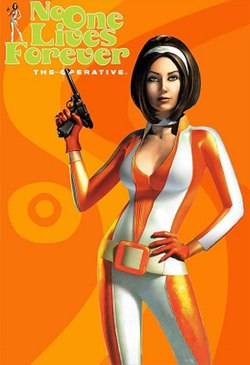

If you handed me a martini glass, a pair of sunglasses with a built-in camera and the entire wardrobe of 1960s spy cinema, I'd still struggle to be as stylishly chaotic as Cate Archer. The PS2 port of The Operative: No One Lives Forever teases you with that world - the swinging soundtrack, the gadgets disguised as perfume and lipstick, the slightly madcap villains - but it also reminds you that adapting a finely tuned PC espionage romp for consoles isn't just about button mapping. This version adds three glossy flashback missions and swaps the dynamic Guy Whitmore score for new music, but it also strips away some of the PC original's snappy systems (and the comforting safety net of quicksaving). For a character-driven analysis fanboying over narrative arcs and motivations, the PS2 release remains an excellent way to revisit Cate's rise from trainee to hard-eyed operative, if you can forgive a few lost edges.
What made No One Lives Forever's single-player sing on PC was not only the level design or gadgets but the narrative propulsion: each mission is basically a scene in a TV serial where characters appear, perform, and change the stage. Ported to PS2, those same scenes are intact and the story still unspools with the charm of 1960s pulp - but the way the plot treats people is the real attraction. Cate Archer is the axis around which the plot and emotional beats rotate. She begins as a novice, the "first female Unity agent," whose very existence destabilizes the organization's old boys' club. That disposition colors every personal interaction; Cate is constantly fighting to be taken seriously, and Monolith uses genre pastiche (and more than a little wry humor) to make that struggle entertaining rather than preachy. Cate's arc is a textbook of small, sharp crescendos. Early in the game she runs, improvises and survives - the Morocco mission is less about espionage finesse and more a harsh, theatrical initiation. When Bruno Lawrie, her mentor, is shot, the game obliges Cate to bear a new kind of burden: grief, suspicion, and a sense of incompletion. Bruno occupies the classic mentor role, but the game's twisty heart is that Bruno isn't immune to the genre's appetite for betrayal and ambiguity. His apparent death, and later revelations about who he might have been working for, turn Cate's emotional engine from naive competence into wary expertise: she learns to trust her instincts instead of simply relying on orders from Jones and Smith. Tom Goodman is the game's performance art of a second-act betrayal. He starts as the affable American partner: the kind of counterbalance that lets Cate show her skills in relief. His murder on the cargo freighter and the later revelation that he - or at least the man wearing his face - is connected to the conspiracy, forces Cate to process grief as a professional liability. The Tom reveal isn't merely an 'oh snap' villain moment; it's a study in how betrayal corrodes institutional loyalty. In the game's final stretch Cate is both investigator and avenger: the arc completes not with a manic beatdown but with an accumulation of small decisive choices that prove she's become the operative she was always suspected of being. Dmitrij Volkov and Magnus Armstrong serve as bookends of the antagonist type. Volkov is the archetypal cold, recurring assassin. He functions in the narrative more like a Greek chorus of violence than a fully realized person - and that's fine, because his presence repeatedly forces Cate into duel scenes that reveal how resourceful and, crucially, human she remains. Armstrong is more interesting. Presented first as a villain, he later defects - or at least switches sides - in a way that complicates the binary of 'good Unity' vs 'evil H.A.R.M.' The game occasionally flirts with moral grey areas, and Armstrong's partial redemption (and then usefulness to Cate) underscores the era's spy fiction where loyalties are frequently negotiable. It's also a neat character mirror: Cate is forced to decide whether practical allies matter more than ideological purity. Baron Dumas and Baroness Felicity Dumas are the game's cartoon-glam villains with an unexpectedly tragic beat. The Baroness, who injects herself with the biological explosive, becomes a pathetic supervillain: glamorous, theatrical, and slowly dying. Her self-detonation gambit and the eventual sequence where Cate has to shepherd civilians to safety before an explosion is both operatic and humane. The choice to make the Baroness both mastermind and victim is a clever little gambit: it lets the game mock its own genre while delivering a sincere emotional payoff - Cate doesn't gloat; she saves people. Dr. Otto Schenker, whose biochemistry work propels the plot, is more MacGuffin than man. His arc, though short, ties into the theme of science detached from ethics - a 60s Cold War paranoia piece that the designers pull off without moralizing. Inge Wagner is a memorable female henchman who both highlights and tests Cate's combat skills and moral compass; like most of the supporting cast, Wagner gets one big scene and then a tidy exit, which suits the serial-flavor story beats. The final reels, where Smith and Jones's roles are peeled back and the truth of Unity's internal corruption is exposed, are where the writing becomes genuinely clever. The Smith/Tom/Betrayal triangle is not just a twist for its own sake; it reframes earlier missions. Confronting Smith in the end and learning the depth of the subterfuge completes Cate's arc from provisional rookie to someone who understands the rot in the institution she's sworn to. The post-credits reveal that Volkov survived and reports to a shadowy Director is cheeky - a wink that promises more, and in the context of the era's serialized adventures, it's simply good form. On PS2 the gameplay experience that carries these arcs is mostly present, but some mechanical friction blunts emotional beats. The lack of quicksave, in particular, makes stealth sections more punishing and thus can break the narrative rhythm: a failed stealth check that forces repeat play can drain the impact of a clever cutscene or hissed overheard conversation. The PS2-exclusive flashback levels (Cate as a younger cat burglar) actually enrich her backstory: they show how her skills were forged, which retroactively makes choices in the main timeline more resonant. Unfortunately, the PS2 port's removal of the adaptive score means music less frequently cued emotional transitions in the moment - the soundtrack does its best, but it rarely replaces the immersion value of Whitmore's dynamic cues.
Visually, the PS2 port is a mixed bag. Monolith and the porting team added fresh textures and new character models for the exclusive flashbacks, and on a living-room display the colors pop in a way that evokes '60s sets and paperback covers. The PS2's hardware also smooths some edges but softens fine detail - faces in cutscenes lose some subtlety and the facial acting that sells betrayals and tentative friendships is flatter than on PC. The game's production design still sings: the Swiss château, the sunken freighter, and the H.A.R.M. space station have distinct personalities and provide memorable stages for the character drama to play out. AI animation quirks that once amused (or irritated) on PC are still present; guards sometimes behave like extras in a low-budget TV drama rather than trained professionals. That goes well with the game's campy tone, but it can break immersion in scenes that are supposed to land emotionally. The removal of Guy Whitmore's adaptive score for the PS2 release is significant: the original's music reacted to your sneaking and elevated tense moments. The new score keeps the '60s vibe but feels more like a soundtrack nailed to the scene rather than a heartbeat woven into it.
If you come to the PS2 port for Cate Archer - and you should - you'll get most of what makes No One Lives Forever special: a witty, stylish spy romp that also takes its characters seriously enough to let them change. Cate's arc from trainee to decisive operative is neatly drawn; the betrayals of Bruno, Tom and Smith give her the emotional ballast the story needs. The PS2 version dresses her up with flashbacks and console-friendly presentation choices, but in losing the adaptive music and the safety of quicksave it also removes some of the original's rhythmic intelligence. For a console audience in 2002 it was a solid way to experience Cate's world; for purists, it feels like theatric understudy stepping into an already full-bodied lead. If you're curious about character work in games - especially a female lead who grows without being written as a sermon - this is still worth a play. Just remember to be patient during the stealth bits and enjoy the dialogue: the writing is where the heart, and Cate's transformation, really live.
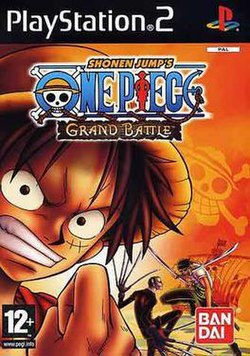
 One Piece Grand Battle! on PS2
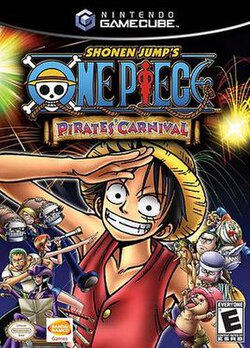
 One Piece: Pirates' Carnival on PS2
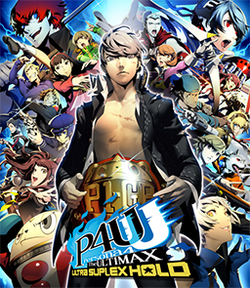
 Persona 4 Arena Ultimax on PS3
 PixelJunk Shooter 2 on PS3
 Primal Carnage: Extinction on PS4
 Commandos: Strike Force on PS2
 Tower of Guns on PS3
 Middle-earth: Shadow of Mordor on Xbox One
 Middle-earth: Shadow of War on PS4
 Middle-earth: Shadow of War on Xbox One












 Another SquareThought Site