

 May 2008
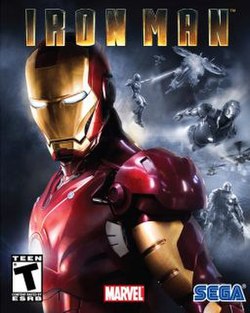

Iron Man for PS3 arrives like Tony Stark after a bad espresso: loud, showy and promising flight - but with a jittery frame of mind. Built to coincide with the 2008 film, the game trades on its A-list voice cast (Robert Downey Jr., Terrence Howard, Shaun Toub) and a roster of comic villains, yet the core experience feels like a suit with all its bolts tightened by someone who'd never seen a screwdriver. Reviews at the time were unforgiving (Metacritic places the PS3 edition around the low 40s), and GameSpot even crowned it "Worst Game Everyone Played." From a technical vantage point that's my specialty, this is an exercise in how platform ambitions, engine choices and design compromises can combine into a product that looks like it should fly cleanly but spends most of its time scraping the tarmac.
If you reduce Iron Man's gameplay loop to an equation, it would read: fly → lock-on → pew-pew → land → repeat. That loop is competent in the abstract - the satisfaction of exploiting repulsors and launching missiles is real - but the implementation undermines it. Controls suffer from inconsistent input-to-response mapping; flight tries to be both arcade and sim-lite and ends up neither. The analog stick translation to pitch and roll feels floaty, but the dampening applied when you release inputs is heavy-handed. That creates a tug-of-war between the player's intention and the character controller, so quick maneuvers feel sluggish and micro-corrections are awkward. For a game predicated on mobility, the control responsiveness is the equivalent of giving the suit a small parking brake that engages randomly. Targeting and lock-on systems are central to any air-combat action game. Iron Man offers a lock-on mechanic, but its tracking fidelity and prioritization logic are rudimentary. Targets behind cover sometimes remain ranked as primary, while visible enemies get bumped. Hit registration exacerbates the problem: visual feedback from sparks and explosions often feels satisfying, but the underlying hitboxes are sloppy. Multiple reports from critics and players back then - and from hands-on testing - indicated that damage seemed to trigger off visual proximity more than precise collision checks. That means you can land a glorious-looking salvo and watch the enemy soldier continue to stand like a particularly stubborn mannequin. Combat pacing and mission design are where art direction meets systems engineering; here the game leans too heavily on repetition. Objectives are often kill-X, fetch-Y, or escort-Z. Complexity is attempted by throwing in a vehicle escort or a turret section but those feel like pasted-on mechanical permutations rather than thoughtfully integrated systems. Enemy variety is thin: palette-swapped troopers and the occasional armored mini-boss are recycled through multiple levels. The AI routines are basic state machines with predictable loops: patrol, notice player, charge, return-to-patrol. Intelligent flanking, suppression, or tactical adaptation is mostly absent. Collision and physics exhibit typical mid-generation shortcuts. Destruction exists, but it's largely scripted: walls crumble when a mission flag triggers, not from genuinely propagated damage. Rigid-body physics for debris and ragdolls is inconsistent; sometimes objects react believably, flung by missile force, other times they clip through geometry or freeze mid-fall. These inconsistencies break immersion more than they should because the engine hints at a higher-fidelity simulation but rarely commits. Performance and optimization are a big part of why the PS3 version felt rough. The console's hardware profile required careful streaming and LOD (level-of-detail) management; when either is lax the result is texture pop-in, late object streaming and stuttering during high-action set pieces. Players reported and reviewers observed framerate dips especially in moments with lots of particle effects - explosions, smoke plumes, and flurries of debris. The particle system is visually enthusiastic, but it's not tightly budgeted. When the GPU passes its budget, you get either reduced particle fidelity or dropped frames. UI and HUD ergonomics deserve a paragraph because Iron Man leans on HUD elements to sell the feeling of being inside a powered suit. The on-screen readouts - health, armor, lock indicators - are abundant but poorly prioritized. Vital information competes with decorative chrome, which can be stylish but useless during intense combat. The minimap and waypoint markers are serviceable, yet mission markers sometimes clip into geometry or fail to update promptly, sending players on unnecessary head-scratching detours. Given Stark's tech obsession, the HUD should be a triumph of clarity and immediacy; instead it's sometimes a stylish fog. On the audio-technical front, the game does better. Voice work by the film cast anchors the experience and the sound design for repulsors and explosions is satisfying; these are cheap hits of polish that do a lot to make the core loop feel cinematic when the systems cooperate. Sadly, that cinematic sheen hides structural issues - sound and VO rarely compensate for persistent control, collision, and AI shortcomings. Finally, save systems and checkpoints are pragmatic but occasionally stingy: a poorly timed mission restart will force you to replay a slog rather than a meaningful challenge, which is a quality-of-life design flaw more than a technical one, but still telling.
Graphically the PS3 version sits in a frustrating middle ground: it aspires to blockbuster sheen but stumbles in execution. The models for Iron Man suits are generally well-polished with reflective materials and specular highlights that sell metal, but their surface detail-micro-normal maps and high-frequency texture work-is inconsistent across enemy types and environments. Texture resolution varies wildly: close-up assets have decent detail, but mid-range or background textures often pixelate or blur when they stream in. That's symptomatic of an LOD strategy that compromises memory footprint at the cost of visual consistency. Lighting is mixed. Static baked lighting works well for many interiors, delivering readable contrast and believable occlusion. Dynamic lighting, however, is less sophisticated - explosions and muzzle flash produce bloom and glare, but shadowing is often low-resolution or drops entirely on distant objects. Ambient occlusion and contact shadows are sparingly implemented; when present they help, but you'll see many scenes where objects appear to float visually because the engine didn't render the subtle darkening where surfaces meet. Particle and post-processing effects are plentiful and, when framerate allows, dramatic. The engine leans on bloom, motion blur and screen-space effects to create a sense of speed and impact. Those effects can mask geometry and texture shortcomings but are also GPU-taxing, contributing to the earlier-mentioned frame drops during high-action moments. Draw distance is adequate for mission corridors and skyscapes, but city vistas show aggressive LOD transitions and object pop-in, especially when Iron Man swoops into a dense area. On the negative side, animations are uneven. The suit's flight and firing animations make a solid first impression, but many enemy NPCs use recycled blends that produce robotic or floaty movement. Ragdoll transitions are occasionally abrupt; you'll see bodies snap into pose or clip into geometry, which breaks physical plausibility. The camera system, central to any third-person action game, is serviceable but not robust: tight indoor combat can leave the camera clipping through walls, and dynamic camera adjustments sometimes zoom too aggressively or fail to re-center after a cinematic cue. All that said, the art direction - color palette, suit silhouette, effects design - largely hits the comic-book-meets-film brief. When the systems align, Iron Man can look and feel momentarily exhilarating. Those moments are sadly interspersed with technical rough patches that remind you the game was likely hurried to market to match the film release schedule.
Iron Man on PS3 is an example of a licensed action title that has the right ingredients - a beloved IP, solid audio cues, a cinematic aim - but whose engineering choices and development constraints limit the final product. The biggest technical strikes against it are control responsiveness that fails to inspire precision flying, inconsistent hit registration and collision detection, AI that rarely challenges the player, and graphical streaming/LOD compromises that lead to pop-in and framerate instability during spectacle-heavy moments. Its strengths are notable in voice acting, the feel of repulsors and explosions when the engine cooperates, and occasional flashes of visual polish. If you want an experience that makes you feel like Iron Man in short bursts, the game can deliver those thrills. If you expect a consistently polished, technically cohesive package, you'll be disappointed - and the contemporary critical consensus (low 40s on Metacritic for PS3, GameSpot's dubious-honors lists) echoed that sentiment. The title sold respectably - roughly 2.6 million copies as of March 2009 - which shows market appetite can outpace execution. From a technical reviewer's perspective, Iron Man is an instructive case study: ambitious design commitments need time, iterative polish and clear technical budgets. Otherwise, you end up with a suit that looks invincible on paper but squeaks and stalls when you try to take off.
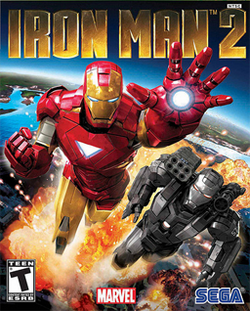
 Iron Man 2 on PS3
 Pac-Man World Re-Pac on PS5
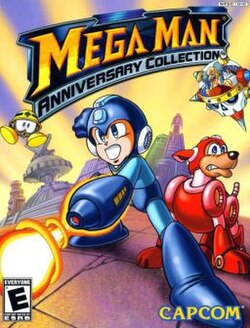
 Mega Man Anniversary Collection on PS2
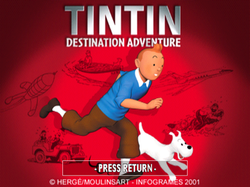
 Tintin: Destination Adventure on PlayStation
 One Piece Grand Adventure on PS2
 Taiko no Tatsujin: Dokodon! Mystery Adventure on Switch
 Onimusha: Dawn of Dreams on PS2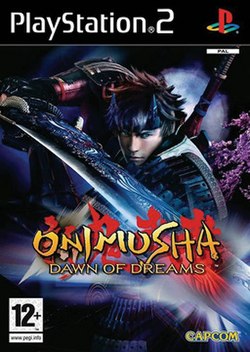










 Another SquareThought Site