

 Jun 2007
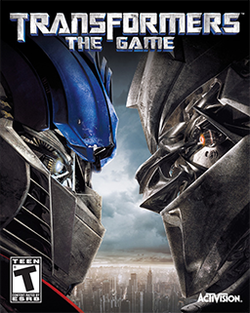

Playing Transformers: The Game on PS3 is a bit like being handed the keys to a muscle car and also a giant robot, then being asked to assemble Ikea furniture while sprinting through downtown. The game proudly wears the movie tie-in badge, lets you toggle between Autobots and Decepticons, and gives you the kind of cinematic battles that made fans salivate in 2007. It also gives you a camera that occasionally believes gravity is optional, and mission design that thinks variety is optional too. If you care mostly about the skill-based, challenge-related parts of a game - aiming, timing, spatial reasoning, learning patterns, and vehicle control - this is a title that will make you learn a lot about patience, improvisation, and how to win when the camera is trying to sabotage you.
Transformers: The Game is architected around two simple mechanical pillars: robot combat and vehicle traversal. On the combat side, each Transformer comes equipped with a light weapon, a heavy weapon, a melee attack, and a context-sensitive interaction that lets you grab and throw environmental objects - cars, lampposts, trees - and sometimes use them as blunt instruments (yes, lamp posts as swords is a feature and a mood). That quartet of attack types gives combat a surface-level variety, but the real challenge lies in mastering when to swap between them and how to mitigate the game's less-helpful systems. Skill set #1: timing and combo rhythm. Light attacks are your spam; heavy attacks are your stagger and finisher. The game rewards rhythm more than flash. Mixing in throws and using the environment forces you to think about spacing: get close for melee to conserve ammo, back off for ranged when surrounded. Many missions drop you into hordes or waves, where successful clearing depends on hitting the right attack for the right situation and chaining resets into heavy finishers. The input complexity is modest compared to a true fighting game, but the underlying timing is unforgiving in pockets. Skill set #2: situational awareness with a broken compass. The camera is the elephant in every room in this game. It was designed to bob and lurch to 'simulate' the walking of massive robots - a noble idea that, in practice, often turns your view into a seasick abstract painting. Challenges that demand platforming precision or precise aim become tests of camera management as much as mechanical skill. If you're the kind of player who keeps your left thumb glued to the camera stick because you like things to be sane, you will need to re-learn that muscle: constant micro-adjustments, pre-aiming around camera blind spots, and patience when the camera decides to pirouette mid-rocket volley. Skill set #3: aiming, lock-on and throw mechanics. Targeting is a mix of manual aim and a loose lock-on system. Many mid-boss encounters punish sloppy aim, especially when enemies can sprint or launch projectiles that ask you to dodge and return fire. Throwing objects works great when the camera is cooperative, turning the environment into a one-shot crowd-control tool. When it isn't, throws miss, the object gets lodged in geometry, and you learn to stop trusting physics to be your friend. Skill set #4: transformation and vehicle handling. The transform mechanic is the game's signature twist: you are not just a shooter, you are a convertible war machine. Some missions are simple swaps from shooty robot to time-limited race, forcing you to rewire your brain from melee spacing to racing lines. Driving, unfortunately, is a sore spot: vehicle handling is deliberately arcade, but also a little clunky. Steering inputs feel delayed; acceleration and braking have odd weight, so time-limited races become more about memorizing routes and braking windows than about reacting fluidly. That means the 'racing' missions test a player's memorization, timing and forgiveness for imprecise controls. If you're naturally good at learning a course and angling into corners early, you'll fare better than someone who expects Mario Kart levels of responsive steering. Skill set #5: navigation, objective prioritization and collection strategy. The open-world zones hide Energon cubes, faction emblems, and side objectives that net you unlockables like color schemes and bonus characters. The challenge here is less twitch and more planning: building routes that hit several collectibles without triggering large-scale enemy respawns, deciding when to ignore optional objectives to progress the story, and figuring out whether the reward is worth revisiting a level. The game incentivizes exploration, but not all collectibles are fun to chase; some are placed where camera and driving quirks combine to make retrieval fiddly. Difficulty balance: the game's difficulty curve is quirky. Many reviewers noted an odd unbalanced difficulty where older gamers found the overall experience too easy but younger players and newcomers sometimes hit brick walls on specific missions that spike in difficulty. Those spikes tend to be content that demands a very specific skill: flawless vehicle handling on a tight course, or patience-heavy boss fights where the camera will ruin a clear shot and force repeated retries. Expect to repeatedly adapt: practice patterns, refine your transform timing, and accept that some levels are endurance affairs more than elegant tests of skill. Replayability and unlocking: incentives to replay include alt skins, G1 unlockable appearances, and bonus content that drops when you gather enough side goodies. There's an unlockable package on Xbox Live for other consoles' players, but on PS3 you still get the satisfaction of polishing a character and shaving seconds off a race - the core challenge here is mastery for the sake of completionism rather than emergent combat depth. Multiplayer: the main PS3 console version is missing local or online multiplayer, which means the only competitive challenge is yourself and leaderboards, if you care. The lack of multiplayer transforms the game into a single-player slog of precision and repetition, which magnifies camera and control issues when they appear. In short: From a challenge perspective the game is a mixed bag. It will stretch your timing, force you to take control of a flighty camera, and demand you learn two very different control schemes (robot and vehicle). If you enjoy learning quirks, exploiting environmental throws, and memorizing race lines, you will find the game rewarding. If you expect consistent, finely-tuned control and a fair camera, you will end up shouting at a very shiny robot.
When Transformers: The Game shows off, it really shows off. The PS3 version delivers some of the best movie-tie-in visuals of its era: character models are big, shiny, and satisfyingly mechanical, with satisfying metallic articulation when you transform. Levels are appropriately destructible and sprawling, giving you a concrete sense of weight when you swipe or tackle something. Sound design and voice acting are likewise high points - Peter Cullen's Optimus Prime and Frank Welker's Megatron bring the kind of gravitas and nostalgia that make blasting enemies feel legitimately movie-sized. Explosions have punch, guns have oomph, and the score leans into the bombastic. Where visuals and sound win, gameplay systems sometimes groan. The problem isn't lack of fidelity but how the cinematic choices interact with player control. Camera 'walk' effects and dramatic shot changes look cool on cutscenes, but during combat they produce uneven framing and awkward aim. Also, vehicle conversions sometimes suffer from lower clarity of perspective: when you transform into a car the field-of-view and motion blur can make tight turns feel more slippery than they should. PS3 handles textures and particle effects admirably for 2007 hardware, but those visual wins only partially cover the gameplay headwinds created by how the game chooses to present action.
Transformers: The Game on PS3 is a textbook example of a fun idea executed with enthusiasm and a few flawed tools. If you want to feel like a giant robot stomping through cities, smashing drones, and occasionally whipping a lamppost like a medieval halberd, there is genuine joy here. The camera, repetitive mission structure, and clunky vehicle handling regularly puncture that joy and turn certain sections into exercises in patience rather than skill. Final verdict: if you prize spectacle, nostalgia-packed voice acting, and are mentally prepared to learn (or tolerate) an imperfect camera and odd difficulty spikes, this game can be an entertaining time-sink. If you demand rock-solid control, fair and consistent difficulty, or couch co-op brawls, you should steer clear or temper expectations. For challenge-focused players: this game tests timing, route memorization, environmental awareness, and camera-mastery more than pure aiming prowess. It rewards persistence and pattern recognition; it punishes impatience. Tips for PS3 players trying to survive the AllSpark: (1) micro-adjust the camera constantly instead of letting it do interpretive dance; (2) use throws to break crowds rather than trying to melee through every horde; (3) practice the transform-to-vehicle transition on easy missions before you attempt a timed race; (4) collect side items on calm missions to unlock skins that make you feel cooler while you die to the next boss. Scorewise, this is a middle-of-the-road, nostalgia-tinged romp - enjoyable in bursts, frustrating in stretches, and worth a rental or a bargain-bin buy for fans who love the license and can stomach the quirks.
 Press Your Luck on PS3
 Game Dev Story on PS4
 Mom Hid My Game! on Switch
 Tintin: Destination Adventure on PlayStation
 One Piece Grand Adventure on PS2
 Taiko no Tatsujin: Dokodon! Mystery Adventure on Switch
 Onimusha: Dawn of Dreams on PS2
 Lego Star Wars: The Complete Saga on PS3
 Lego Star Wars: The Video Game on PS2
 Lego Star Wars: The Skywalker Saga on PS5
 Lego Harry Potter: Years 1–4 on PS3
 Lego Harry Potter: Years 1–4 on DS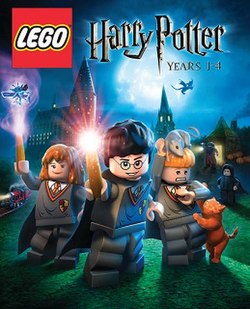










 Another SquareThought Site