

 Aug 2025
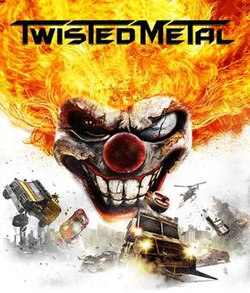

Twisted Metal for PS3 is a turbocharged return to the car-as-weapon playground, built by Eat Sleep Play and shepherded to retail by Sony after what started as a digital-sized idea. If you like your multiplayer with a side of chaos and your single-player with a sprinkle of Bitter-Story Endings, this reboot gives you both: a multiplayer-first design with split-screen for friends, 16-player online mayhem (servers were active until early 2019), and a single-player story mode added late in development because apparently the world needed more twisted resolutions. This review zooms in on what actually makes the game a challenge: the mechanical skills you need, the strategic thinking the modes demand, and the learning curve that separates a lucky rookie from a repeat offender on the leaderboards. Expect vehicle handling, teamwork, timing, and a surprising amount of persistence to win in the modes that matter.
Twisted Metal is unapologetically multiplayer-centric. The demo that preceded release offered two online modes - Deathmatch and Nuke - plus an offline single-player challenge mode for practice. Those two tiny demo slices are a good hint about the game's mentality: fast learning, then fast punishment. The full game expands that into matches for four-player split-screen and up to 16 players online, which turns every arena into a ballet of bullets, rockets, and questionable life choices. If you want a single word that summarizes the core challenge, it's 'situational-awareness.' Vehicles move, projectiles fly, special weapons change the balance, and objectives pop up like landmines disguised as power-ups. Winning requires a mix of core skills: precise aiming (for both direct-fire weapons and timing splash damage), throttle control and momentum management (you are a vehicle; momentum is the boss), and map memory. Know the map and you know where the next health or weapon pickup spawns, where the choke points funnel traffic, and which hiding nook lets you ambush a cruising opponent. The offline challenge modes are small, focused tests of each of these skills, and they're worth using as a practice ground before you try to coordinate the more complex team-based modes. Nuke Mode deserves its own paragraph because it's the game's attempt to make vehicular combat feel like a heist movie directed by a pyromaniac. Teams select one of four factions and must abduct the enemy team's leader, deliver them to a missile system, and then manually guide a launched nuclear missile to destroy a giant statue held aloft by an enemy helicopter. The sequence is gloriously multi-step: capture, escort, sacrifice, then pilot the missile like a very angry drone. Every phase tests different abilities. Capturing the leader is mostly about tactical positioning and timing: you need to know how to box someone in, use weapons that disable or slow rather than just explode, and read enemy movement. Escorting (or intercepting an escort) is a study in momentum control, blocking, and predicting paths. The sacrifice and missile control introduce the odd one-two punch of precision under pressure; even after you've completed the gruesome handoff, the player who launches the missile must guide it to the target - which is not an exercise in button-mashing but in controlled input, spatial judgement, and occasionally panic management. To destroy the opposing statue you need to repeat the process three times, which means endurance and resource management across the whole match. Repeating that cycle under constant enemy pressure separates the competent teams from the lucky ones. Teamplay is where Twisted Metal's challenge broadens. The game punishes lone-wolfing in certain modes; in Nuke Mode especially, individual heroics won't win you the match if you lack teammates who can hold lanes, deny pickups, and secure the leader. Communication is rewarded, as is role specialization: one player becomes a mobile brawler who soaks up hits and draws attention, another a nimble grab-and-run specialist, and a third a support/area-denial specialist controlling chokepoints. Learning the best vehicles for each role is part of the meta-skill set. The reboot gives you an eclectic roster that calls to mind classic Twisted Metal archetypes - heavy hitters and fast movers - and picking the wrong vehicle for the map and game type is a rookie mistake that feels ridiculous only after you die for the nineteenth time while your teammates vanish like smoke. Latency and the fall of online services are part of the game's life story. During the years it was active you had to cope with varying connection quality, which adds a skill layer: predicting lag, leading your shots, and compensating for input delays. For modern players trying Twisted Metal now, the servers were discontinued in early 2019, which means most of the high-skill online dance cannot be experienced on official servers anymore. That makes the offline single-player challenges, split-screen bouts, and the memory of past matches the only ways to appreciate the skill ceiling. If you can still find local multiplayer partners, the split-screen modes are an excellent training ground because the game remains unfiltered: same rules, no lag, and a lot of screaming. The single-player campaigns are less about multiplayer tactics and more about teaching the player to adapt to different mission structures. The story arcs (Sweet Tooth, Mr. Grimm, Dollface, the Preacher) present scripted challenges that mix combat and environmental puzzles; they are a useful laboratory for learning how to exploit a vehicle's strengths and patch over its weaknesses. The developers originally intended the title as a downloadable multiplayer offering, but Sony's request to add a single-player story mode led to the inclusion of these narrative arcs. That late addition is both a boon and a source of rough edges: the single-player segments sometimes feel like condensed skill checks, which is fine if you're using them to level up your gameplay rather than your empathy for broken clowns. One of Twisted Metal's subtle challenges is learning when to engage and when to evade. Unlike more forgiving action games, this one often hands you the right tools but makes the consequences of misuse immediate and painful. Weapon selection and timing are crucial; using a high-damage weapon at the wrong time can get you fragged mid-animation, and wasting a transport or immobilize ability can let the opposing team steal your objective. The game rewards patient aggression: be bold when your team has pressure, hold back when the odds turn, and always have an exit vector.
Graphically the PS3 Twisted Metal wears its battle scars like jewelry: detailed character-based vehicle designs and arenas that sell the game's dark carnival vibe. The Wikipedia-sourced record doesn't deep-dive into frame rates or rendering tricks, so this assessment stays conservative: the visuals serve the gameplay. The environments are readable enough to learn routes and spawn points, and key visual cues are clearly telegraphed so you can react - which matters when split-second decisions decide matches. Special weapons and the missile guidance sequences are given enough visual clarity that you can track fast-moving threats and plan countermeasures. The presentation sometimes leans on theatricality in cutscenes - given the game's heavy narrative arcs (Sweet Tooth, Mr. Grimm, Dollface), that's expected - and the graphics do the job of making the missions feel consequential. If you were hoping for a tech-showcase, the title was never marketed as next-gen eye candy; it prioritizes clarity and style over pushing polygon counts to the moon.
Twisted Metal on PS3 is a game that rewards a very particular kind of player: the one who actually enjoys mastering messy systems. If you like learning maps, memorizing pickup timings, mastering vehicle momentum, coordinating with teammates, and handling high-pressure, multi-step objectives like Nuke Mode's abduct-sacrifice-missile routine, this is a satisfying playground of escalating difficulty. The inclusion of single-player story arcs gives you focused tests to build those skills, while the online modes (when servers were active) offered a broader canvas for competitive expression. The game's main shortcomings aren't design failures so much as lifecycle realities: an online dependency that made some of the best content ephemeral, and a late-added single-player mode that sometimes feels like a patch rather than a fully integrated experience. For anyone revisiting Twisted Metal today, the best way to appreciate its challenge is locally: use split-screen and solo challenge modes to learn the core mechanical toolkit, then celebrate the small victories like perfectly-guided missiles or a last-second leader abduction. The PS3 iteration is not flawless, but it nails what vehicular combat should feel like - brutal, tactical, and strangely elegant when executed well. That reward-for-effort philosophy is why the game earns a respectable 7.6/10: it pushes players to get better, it provides clever, multi-step objectives that test different skill sets, and when everything clicks, it's a chaotic masterpiece of teamwork and timing. If you can find a friend, an old console, and a lot of patience, Twisted Metal will teach you to be both cruel and precise. If you walk away from a match without learning something new - even if that thing is simply how to explode in a more photogenic way - you probably weren't paying attention.
 Tiny Metal: Full Metal Rumble on Switch
 Rock Band Metal Track Pack on PS3
 Project Awakening on PS4
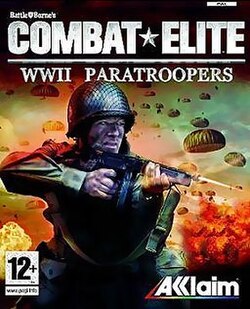
 Combat Elite: WWII Paratroopers on PS2
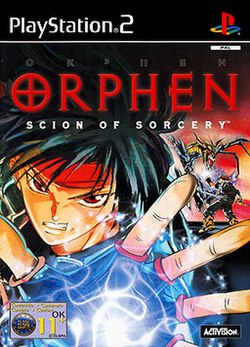
 Orphen: Scion of Sorcery on PS2
 Monster Hunter Stories 2: Wings of Ruin on Switch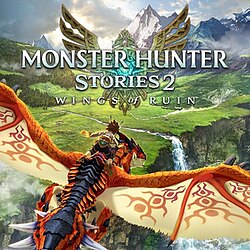










 Another SquareThought Site