

 Aug 2025
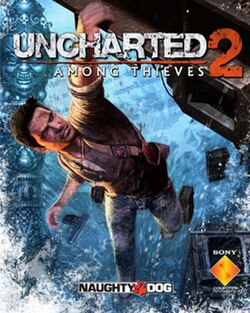

Uncharted 2: Among Thieves is the sort of game that makes you feel like an action movie stunt double who also did a weekend intensive in archaeology. Naughty Dog took everything that worked in Drake's Fortune, plugged it into a caffeine-fueled, motion-capture-driven montage, and turned Nathan Drake into a one-man exam of your reflexes, reasoning and willingness to clutch the analog stick like it holds the secrets of the universe. For anyone who treats 'cinematic' as shorthand for 'I want to sit back and watch', think again: this is cinematic on hard mode. The game's greatest trick is making towering set-pieces, collapsing trains, and Himalayan ice caves feel like challenge rooms - and it expects you to be competent at a surprisingly wide mix of skills: platforming precision, cover-based gunplay, stealth improvisation, puzzle deduction, and occasionally not dying while the world collapses around you.
If Uncharted 2 had a job description it would read: "Expert climber, marksman, puzzle-solver, and improvisational contortionist required. Must be comfortable hanging off wrecked trains." Mechanically the game is an elegant toolbox wrapped in cinematic spectacle. Drake's movement kit is deceptively simple - jump, climb, edge-grab, mantle, and swap guns - but Naughty Dog layers these basics into encounters that test timing and spatial judgment more than raw twitch speed. Platforming is the game's baseline difficulty. Drake scales narrow ledges, scrambles up hotel facades, and wrestles with precarious hanging train cars. These sections reward careful observation: the engine cues climbable surfaces, but several sequences deliberately demand trust in your read of the environment. There's rhythm to it - a missed jump isn't just a restart, it can cascade into an immediate firefight or a cinematic death. The infamous hanging-train opening is a lesson in split-second decision-making: choose the wrong handhold, and gravity will lecture you with a cutscene. Precision here is not purely mechanical; it's also spatial awareness and the ability to keep composure when the camera starts doing dramatic things. Shooting is a cover-based affair with some nice flourishes. Drake can take one single-handed and one two-handed weapon, use blind-fire, or pop out and aim down sights. The AI is competent enough to punish sloppy behavior: enemies flank, suppress, and occasionally feel less like cannon fodder and more like a pressure test for your positioning. The game nudges players toward using cover smartly and rewards movement - firing while strafing, timing bursts between reloads, and picking your moment to throw a grenade. Ammunition is finite enough that you can't treat firefights as paintball matches; resource management and weapon prioritization matter. The combat often alternates between frantic open skirmishes and precise, small-scale confrontations that read almost like puzzle rooms: how do I use the environment, which weapon is best here, should I go loud or shadowy? Stealth is one of those sweet spots where Uncharted 2 mixes old-school sneaking with Drake's acrobatic toolkit. If enemies don't notice you, a rear takedown is typically a one-hit solution. The game delights in letting you perform cinematic assassination moves - pulling an unsuspecting guard off a ledge while hanging from a rail never gets old - but it also punishes overconfidence. Stealth sections test patience, line-of-sight reading, and timing: you learn to bait patrols, use shadows and cover, and know when to sprint for the next ledge. Then there are the puzzles. They are rarely brain-bending, but they serve as breather tests that probe your attention to lore and journal notes. Drake's journal isn't a decorative prop; it's a subtle tutorial in observation and deduction. Puzzles demand you interpret clues and manipulate mechanisms without a handholding parade. This is where the game rewards curiosity: those who skim find themselves stuck, while those who comb the environment and journal entries progress like smug archaeologists. Collectible hunting - 100 treasures and a secret relic - layers optional challenge atop the main campaign. Going for them tests exploration instincts and platforming skill. They also tie into the medal system and unlockables: if you like pushing for 100% completion, expect to get mean with your traversal and to revisit levels with a checklist mentality. Multiplayer (sadly shuttered in 2019) was another proficiency exam. Competitive modes like Deathmatch and Plunder demanded map knowledge, objective focus, and loadout savvy. Plunder's treasure-carrying mechanic is a beautiful skill-check: the carrier is slowed, so teams must plan routes and protect a moving objective. Co-op modes were teamwork puzzles, requiring players to balance combat, platforming, and revives in sync. Playing these modes well wasn't just about aim; it was about communication, role awareness, and knowing when to disengage and reset. There are a few friction points in the control scheme. Critics and players alike noted finicky moments in platforming and a handful of times where the climbing logic feels 'linear' or misreadable. Expect occasional frustration when the game asks for a pixel-perfect jump with a camera swing that ate half your view. Those hiccups are rare relative to the scale of ambition, but they are an honest cost: some challenges are artery-tightening because the game occasionally expects miraculous analog stick judgement. Overall the greatest challenge in Uncharted 2 is variety. This is not a game that asks you to master one thing; it asks you to be a generalist who can switch shoes instantly: from quiet thief to shotgun surgeon to puzzle-reading historian. It trains you to prioritize - when to explore for treasure versus when to sprint to the next checkpoint - and to stay calm under manufactured cinematic disaster. If you're the sort of player who likes to be excellent at one narrow skill, Uncharted 2 will broaden you, often with a grin and the occasional bruise.
Naughty Dog's engine facelift - Naughty Engine 2.0 - is not mere window-dressing, it's a stealthy difficulty modifier. The game's visuals do double duty: they look gorgeous and they create mechanical complexity. Real-time moving environments, nuanced animations, and dense set dressing mean platforming and combat occur in three dimensions that behave like characters, not props. Motion capture contributes to believable animations and gives Drake's movements weight and timing; when you swing for a ledge you feel the actor's cadence in your thumbs. This matters for challenge: animations influence hitboxes, timing windows for grabs, and the readability of the environment. During firefights, debris and dynamic lighting can obscure sightlines, demanding better situational awareness. The game also uses the PS3's SPUs to squeeze out effects like screen-space ambient occlusion, making depth perception clearer - useful when you need to spot a tiny handhold or a throw of resin that explodes the set. So the graphics don't just make the world pretty; they make the world a more exacting playground.
Uncharted 2: Among Thieves is the rare blockbuster that scaffolds its spectacle around actual player skill. It's a masterclass in mixing challenge types: platforming that makes you competent with the sticks, combat that rewards smart cover and ammo management, stealth that honors patience, and puzzles that give wins to observant players. The occasional control quirk and linear climb can be aggravating, but those moments are worn like badges - evidence that the game pushed boundaries. For the PlayStation 3 generation, Uncharted 2 didn't just raise the cinematic bar; it turned blockbuster set-pieces into demanding levels that teach you by drama. If you want a single-player experience that asks you to be clever, quick, and adaptable while delivering set-pieces that will make your palms sweat, this is a must-play. And if you happen to be the sort of person who collects every treasure and unlocks every medal, bring snacks - Drake's tests can be long, and they are very, very satisfying.
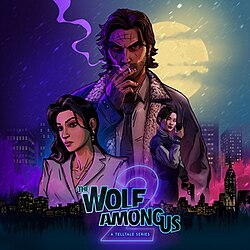 Uncharted 3: Drake's Deception on PS3
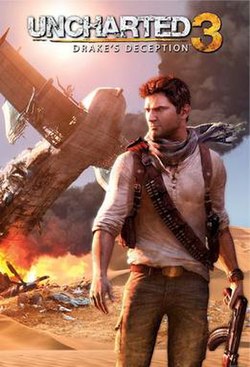 The Wolf Among Us 2 on PS5
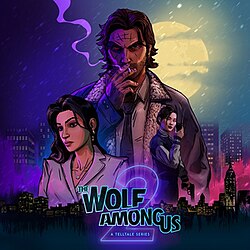 Tintin: Destination Adventure on PlayStation
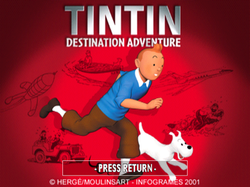 One Piece Grand Adventure on PS2
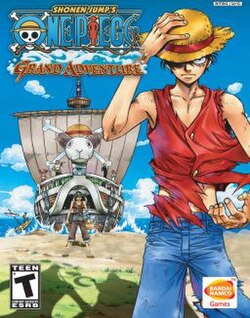 Taiko no Tatsujin: Dokodon! Mystery Adventure on Switch
 Onimusha: Dawn of Dreams on PS2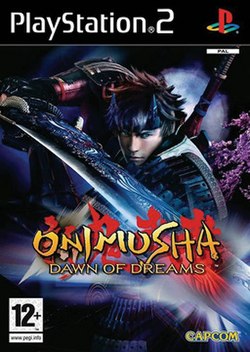
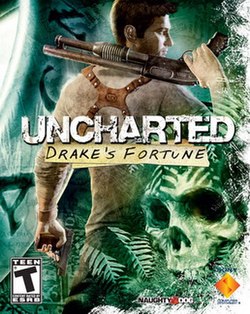 Crash Bandicoot: Warped on PlayStation
 Jak 3 HD on PS3
 Jak II HD on PS3
 Crash Bandicoot 2: Cortex Strikes Back on PlayStation










 Another SquareThought Site