

 Aug 2025
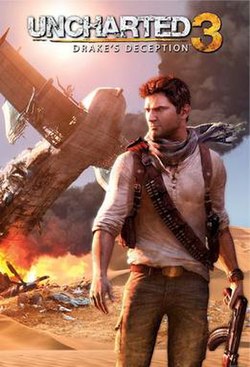

Uncharted 3: Drake's Deception arrives like a Hollywood stunt double for your living room - polished, slightly arrogant, and somehow managing to look good while tumbling off a cruise ship. Naughty Dog's third main outing with Nathan Drake takes everything fans loved about the series and pours it into a funnel of sand, wine-dark deserts and cinematic set pieces, then punches the funnel until story and spectacle come out the other end. If you're expecting an open-world archaeological sandbox, prepare to be lovingly redirected: this is still a tightly directed, blockbuster-style adventure that wears its movie inspirations on its sleeve and Nolan North's smirk in its heart. Drake's Deception picks up two years after Among Thieves and keeps the franchise's winning formula - charismatic leads, witty banter, smartly staged platforming, and gunfights choreographed like action-dance numbers - while adding new toys: more elaborate sand physics, increased mocap-driven performances and a multiplayer suite that aimed to be the PS3's social party trick. It isn't flawless, and it can be a little too keen on guiding your hands through every jaw-dropping moment, but if you want a rollercoaster with excellent facial animation and an occasionally unreliable sense of direction (emotional and geographical), this is your flight.
Playing Uncharted 3 is like being given the keys to a very expensive action film and then being told, "Don't crash the car - except when we tell you to." You control Nate in a third-person perspective and, as usual, he can climb, sprint, hang from ledges, leap across chasms and generally perform all the acrobatics you'd expect from a guy who writes postcards from death-defying places. The traversal has been expanded - there are more contextual animations and traversal moves - so Nate reacts with believable flailing, grunting and the occasional dry quip when physics try to ruin his day. Combat balances cover-based third-person gunplay with close-quarters brawling. You can lug a single-handed weapon and a two-handed weapon at once, toss grenades and pick up enemy weapons in the classic "I want that shiny gun" fashion. Naughty Dog refined the stealth options as well: sneaking behind a goon and giving him a one-hit surprise takedown feels wonderfully bonsai - neat, quick and quietly satisfying. There was some early complaining about the aiming tweaks on release, but Naughty Dog listened; a patch added an aiming toggle for players who preferred the Uncharted 2 feel. So if your crosshair initially felt like it had a mind of its own, you weren't alone, and the fix eventually landed. The game occasionally leans into set-piece wizardry. Sequences like the tilting cruise-ship corridor, the cargo plane bailout and the sandstorm escape are examples of Naughty Dog designing environments that actively play with perception and gravity. Puzzles are mostly low-key - the Drake journal gives clues and there's an optional hint system for players who want to keep moving - so the focus is squarely on pacing and spectacle rather than brain-munching riddles. Fans of puzzle-heavy adventures might be left wanting, but those who came for cinematic momentum will applaud. Multiplayer arrives like a buffet of modes: competitive deathmatches, team objective fights and co-op missions that expand the game's life considerably. There was a lot of energy put into the online suite - character customization, dynamic environmental events (including planes and other map hazards), collectible treasures acting as in-game currency, and a Buddy System designed to make teaming up less of a headache. Naughty Dog drew lessons from earlier online efforts and other successful titles, and it shows. The multiplayer was ambitious, and even after the initial beta hiccups (console freezes, matchmaking issues), it matured into a robust offering - until the servers were shut down in September 2019, which made the multiplayer experience a fond, now-archival memory for PS3 players. On single-player, the campaign is linear by design - Amy Hennig argued the linearity supports narrative flow - and while some critics called it narrower than its predecessor, the trade-off is a pounding cinematic rhythm that rarely stops hitting the right notes. Development-wise, the studio did field research to nail the sounds and sights, used heavy motion capture (they literally set up movie-style mocap performances), and pushed the PS3 pretty hard. The result is not only polished mechanics but also incredibly believable character performance: the voice acting and facial animation are among the game's crown jewels.
If visuals were a competitive sport, Uncharted 3 would show up in a tailored suit. Naughty Dog's "evolved" engine from the earlier Uncharted games got a serious workout: textures are more detailed, character animations are smoother and environmental effects like sand, water, smoke and fire are dramatically improved. Sand is treated almost like an extra cast member - it pours, piles, shifts and behaves in ways that make the desert sequences genuinely intense. The Rub' al Khali and sunbaked ruins feel atmospheric without tipping into postcard-level cliché. Motion capture is used not as a tech flex but as a storytelling tool. Naughty Dog recorded motion and dialogue together on stage, giving scenes an organic flow that often reads more like a well-directed film than a game cutscene. The cast sells the script: Nolan North, Richard McGonagle, Claudia Black and the rest deliver performances that are punchy, emotional and sometimes heartbreakingly small. The cinematic ambition paid off with a flood of awards for graphics and voice acting; Uncharted 3 was one of 2011's most lauded titles in that department. That said, the graphical jump from Uncharted 2 to 3 is noticeable but not revolutionary. Studio leads admitted the PS3 was reaching its limits; this is still peak PS3, but if you're comparing generational leaps you'll find the improvement narrower than the sequel's step forward. Texture streaming, particle effects and lighting are all excellent, and many levels received dynamic events that change the map mid-match or mid-scene, which is a neat trick. Oh, and the game was massive for its time - Naughty Dog's asset pool ballooned, and the disc content pushed Blu-ray hard. For the era, it's a looker; for the franchise, it continues a pedigree of technical ambition.
Uncharted 3: Drake's Deception is a sumptuous, slightly indulgent feast of action cinema wrapped in a videogame. It doubles down on the things Uncharted does best: charismatic characters, expertly timed set pieces and a visual style that turns the PS3 into a portable blockbuster machine. Linearity and a few mechanical tweaks (notably early aim complaints) kept some reviewers from handing it a flawless score, but Naughty Dog patched and defended their design, and the game's story beats, mocap performances and technical polish won over most audiences and critics. If you want a meandering open world to bury yourself in, this might not be the ticket. If you want expertly paced adventure with superb presentation and enough thrills to make your controller sweat, Uncharted 3 is a high-value ticket. It sold millions, collected awards, and seeded ideas (sand physics!) the studio would keep refining. Play it for the characters and the spectacle; play it because the cinematic moments still hit. Play it, and then try not to laugh when Nate delivers a quip as the scenery collapses beneath him - that's basically the series' entire ethos, and it works like a charm. Final verdict: a near-masterpiece of action-adventure - polished, theatrical, and full of heart. Bring a towel for the sand, and maybe an extra controller for when your jaw drops so hard the DS3 needs picking up.
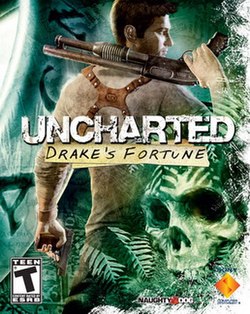 Uncharted 2: Among Thieves on PS3
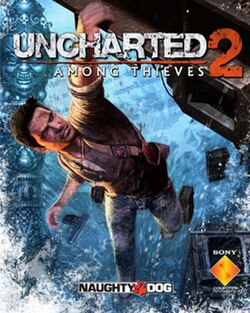 Drake & Josh: Talent Showdown on DS
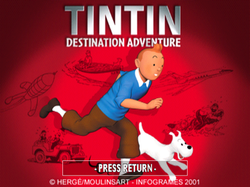
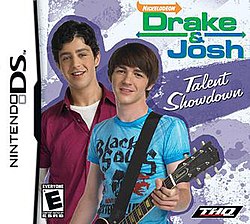 Tintin: Destination Adventure on PlayStation
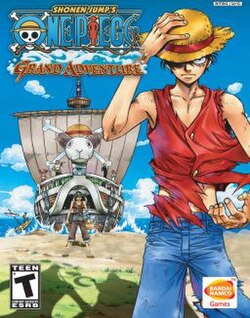
 One Piece Grand Adventure on PS2
 Taiko no Tatsujin: Dokodon! Mystery Adventure on Switch
 Onimusha: Dawn of Dreams on PS2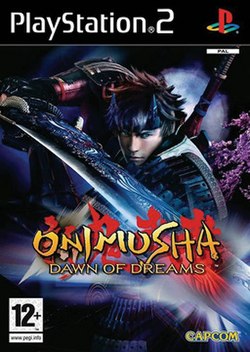
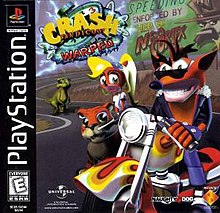 Jak 3 HD on PS3
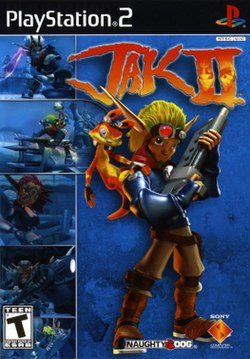
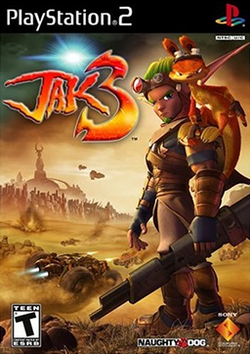 Jak II HD on PS3
 Crash Bandicoot 2: Cortex Strikes Back on PlayStation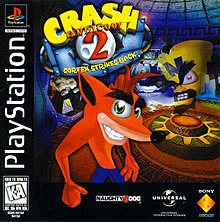










 Another SquareThought Site