

 Mar 2011
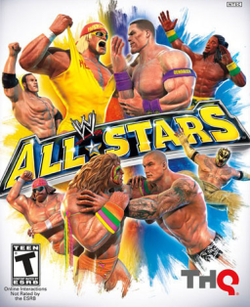

WWE All Stars is the game that straps a jetpack to professional wrestling and sends it flinging through neon-colored nostalgia. Built for players who like their suplexes supersized and their storylines served with a wink, All Stars trades simulation for spectacle. On PS3 it was crafted by THQ San Diego using Unreal Engine 3, which gives the ring the kind of shine that says both "main event" and "cartoon rampage." This review takes the gimmicks seriously: instead of critiquing frame rates like a boring coder, I examine the playable roster as characters in short, punch-drunk soap operas. If you came for tight realism, this isn't your prom night. If you came for mythic finishes, dream matches, and cutscenes where The Undertaker broods like a gothic action hero, welcome to WrestleMania on espresso.
All Stars disguises deep design beneath arcade exuberance. Under the flashy animations and sky-high Attitude Adjustments there is a combo system that rewards rhythm, positioning, and timing. Fighting-game sensibilities show up in the mid-air strings and ground combos, while traditional wrestling tropes-pins, submissions, finishers-are blown up to stadium size. Moves like Triple H's Pedigree don't just happen; they arrive with shockwaves that make your controller feel complicit in the narrative. Where the game truly gets dramatic is in its modes. Path of Champions lays out three short, sharp arcs: the Undertaker-led Legends ladder, Randy Orton's Superstar gauntlet, and D-Generation X's tag-team romp. Each is ten matches and a dozen cutscenes, and the developers use those snippets to sketch motives and relationships rather than write epics. The Undertaker's storyline leans into myth: he is an immovable force, an ancient presence who stomps through the roster with funeral-procession inevitability. His cutscenes are less dialogue and more gravitas-think silent cliff shots and ominous Paul Bearer cameos-giving him the arc of a walking legacy. Playing him feels like inhabiting the remorseless end of story arcs: opponents don't so much lose as get checked off a list. Randy Orton's path is a study in venomous entitlement. His in-game promos and matches make him the conniving apex predator-an arc that suits the gameplay because Orton's moves are all about pinpoint strikes and the RKO's sudden, almost rude interruption of the opponent's plans. Against the arcade backdrop, Orton becomes the spoiler: he's the wrestler who ruins your combo parade with a single well-timed counter. D-Generation X get the buddy-comedy-meets-antiheroes treatment. Their tag storyline is less about long-term consequence and more about anarchy with excellent hair. In a cast that includes legends like Dusty Rhodes, Bret Hart, and Stone Cold, D-X are the ankle-biters who steal scenes with snark and pratfalls, and the game's fast pace turns their matches into chaotic, grin-inducing set pieces. Fantasy Warfare is where All Stars' writing gets playful. Dream matches pit legends against modern doppelgängers-Shawn Michaels versus The Undertaker in a fantasy WrestleMania rematch is the finale-and every card comes with a promo video that attempts to justify the pairing. Sometimes it's a tidy callback (a 90s star against a similarly-styled present-day figure), and sometimes it's essentially fan fiction brought to life. The mode doubles as a character study: Eddie Guerrero's unlockable presence rewards the player with a narrative about charisma and cunning, Mr. Perfect's inclusion is a nod to technical correctness, and Jack Swagger's modernity contrasts with Sgt. Slaughter's old-school toughness. Each match's build-up and finish function like five-minute short films where the wrestlers' arcs are compressed into a single confrontation. Create-a-wrestler and Exhibition give players agency in these stories. The ability to graft a moveset and finisher onto a bespoke body means you can write your own arc: the plucky rookie, the cheating veteran, the indie show-off with Shawn Michaels' moonwalk finisher. On PS3, the controls feel responsive enough for these improvisations. The arc mechanics aren't deep-All Stars doesn't promise a sprawling career sim-but by emphasizing spectacle and character contrast it creates micro-arcs that are satisfying in their brevity. Commentary by Jim Ross and Jerry Lawler functions as the in-house narrator, and Lawler even appears as a playable character. Their lines are mostly color and crowd-candy, but in a game devoted to larger-than-life personas they do a lot of heavy lifting. The match commentary sells the stakes of a short arc: an announcer can turn a simple comeback into a climactic betrayal, and in the context of arcade wrestling, that's often half the fun.
All Stars' aesthetic is the equivalent of a wrestler's entrance on triple espresso: everything is over-the-top. Character models are exaggerated in a way that flatters their personas-Triple H looks like a warlord with a couture haircut; The Undertaker is sculpted for doom; Rey Mysterio practically vibrates with neon energy. The Unreal Engine 3 foundation on PS3 gives the wrestlers weight, and the lighting treats finishers like meteor strikes. Crowd reactions, ring ropes, and the occasional ring-rattling shockwave are rendered with comic-book intensity. The visual design supports storytelling. Legends look comfortably mythic; modern superstars are glossy and athletic. Cutscenes are short but cinematic, and they rely on visual shorthand-shadow, close-up, a snap of rage-to tell arcs in 30 seconds. The whole presentation screams "greatest hits montage," and that is both a strength and a constraint: while the art direction is consistently fun, the exaggerated look occasionally sacrifices subtlety. If you want realistic bruises or sweaty pores you will be disappointed, but if you want your DDT to look like a meteor strike, this game's camera will helpfully zoom in, add lens flares, and play triumphant music.
WWE All Stars on PS3 is a love letter to spectacle, roster nostalgia, and the melodrama of professional wrestling. It isn't a deep career simulator, and if you're a purist for realism you'll find its cartoonish flourishes grating. What it does excel at is turning individual matches into miniature story arcs where characters arrive, make a point, and leave the ring having said something about who they are. The Undertaker remains the ominous endpoint, Randy Orton the opportunistic predator, D-Generation X the wise-cracking chaos merchants, and the fantasy matchups let the game play theatre director for a night. With a Metacritic-equivalent hovering in the mid-70s and critics praising its art design and brisk gameplay, All Stars earns its place in the pantheon of arcade wrestling. It's short, occasionally repetitive, and the online servers have since been retired, but as a single-player or local multiplayer experience it still delivers the catharsis of a perfect finisher. If you're in your late teens or early twenties and you like your stories loud, punchy, and with a soundtrack, WWE All Stars is worth dusting off-put it on, pick your favorite legend or modern brawler, and let the short, glorious arc of each match do the heavy lifting.
 PlayStation All-Stars Battle Royale on PS3
 Sonic & Sega All-Stars Racing on DS
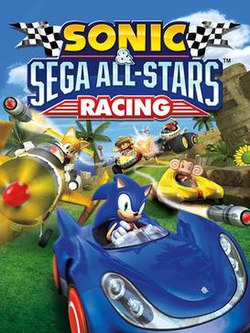 Oretachi Game Center Zoku: Nekketsu Koukou Dodge Ball Bu on PS2
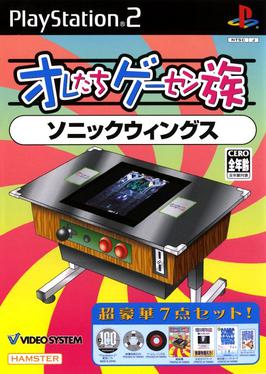 Oretachi Game Center Zoku: Rabio Lepus on PS2
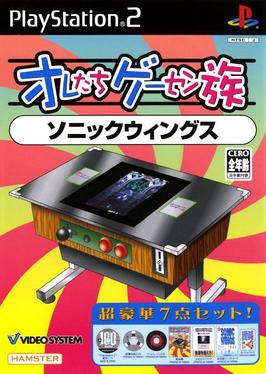 Oretachi Game Center Zoku: Super Volleyball on PS2
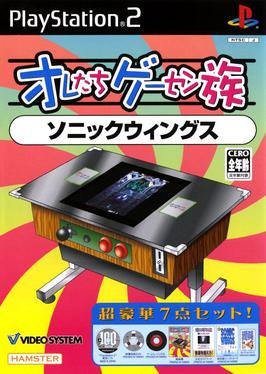 Oretachi Game Center Zoku: Trio the Punch on PS2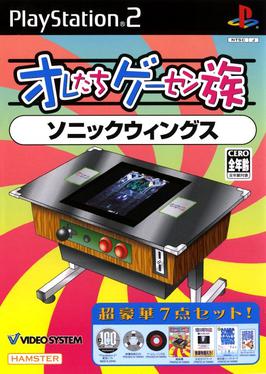










 Another SquareThought Site