

 Nov 2013
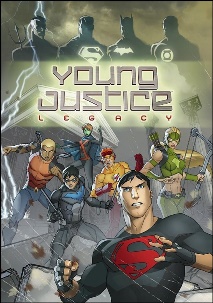

Young Justice: Legacy arrives on PS3 as a licensed attempt to bridge the gap between TV seasons, packing a squad-based action-RPG shell around a roster of familiar faces. On paper it's the kind of toybox that should make fans grin: twelve playable characters, Justice League cameos, level-based progression, costumes that alter playstyle, and voice actors from the animated series. Under the hood, however, the game reveals the telltale signs of a rushed, multi-studio production: duplicated systems, shallow mechanical depth, and rough technical integration. This review digs into what the game does mechanically and technically on PS3 - where it succeeds because of design intent and where it stumbles because of execution and production instability.
The central gameplay loop is straightforward and mechanically explicit: pick a squad of three from the base roster of twelve, then play through fifteen mission levels while swapping control between active teammates. That squad architecture is an honest attempt to balance variety and player agency. Each hero has a defined role via strengths, weaknesses, and a unique ability set, and characters level up as missions progress. Costumes aren't purely cosmetic; every outfit changes appearance and the way a character plays, which suggests a framework that could have encouraged build diversity and replayability. From a systems perspective the game implements core RPG components: XP-driven progression, equipment vendors (Red Tornado), and training NPCs (Black Canary) to presumably gate skill or stat growth. These are sensible choices for translating a team-based superhero cartoon into interactive form. On PS3 the controller mapping feels conventional - face buttons perform light and heavy attacks while triggers offer special abilities - but the combat design itself often fails to reward timing or strategy. Special abilities exist, but without strong cooldown design or meaningful tradeoffs, they devolve into button-mashing gratifications rather than tactical resources. Character switching is technically solid as a concept: it allows you to mitigate individual weaknesses and chain combos between heroes. In practice the AI for offscreen allies is inconsistent. The supporting two AI teammates will sometimes perform their role competently - resurrecting from downtime, using an assist ability to break an enemy's stance - and other times they stand idle until you wander into their aggro cone. Squad synergy is present in the ruleset, but poorly telegraphed; there's no deep tutorialization of combos, nor clear feedback loops to teach the player how to exploit synergies reliably. Mission structure is linear: fifteen distinct missions in total. That number limits the opportunity for emergent play; level design centers on encounters and set pieces rather than open exploration or branching objectives. A handful of levels modify the feel by adding Justice League assists - emergency cinematic help from Superman or Batman - but these features are scripted and infrequent, so they act more like fan-service punctuation than meaningful gameplay moments. Multiplayer support is listed, but it functions as an add-on rather than a core pillar. The game is fundamentally built for single-player progression with isolated co-op options. Where the architecture had promise - costume-driven role shifts, gear and level scaling, unlockable mission modes - the implementation often feels shallow. Leveling gives predictable stat bumps but lacks personalization systems like deep skill trees or meaningful equipment variety. DLC characters exist, which expands roster options, but by then the core combat loop has already shown its cards. From a technical design perspective it's important to note the game's turbulent development. The project changed hands between in-house teams and contractors, and versions for Wii and Wii U were cancelled due to quality and retailer support issues. That production history is visible in the game's seams: assets that look like they were created to scale across platforms, a middling level of polish, and occasional dissonance between audio/visual fidelity and mechanical refinement.
Graphically, Young Justice: Legacy on PS3 leans into faithful character models and recognizable costume silhouettes that will satisfy fans who want to see Nightwing, Aqualad, Artemis, and the rest in polygonal form. The art direction aims for a cel-shaded, TV-accurate look rather than photorealism, which is the right choice for a property rooted in animated aesthetics. However, the execution is uneven. Textures and model detail are serviceable but rarely exceptional. Many environments are blocky, with simple geometry and repeated tiling textures - a sign that asset teams optimized for memory budgets and cross-platform parity. This isn't a PS3 showcase; it's a mid-tier title attempting to preserve stylistic fidelity over graphical fidelity. Lighting tends toward flat or ambient-rim setups that keep character visibility consistent but also conceal depth and material variation. That makes combat readable, but it also flattens visual interest. Animation quality follows a similar pattern: key animations for signature moves are competent, and special-ability telegraphs make actions legible in combat. Blend trees and transition smoothing are, at times, rudimentary - swaps between run, attack, and special states can feel abrupt, leaving the player with clipped or mechanical motion. Camera behavior is functional but conservative; it focuses on the controlled player, and during squad swaps the framing adjusts to the active hero but can occasionally obscure situational context. These are not catastrophic issues, but they accumulate to diminish the sense of polish. The audio implementation is a highlight relative to other technical areas. The game benefits from an extensive voice cast pulled from the animated series: Jesse McCartney, Mae Whitman, Nolan North, Bruce Greenwood and others. That familiarity bolsters character presence and helps mask some mechanical shortcomings. Sound design for abilities provides useful feedback, although the score and effects rarely rise above competent genre tropes. Overall the PS3 build looks and sounds like a licensed game with constrained resources: faithful to source material, technically conservative, and not designed to push the hardware graphics envelope.
Young Justice: Legacy embodies the paradox of licensed adaptations: great source material and a cast that understands the characters paired with mechanical and technical choices that feel undercooked. The squad-based action-RPG framework is sensible on paper - costume-based role variance, equipment vendors, leveling, and a three-character squad mechanic could have produced deep, replayable systems. In execution, though, the design rarely capitalizes on that potential. Combat lacks mechanical depth, AI consistency is spotty, mission variety is limited to fifteen linear stages, and the production history of shifting developers and cancelled platform versions is reflected in the seams of the final product. If you're primarily after a nostalgia hit - hearing the show's voice actors and moving through story moments that sit between seasons - the game will provide moments of fan-service satisfaction. If you're looking for a polished PS3 action-RPG with robust systems and steady technical polish, this is not it. The game received broadly negative reviews at launch for reasons that line up with these technical observations, and an IGN score of 4.8/10 is an understandable reflection of the outcome. Young Justice: Legacy is an earnest, licensed attempt that wears its heart on its sleeve but struggles on the mechanics-and-polish side. Fans will find value; completionists might extract some enjoyment from costume builds or the roster. For players seeking deep gameplay systems or a technically refined PS3 experience, it's likely to feel like a missed opportunity.
 Rogue Legacy 2 on PS4
 Anodyne on PS4
 Tintin: Destination Adventure on PlayStation
 Disney's Chicken Little: Ace in Action on PS2
 Onimusha: Dawn of Dreams on PS2
 Combat Elite: WWII Paratroopers on PS2










 Another SquareThought Site