

 Feb 2019
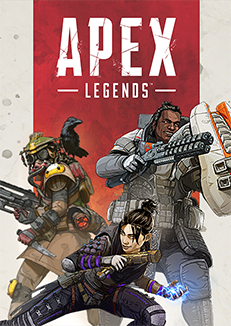

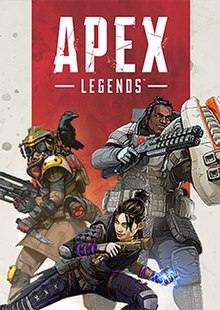
Apex Legends hit the PlayStation 4 like a polite apocalypse: quietly, all at once, and with a surprising number of people already waiting in the fallout shelter. Respawn Entertainment took the core DNA of Titanfall, removed the bulky mechs (sorry, Titans) and single-player epics, and handed players an elegant, squad-forward battle royale that launched without the usual six-month hype train. On PS4 it arrived as a free-to-play behemoth that persuaded literally millions to drop in within days - and then stayed around long enough to acquire seasons, events, and more character drama than a small soap opera set on a floating volcanically active map.
Apex Legends plays like a tag team of chaos with a ruleset that is both friendly and ruthless. You queue up in Duos, Trios, or Solos (depending on the era and respiratory whims of the matchmaking gods), pick a Legend - a character with a unique kit and personality - and then decide which part of the island you want to regrettably throw yourselves onto. The game limits squads so no one can stack the roster with the same Legend, which is an excellent way of ensuring someone always ends up being the weird support character you didn't ask for but secretly need. The combat itself is slick. Gunplay has been lauded across the board, and if you've ever wanted bullets to feel like they meant something, this is the place. Movement borrows Titanfall's momentum-lite: you can climb short walls, slide, and use zip-lines, but Respawn resisted the temptation to resurrect full wall-running because apparently they enjoy players being able to tell where threats are coming from. That choice makes encounters more readable without sacrificing mobility, and it keeps fights from becoming a human game of pinball. Where Apex truly stands out, and then collected an industry patent like a polite vampire, is the ping system. This nonverbal communication lets you mark enemies, loot, or "I am going to jump into that arena now and probably die" points of interest without needing voice chat. It is the sort of UX gem that makes you wonder why every other shooter was content to rely on shouting into the void. Respawn patented the idea, then-mercifully-made it free for other developers to use, because nothing says 'goodwill' like institutionalized collaboration after securing a patent. Matches have a familiar battle royale arc: scavenge, avoid the shrinking ring of death, and try not to be that guy who bags a triple-kill only to be revived three times by someone who kept their banner on the wrong side of the map. Knocked players can be revived and fully eliminated players can be respawned if their banner is recovered and taken to a respawn beacon. This resurrection mechanic adds an extra layer of hope, betrayal, and frantic map traversal - as well as the special shame of watching a teammate sprint with your banner like it's a Black Friday TV. Arenas mode arrived to scratch the competitive itch: 3v3 rounds with buy phases and a focus on economy and team play. It's essentially Apex's attempt at being Counter-Strike for people who like double-jumping and explosive personality. Seasons cycle in like soap opera chapters, bringing new Legends, weapons, map changes, and a rotating roster of limited-time modes. Events add little chaos flairs - sometimes themed, sometimes experimental - ensuring the game rarely sits still for long. Monetization is cosmetic-first: battle passes, skins, and loot boxes. The store has had its controversies (see: Iron Crown pricing kerfuffle), but none of it directly bends the combat in favor of pay-to-win. You will, however, spend money on things that make you feel impressive while you still die to a better sniper and someone who remembers to use a shield battery.
On PS4, Apex Legends looks like it read a handful of sci-fi concept art books and then decided to be cooperative about it. Maps like World's Edge, Olympus, Storm Point, and Broken Moon are distinct enough that you can describe your strategy in terms of landscapes rather than vague 'up by the thing' pointers. Verticality, zip-lines, and vehicles like Tridents on Olympus give traversal visual variety and make the world feel lived-in rather than just a pretty arena. The Source engine has been stretched in admirable ways to present these sprawling vistas, but console players should be aware of trade-offs. Draw distances are impressive, but the game sometimes compromises resolution and frame rate to get everything rendered. That means visuals are often cinematic, if a little soft around the edges, and performance can wobble when the server decides everyone should be in the same small building at once. Still, animations are solid, Legends have characterful models and expressive emotes, and the overall aesthetic - a slightly gritty sci-fi carnival - reads clearly even when chaos and explosions are busily rearranging the environment.
Apex Legends on PS4 is a confident, well-constructed live-service shooter that treats squads like relationships: useful, sometimes messy, and more fun when communication exists. It shipped as a surprise baby that grew up into a sprawling, seasonally-updated thing with excellent gunplay, one of the best nonverbal ping systems in gaming, and a parade of characters that make every match feel like an episode with slightly more grenade fire. There are flaws: monetization hiccups, the occasional stability or frame-rate compromise on console hardware, and seasonal shifts that will occasionally make you nostalgic for a weapon that no longer exists. None of these are fatal. Respawn has built a game that rewards teamwork, adaptation, and a willingness to try new Legends until one clicks. If you own a PS4 and like shooters that are social in the most efficient possible way (emoji-assisted combat), Apex Legends is still worth the download - and the inevitable amount of time you will spend trying to convince strangers to 'stick together' while you all sprint toward the same death circle.
 Power Rangers: Super Legends on DS
 WWE Legends of WrestleMania on PS3
 My Hero Ultra Rumble on Switch
 Marvel Rivals on PS4
 Warhammer 40,000: Boltgun 2 on Xbox Series X/S
 Star Ocean: First Departure R on PS4
 Star Wars Jedi: Survivor on PS5
 Apex Legends on Xbox Series X/S
 Apex Legends on PS5Star Wars Jedi: Fallen Order on PS5
 Star Wars Jedi: Survivor on Xbox Series X/S










 Another SquareThought Site