

 Apr 2022


Road 96 arrives on PS4 as a bite-sized, first-person procedural adventure built in Unity by a compact French studio (DigixArt) led by Yoan Fanise. The conceit is deliciously simple: you play multiple teenage hitchhikers trying to flee the authoritarian nation of Petria along a single titular route. Instead of hand-crafting a single fixed narrative, DigixArt assembled a modular, encounter-driven storytelling engine that lets choices and small items carry between runs. The result is a branching arcade of vignettes - part interactive road movie, part randomized narrative machine - with a clear technical agenda: deliver a high-variance story through procedural generation (the team touts 148,268 story permutations). On PS4, that system mostly works, but the port shows the usual trade-offs of pushing an ambitious, systemic narrative onto older hardware.
At a mechanical level Road 96 is deliberately compact and systems-light; the core loop is: attempt a crossing, use resources and choices to survive encounters, fail or succeed, then repeat with a new protagonist until the overall campaign concludes on election day (September 9 in Petria). The game is first-person, but it's not a shooter or parkour sim - it's an encounter engine. Movement and exploration are basic, and the challenge comes from resource management (an energy meter), choice outcomes, and a handful of minigames. The energy meter is the primary survival constraint: actions deplete it, and you restore it by eating or sleeping. Run it to zero and you either pass out and risk arrest or get mugged and lose money - both mechanical punishments that nudge you toward conserving resources. Money functions as a light economy: you salvage, trade, steal, or sell to buy services that open or simplify routes. These systems are straightforward, intentionally low-friction, and support a 'short play, multiple runs' design rather than a single marathon session. Where Road 96 gets interesting is in its procedural stops and encounter design. Each crossing attempt moves the global timeline forward, and the game seeds procedurally generated stops where you can scavenge, talk to NPCs, or play minigames. The team designed seven recurring key NPCs; interactions with them yield special items and flags that persist across future attempts. That persistence is the game's core technical trick: instead of brute-force branching (which explodes combinatorially), Road 96 implements a carryover state - items, relationship flags, and story beats - that alter later dialogues and opportunities. It's an architectural choice that reduces authorial burden while preserving a feeling of continuity. Minigames are used as gating and reward mechanics. They're not deep skill challenges in most cases; they're affordances that enrich conversations and sometimes hand out items that unlock different interactions. This reinforces the narrative-as-system approach: progress isn't just about winning a puzzle, it's about accumulating story-significant artifacts and flags that change the sandbox of later runs. Procedural generation is the star but also the source of compromises. The system creates many permutations (DigixArt claims 148,268), giving each run a fresh surface-level experience while relying on a finite set of authored narrative building blocks. That design scales well technically - less memory and authoring overhead than fully branching scripts - but can feel repetitive if you play long stretches without hitting the larger set pieces that carry real weight. Some critics noted that completion meters and certain pacing metrics feel artificial; that is, the game sometimes telegraphs progress in ways that undercut organic discovery. From a systems perspective, that's a visible artifact of balancing a randomized encounter graph against player sense of narrative momentum.
Road 96 on PS4 uses Unity as its engine, and the port behaves like a typical Unity story title aiming for cross-platform parity. Multiple outlets praised the writing and soundtrack, but several reviewers flagged graphical and interface shortcomings on console. IGN specifically mentioned visual and UI issues, and Nintendo World Report highlighted technical flaws that detract from immersion. Those are telling statements for a PS4 build: expect lower-resolution textures, occasional LOD or pop-in at object boundaries, and tight memory budgets that limit how many unique assets can be streamed into a scene at once. Unity gives small teams strong tooling, and DigixArt uses stylized assets and modular scenes to minimize heavy draw calls. The game's art direction (leaning on clear silhouettes and character-driven animation) helps hide some of the fidelity limitations, but it can't fully mask interface rough edges. The UI is functional but sparse - dialogue boxes, inventory screens, and minigame transitions are utilitarian and occasionally clunky with a controller. Loading and transition points are frequent because each procedural stop is a discrete set piece; on PS4 these are handled with short loads rather than seamless streaming, which matches the game's episodic pacing but interrupts flow more often than on higher-end hardware. Performance-wise the documentation and reviews suggest the PS4 experience is serviceable rather than buttery. There are no claims in the source material of crippling frame drops or crashes, but the reported "graphical shortcomings" and "technical flaws" imply that a few texture or interface issues persist in the PS4 release. The soundtrack and audio design received consistent praise and do a lot of heavy lifting for immersion - good music and voice cues can paper over visual shortcomings, and in Road 96 they often do.
Road 96 is a technical experiment first, a narrative joy second. DigixArt built a procedural storytelling engine that leverages persistent flags and items to make short, repeatable runs feel cumulatively meaningful. On PS4 that experiment mostly succeeds: the modular architecture and Unity toolchain allow for a lot of narrative variance without requiring an army of writers or a prohibitively large install. The trade-offs are visible - simplified mechanics, repetition in procedurally pooled encounters, and console-specific graphical and interface compromises - but those are architectural decisions, not bugs in the intention. If you're tuning into Road 96 for the narrative design and systemic storytelling, PS4 is a perfectly acceptable platform: the permutations are real, the seven key NPCs matter, and the energy/money systems provide a tidy gameplay spine. If you're a stickler for graphical polish or seamless UI/UX on older hardware, be prepared for some concessions. Overall, the game is an ambitious, well-executed narrative toybox with a few PS4-era rough edges - worth your time if you like your stories procedural, your outcomes emergent, and your elections strangely eventful. Score: 8/10.
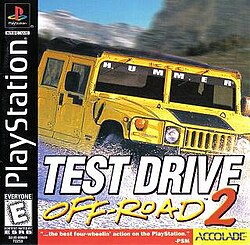 Test Drive: Off-Road 3 on PlayStation
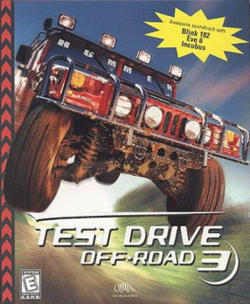 Road Redemption on PS4
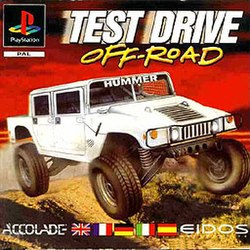
 Test Drive: Off-Road on PlayStation
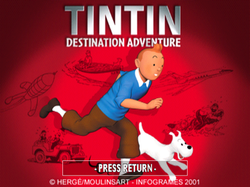
 Tintin: Destination Adventure on PlayStation
 One Piece Grand Adventure on PS2
 Taiko no Tatsujin: Dokodon! Mystery Adventure on Switch
 Taiko no Tatsujin: Don to Katsu no Jikū Daibōken on Switch
 11-11: Memories Retold on PS4
 11-11: Memories Retold on Xbox One










 Another SquareThought Site