

 Sep 2014
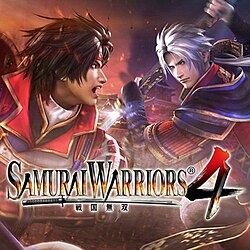

Samurai Warriors 4 arrives like a polite katana to the face: historically themed, loud, and definitely not subtle. Built to celebrate the series' tenth anniversary, this Omega Force entry keeps the franchise's comfortable formula of mowing through thousands of soldiers while pretending to learn something about the Sengoku period. The PS4 port arrived months after the original release, bringing sharper edges to the chaos and the comforting knowledge that every grunt you just cleaved once had a name, an allegiance, and probably a very poor life insurance policy. Voiceovers are strictly Japanese here, which is either charming, authentic, or a convincing argument for subtitles depending on how committed you are to pretending you can read faster than the dialogue scrolls.
The core loop of Samurai Warriors 4 will be familiar if you have ever played a Musou game: pick a character, run into a stage, and turn an entire army into a very large stain on the map. What sets this entry apart are a few mechanical knickknacks that try to make the experience feel like more than one long sword-based satisfaction. The game introduces character-switching, allowing you to bring two fighters into battle and swap between them on the fly. It's a neat trick: one minute you're flinging spears like a very determined laundry day, the next you're a nimble swordsman leaping across the battlefield to remind an officer that their life choices were poor. Hyper Attacks are a secondary moveset that sweep through mobs with a dashing flourish. They are excellent for clearing space and feeling momentarily like a graceful disaster. They are hilariously useless against officers, who either shrug them off or stare at you in the way generals do - like a teacher who has seen this exact homework copy five times before. Rage Mode exists as well, making you briefly invincible while boosting attacks and supercharging your Musou. It is exactly the ego steroid that every button-masher needs. Duels spice up some encounters by forcing honor - and a quick-time-event-style seriousness - when specific conditions are met. The create-a-warrior suite returns with more customization than you can shake a decorative helmet at. Chronicle Mode lets custom characters play a bigger role, including recruiting generic officers as partners and, mercifully, an option to turn off female characters if you prefer your roster to look like a historically accurate chess set. Story Mode has been overhauled into ten regional and clan-based narratives rather than one story per character. This structure mirrors the more recent Dynasty Warriors titles and helps the game avoid repeating itself too quickly, although many characters still do not appear in the main stories and are saved for Chronicle Mode. The tales lead logically toward two convergences: the Unification route led by Hideyoshi Toyotomi, and the Sanada-centric parallel story that focuses on the eponymous clan. The game plays fast and loose with historical accuracy - Nobuyuki and Yukimura Sanada show up for battles they could not possibly have attended - but the narrative cares more about dramatic spectacle than a history exam. Combat has had some balance tweaks: Musou Attacks now finish with unique animations but no longer grant full free-action. Enemy generals have been softened to a state of hyper armor rather than total invulnerability, which lets fights feel decisive without being cheap. The result is a package that rewards flashy play and roster experimentation more than tactical depth, which will please players who like seeing numbers explode and historians who have never met a timeline they respected.
On PS4, Samurai Warriors 4 looks like someone took the series' colorful energy drink and poured it into polygons. Character models get the high-def loving they deserve: faces, armor, and hair have detail, and the camera enjoys lingering on dramatic poses long enough to justify their existence. Environments are pretty without being memorable; castles, fields, and villages are serviceable stages for mass destruction but rarely linger in the brain after you've trashed the 800th cannon fodder. Crowd density is where the game shows both its strengths and its limitations. The battlefield feels alive with troops to slice through, and Omega Force's engine handles large numbers well, maintaining the satisfying chaos Musou fans crave. However repetition is inevitable: the same layouts, enemy types, and mission objectives cycle often, so visual polish can't entirely conceal the game's looped nature. Cut-scenes and story presentation are competent; the Japanese voice track adds a cinematic flair that pairs well with subtitles, assuming you like your historical melodrama served with a side of stoic line delivery. If you want breathtaking vistas or environmental variety that grows over time, this isn't the title that will make you book a vacation in feudal Japan. If you want to watch hair physics and umbrella-wielding samurai across a field of screaming soldiers, congratulations, you've found your cinematic niche.
Samurai Warriors 4 is the video game equivalent of a drum solo: loud, a bit repetitive, and oddly satisfying if you enjoy rhythm more than melody. It refines the franchise's strengths - enormous rosters (55 characters in the base game), dramatic duels, and satisfying crowd-clear mechanics - while making sensible but not revolutionary changes with character-switching, Hyper Attacks, and Rage Mode. Story-wise, it trades individual character arcs for broader clan narratives, which provides focus but leaves some favorites babysitting Chronicle Mode instead of starring in the main campaign. The PS4 port gives the whole thing a cleaner coat of paint and handles the chaos well, but it does not change the fundamental fact that the fun comes from how many soldiers you can reduce to confetti before the mission ends. If you are a Musou veteran or someone who wants historical pageantry served with a chainsaw of swords, Samurai Warriors 4 is an enjoyable, if occasionally repetitive, romp. If you prefer nuanced combat, stealth, or narratives that actually respect timelines, this will probably make you wish for a smaller scale. Revisions and DLC later expanded the package, and II and DX add more characters and content if that becomes necessary to justify the bloodbath. In short: if your ideal afternoon is 'eighteenth-century warfare, but louder and with better hairstyles,' this is your game. If your ideal afternoon is not that, you should still try it once, then judge gently from a safe distance.
 Touken Ranbu Warriors on Switch
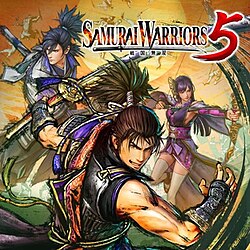
 Samurai Warriors 5 on PS4
 Onimusha Blade Warriors on PS2
 PlayStation Home on PS3
 Gaelic Football '25 on Xbox Series X/S
 Together! The Battle Cats on Switch
 Crash Bandicoot: The Wrath of Cortex on PS2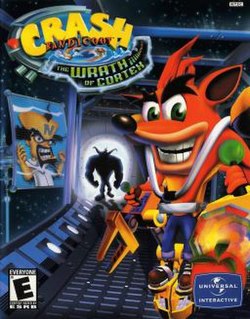
 Samurai Warriors 5 on Switch
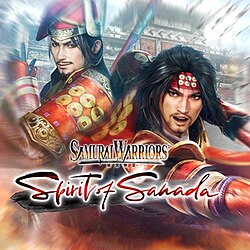
 Samurai Warriors: Spirit of Sanada on Switch
 Hyrule Warriors: Definitive Edition on Switch
 Fire Emblem Warriors: Three Hopes on Switch
 Dragon Quest Builders 2 on Switch










 Another SquareThought Site