

 Feb 2015
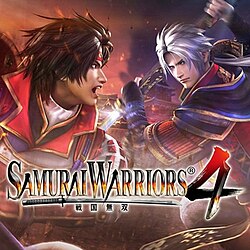

Samurai Warriors 4-II is the 'different' follow-up to Samurai Warriors 4 rather than a conventional expansion. Released on PS4 (along with PS3, PS Vita and PC) in 2015, II reworks pacing, story structure and some systems rather than trying to fix every problem the base game had. If you liked the series' trademark 'be a human lawnmower with a sword' gameplay but wished it had slightly smarter progression and more coherent character focus, this is the variant that tries to answer that prayer. On the technical side, II is best read as a tuning patch with content toppings: one extra playable (Naomasa Ii), a retooled Story Mode that focuses on individual characters, Survival Mode, and a set of mechanical adjustments aimed at balance and presentation. The result is not revolutionary, but it's markedly more deliberate than the original release.
Where Samurai Warriors 4-II earns its keep is in systemic changes and the surgical approach to action balance. The game's core remains Omega Force's classic crowd-combat loop: wide-area normals that chain into Musou specials and finishers, against a constant sea of cannon-fodder enemies and higher-priority officers. II tweaks that loop rather than upend it. At the input layer you still have light/heavy strings that combo into Musou and special moves. The tag-style character-switching from Chronicles returns, allowing two-character loadouts with instant swapping. That design significantly impacts flow: one character clears mob density while the other hunts objectives or officers, which reduces downtime and gives the AI fewer chances to trivially clog your momentum. Hyper Attacks provide a secondary dash-swipe to clear crowds and preserve combo flow; they're deliberately gated - useful for crowd control but ineffective against named officers, which preserves some threat hierarchy instead of letting Hyper Attack trivialize every encounter. The Rage Mode/Spirit Gauge mechanic is an interesting design constraint. You burn Spirit to trigger a short invulnerable state with boosted output and a buffed Musou attack. Mechanically, that creates a resource tradeoff: use Rage to brute-force through a dense choke or save it for an officer who needs a musou-powered finish. That layering adds a thin but meaningful metagame to encounters and is one of the few places where the game nudges players into decision-making beyond 'hit everything until it dies.' Musou Attacks were altered to include distinct finishing animations that no longer permit free movement during their duration. That change cleans up a technical problem (players cancelling into other actions mid-finisher could break pacing) at the cost of a little theatrical freedom. Enemy generals lost absolute invulnerability during their finishers and instead gain Hyper Armor; this is a smart change in terms of perceived fairness - you can now trade with a general instead of being stuck watching a scripted invulnerability. The change also demonstrates an attention to combat feel and state machine design: less dead time, more readable windows for risk and counterplay. II also focuses on modes and progression. The revamped Story Mode shifts emphasis away from one-story-per-character toward character-driven chapters and scenarios. This restructuring helps the writing and pacing, and makes the campaign feel less like a fragmented anthology. Chronicle Mode and create-a-warrior remain deep, with additional weapon movesets and the ability to recruit officers as partners. The new Survival Mode is an obvious fit for the formula - it pushes the combat loop to its limit and exposes balance edges - and II's 'action balance' update smooths out some previously spiky DPS curves and invulnerability incidents. On the roster front, the II update adds Naomasa Ii, bringing the cast to 56. The sheer volume of characters is both a blessing (choice, variety of move libraries) and a balancing nightmare; II's action-balance patches do a respectable job of narrowing the gap between the extremes of 'overbearing mainstays' and 'useless edge picks', but character performance still hinges on move-set synergy and player familiarity. Duels, cut-scenes and character development systems were all nudged toward more clarity, and the net effect is a game that feels polished in terms of systems even if it never becomes strategically demanding. Where II stumbles tactically is depth. Combat is satisfying on a micro level, but the systems rarely compound into emergent complexity: encounters are resolved through better gear, higher level stats and more aggressive button mashing rather than layered counterplay. That said, if you treat the game as a technical exercise in pacing and balancing rather than a deep action-RPG, II is a tidy evolution.
Visually Samurai Warriors 4-II adheres to the series' established style: exaggerated character designs, clean models, and battlefield-scale scenes filled with dozens of enemies. The PS4's iteration mainly provides a cleaner presentation and slightly higher-resolution textures compared to previous-gen ports, and the studio used cut-scenes and finishers to show off character models and signature moves. The Musou finishing animations received separate polish from the True Musou sequences, which reduces visual redundancy and keeps spectacle fresh when you use multiple characters in a stage. Crowd density is handled in a way that favors frame stability over brute-force particle overload: enemy models are relatively low-poly with simplified shader work at range, while close-up characters use more detailed rigs and facial textures. This is a sensible trade-off for a game that needs to maintain readability during mass skirmishes. Cut-scenes and the new character-focus Story Mode get a little more camera attention and cinematic staging, which helps with narrative clarity even if the writing veers into romanticized history. The DX version and later releases bundle hundreds of DLC pieces - costumes, weapons and music - and while II itself doesn't rework the art direction, those cosmetic packages provide significant visual customization. Texture swaps, silhouette changes and weapon VFX give players more agency over both aesthetics and the small-but-pleasant dopamine hit of incremental visual upgrades. For a studio whose priority is relentless action rather than photoreal fidelity, the graphical balance here is logical and effective.
Samurai Warriors 4-II is best judged as a systems-first update: it doesn't reinvent Omega Force's anarchic battlefield formula, but it does interrogate where that formula felt sloppy and corrects course. The combat tweaks - Hyper Attacks, Rage Mode, revised Musou finishers and Hyper Armor on enemy generals - are technical changes that improve pacing and fairness, and the Story Mode refocus gives more meaningful context to otherwise scattershot narratives. On PS4 the title benefits from clearer textures and better-presented cut-scenes, and the added Survival Mode and character development adjustments expand longevity. If you are a completist for the series or enjoy high-action, low-complexity brawlers with massive rosters, II is worth the time; it smooths out many rough edges and ships with a competent suite of modes. If you were hoping for a deeper strategic layer or systemic reinvention, II's changes are incremental rather than radical. Overall, this is a solid, technically tidy entry: lean, well-balanced, and occasionally brilliant in the small decisions it fixes - which is why it sits comfortably at 7.5 out of 10 in this reviewer's book.
 Touken Ranbu Warriors on Switch
 Samurai Warriors 5 on PS4
 Onimusha Blade Warriors on PS2
 PlayStation Home on PS3
 Gaelic Football '25 on Xbox Series X/S
 Together! The Battle Cats on Switch
 Crash Bandicoot: The Wrath of Cortex on PS2
 Samurai Warriors 5 on Switch
 Samurai Warriors: Spirit of Sanada on Switch
 Hyrule Warriors: Definitive Edition on Switch
 Fire Emblem Warriors: Three Hopes on Switch
 Dragon Quest Builders 2 on Switch










 Another SquareThought Site