

 Nov 2020


If you liked swinging around Manhattan as Peter Parker and wanted a snack-sized, sharper espresso version of that thrill, Miles Morales on PS4 is for you. This standalone follow-up leans into tight combat encounters, stealth scaffolding, and traversal puzzles that test reflexes, situational awareness, and a sprinkle of patience. On PS4 you won't get the PS5 ray-tracing fireworks, but you will get the same core challenges: learning new abilities, threading gadget combos through hectic fights, and reading enemy patterns like a very stressed chess player with sticky fingers. Consider this your training montage: the city is snowy, the stakes are personal, and the game wants to see if you can think like a Spider-Man who actually has to grow into his suit.
The challenge in Miles Morales is less about cheap difficulty spikes and more about building a toolkit of mechanical skills and then using them under pressure. Combat is the obvious place this shows. At first glance the system inherits the smooth, rhythmic brawling of its predecessor: light attacks, heavy finishes, aerial juggling, and environmental takedowns. But Miles adds a few spicy ingredients that change how fights play out and what the game asks of your thumbs and brain. Venom blasts are the headline here. This bio-electric ability lets you stun enemies, charge or drain electronics, and when upgraded, lays down a big area-of-effect blow. You can't just spam it: managing Venom power, choosing when to expend it to break a shield or finish an elite, and reframing fights around its cooldown is a new muscle to grow. It rewards timing and planning: pop Venom to interrupt a stun-resistant foe, then chain a gravity well or a web-capture to keep the combo flowing. The best players will treat Venom like a temperamental sidekick - powerful, but surprisingly needy. Gadgets are more than trinkets. Remote Mines attach to enemies or panels; Gravity Wells bunch enemies together for cinematic follow-ups; holographic fighters distract patrols and can split attention during large skirmishes. Learning to combine webs, gadgets, and the environment is the core skill loop. For example, start a fight from stealth by using Camouflage to get a takedown, drop a Gravity Well on the remaining goons, toss Remote Mines at a displayed electrical panel, then finish with a Venom explosion. The game nudges you into improvisational choreography - the level of challenge rises when enemies arrive with shields, stun-bats, or flight packs that punish greedy button-mashing. Stealth sections are a solid training ground for patience and planning. Miles' camouflage gives temporary invisibility, letting you thread between sightlines for silent takedowns. The stealth is smartly designed: guards respond to sounds and lights, some areas feature camera networks that require gadget usage, and the map often offers multiple insertion points. These sequences reward observation: scan the area with your spider-app, mark patrol routes, and prioritize targets. A rushed stealth approach equals being swarmed; a methodical one makes you feel like a ghost with a cool jacket. Traversal is a competency challenge in itself. The open-world Manhattan is smaller than the main game's map but denser, and snowy conditions add a mood that doesn't affect mechanics but does make movement feel cinematic. Swinging efficiently is a hidden skill - stringing zip-pulls from building to building, catching ledges, and chaining aerial attacks to keep momentum in fights require spatial awareness and timing. Fast travel exists, but to master the game you want to minimize it. The reward is muscle memory: after a few hours you're timing slingshots off rooftops like a caffeinated acrobat. Boss encounters and set-pieces lean on pattern recognition. Rhino is a good example: he telegraphs charges and stomps, and the fight forces you to integrate your gadgets, dodges, and the Venom ability. The Underground and Roxxon forces introduce variety via R&D-enhanced suits and programmable-matter weaponry; each new enemy type nudges you to adapt rather than rely on a single reliable move. Quick reflexes help, but so does learning when to retreat and reset a fight. The skill tree and upgrade choices themselves are a strategic layer of challenge. You can't unlock everything immediately, so you must choose playstyle-defining upgrades: do you extend camouflage duration, increase Venom power regeneration, or enhance web-utility? The game encourages experimentation by providing side activities and crimes via the Spider-Man app that grant XP - completing those not only smooths the difficulty curve but also introduces mechanical diversity earlier. That said, the game's shorter runtime means the window to explore all permutations is smaller than in a full-sized open-world epic, which ups the stakes on your choices. One more subtle test: the game forces you into non-powered civilian sections occasionally. Those moments strip the toolkit away and challenge your pacing and narrative patience, but mechanically they also bake tension into the overall experience. You're not always the invincible web-slinger; sometimes you're the kid who has to solve a problem without spidey-powers, which is an underrated form of difficulty design. Overall, Miles Morales on PS4 asks you to develop reflexes, pattern reading, gadget synergy, resource management (especially with Venom), and traversal competence. It doesn't punish you with unfair difficulty so much as invite you to get better at a compact and polished skill set.
On PS4 the game looks great for the hardware but predictably leans on smart art direction rather than next-gen eye candy. The snowy Manhattan and the vibrant Harlem neighborhoods give the city personality and make traversal meaningful. Character models and animations are expressive, which matters during combat when precise hit reactions and weight cues tell you whether an enemy is staggered or about to counterattack. Technical features like high-fidelity reflections and ray-tracing are PS5 perks, but the PS4 experience still presents readable visual information - important when you need to spot an explosive barrel, a web-swing anchor, or an enemy gadget in the middle of a firefight. Framerate dips can happen on crowded set-pieces, but they rarely break combat rhythm. The short runtime keeps assets focused and polished rather than stretched thin.
If you want a challenge that improves you rather than frustrates you, Miles Morales on PS4 is a compact masterclass in combat and traversal skill design. It pushes players to manage resources, chain gadgets into combos, and read enemy patterns while rewarding patience in stealth and precision in timing. The PS4 version forgoes some visual bells and whistles but preserves the mechanical heart: Venom timing, gadget synergy, and traversal rhythm are intact. The game is shorter than a full Spider-Man epic, which makes progression choices feel weightier and the learning window tighter. This is a great title for players who enjoy getting mechanically better - expect to be humbled by Rhino, outfoxed by Underground tech, and eventually smugly fluent in Gravity Well-to-Venom combos. Recommended for anyone who loves skill-based action with charm, not for those hunting next-gen visuals as the main draw.
 Old Man's Journey on Switch
 Pac-Man World Re-Pac on PS5
 Iron Man 2 on PS3
 Tintin: Destination Adventure on PlayStation
 Disney's Chicken Little: Ace in Action on PS2
 One Piece Grand Adventure on PS2
 Taiko no Tatsujin: Dokodon! Mystery Adventure on Switch
 Marvel's Spider-Man 2 on PS5
 Ratchet & Clank: Rift Apart on PS5
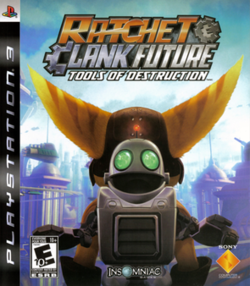
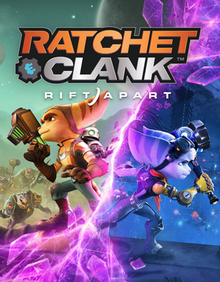 Ratchet & Clank Future: Tools of Destruction on PS3
 Marvel's Spider-Man: Miles Morales on PS5
 Ratchet & Clank Future: A Crack in Time on PS3










 Another SquareThought Site