

 May 2017
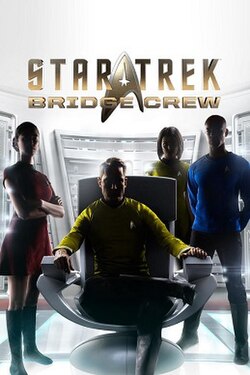

Star Trek: Bridge Crew drops you into a spaceship bridge where the real danger isn't always Klingons - it's your friends. Originally built as a full-on VR experience and later patched for traditional play, this game puts up to four players into the familiar roles of captain, helm, tactical and engineer aboard the USS Aegis as they hunt for a new Vulcan homeworld in a sector called The Trench. If you have ever wanted to be the person issuing calm orders while someone frantically reallocates power to life support, this is the game that will teach you how to do it poorly, and eventually, maybe, correctly. This review privileges the challenge side of Bridge Crew: what skills it asks of you, how it punishes sloppy teamwork, and what it rewards. It's not about pew-pew pew starship dogfighting spectacle; it's about coordination, command, and the small, glorious victories of a crew that communicates. Expect to practice loud, clear callouts, to triage systems while under fire, and to develop a vocabulary for catastrophe.
Bridge Crew is a role-driven, cooperative exercise in controlled chaos. Each player picks a station and gets a very specific toolkit and responsibilities. The captain is the only one who sees mission objectives natively; everything else is dependent on the captain communicating those goals and prioritizing. That setup turns the captain role into a leadership exam: you must issue concise orders, manage expectations, and resist the urge to micromanage every power toggle. Leadership here isn't a cosmetic title, it is a practical skill you will either master or be mercilessly roasted for. The helm officer focuses on navigation. On PS4 that translates into steering the ship between regions, managing impulse versus warp, and executing maneuvers to avoid hazards or to position the ship for attacks and rescues. Spatial awareness and timing are crucial. A good helm player learns to read the tactical officer's data, anticipate threats, and keep the ship in the sweet spot where weapons hit and your shields aren't being microwaved. Tactical is the battlefield brain. You manage sensors and weapons, decide when to fire or when to pull back, and call out threats. Tactical players must be decisive and comfortable working with imperfect information; sensors can be noisy and late, and a slow shot might be a missed objective. The role rewards pattern recognition, threat prioritization, and a healthy relationship with the 'lock target' button. The engineer is resource management incarnate. This role redistributes power between engines, shields, weapons and auxiliary systems, and supervises repairs. The game forces you into triage decisions: power the shields or push more to engines to reposition; route to weapons and risk slower repairs, or sacrifice offensive power to keep the crew alive. Engineers need multi-tasking skills, calmness under pressure, and a knack for improvisation. When systems break, repairs are not instant; allocating personnel and attention becomes a skill you refine. NPCs can fill non-captain seats if you play alone, but their behavior is predictable and can't replace the improvisational flair of human teammates. Playing with three other humans is where the game sings: clear communication, shorthand commands, and trust create tense, memorable encounters. For single players or pickup groups, the game mitigates some complexity by allowing NPC control, but the challenge and satisfaction drops when you trade human unpredictability for AI reliability. Missions come in two flavors: scripted story missions and randomly generated encounters. The latter keep the pacing fresh and force you to apply core skills under different constraints. Random missions are excellent for practicing triage, because you never know which subsystem will fail first or how many Klingon ships will decloak behind you. The learning curve is real. Early sessions consist of people talking over each other, shouting 'shields!' and turning off the wrong reactor because they misunderstood the captain. That awkward phase is a feature, not a bug: Bridge Crew trains you in communications discipline. Use short, standardized callouts. Assign roles within roles (a repair rotation, a weapons priority list) and stick to them. Over a few missions your crew will develop rhythm and start to feel like an actual command team. On PS4, the game initially launched as a VR flagship but was patched in December 2017 to be playable without a headset. That opens the door for couch commanders and less motion-sick players, but the core challenge remains the same: organizing a small team around a shared information set and making good decisions fast. If you prefer tactile, hand-tracked input, VR adds immersion and quicker, intuitive gestures. Non-VR play makes the experience more menu-driven and slightly less theatrical, but still demanding in terms of decision-making and teamwork. If you know Artemis: Spaceship Bridge Simulator, you'll recognize the DNA. Many critics called Bridge Crew 'Artemis in the Star Trek universe,' and the comparison is fair - both are about human teams coordinating on a single goal. Bridge Crew adds licensed Star Trek polish, voice direction, and a focus on accessible roles, which is great for players who want the license and the learning scaffolding. Expect a lot of 'do what I say' moments and also glorious successes when your crew pulls off a nail-biting extraction or perfectly times a warp jump out of danger.
Bridge Crew prioritizes clarity and immersion over graphical showboating. The bridge models, instrument panels and environmental effects look clean and purposeful on PS4, especially in VR where depth and scale make the bridge feel like an actual workplace. Textures and distant ship models aren't pushing photorealism, but they don't need to: the visuals convey tactical information clearly, which is what matters when your engineer is yelling about power surges. Audio and direction in VR have been singled out for praise, with awards recognition for VR direction; sound cues are a large part of the challenge, helping you triage issues when your eyes are busy. On PS4 without a headset, the game is still visually serviceable and the UI adapts to a controller-driven workflow. The result is a solid aesthetic package that supports gameplay more than it hogs the spotlight.
If your idea of fun is coordinating frantic resource swaps while someone else screams about Klingons on the port bow, Bridge Crew is a rare game that turns leadership and cooperation into satisfying gameplay. The challenge is social and cognitive rather than twitch-based: you will be tested on communication, delegation, prioritization, spatial navigation and quick decision-making under pressure. The learning curve can be steep, but it's rewarding - teams that learn to speak the same tactical language will feel brilliant. Bridge Crew's PS4 incarnation lets more players try the experience without the barrier of VR hardware, though the purest thrills still come from sitting in VR and feeling the bridge around you. The game isn't flawless - graphical ambition is moderate and some single-player stretches rely on predictable NPCs - but as an exercise in multiplayer challenge design it succeeds. It earned generally positive reception and scores that reflect a strong concept well executed. If you love Star Trek, leadership simulation, or cooperative challenges that rely on human chemistry, this one's worth a mission or two. Just remember to assign an engineer before you warp into excited chaos.
 Lego Star Wars II: The Original Trilogy on PS2
 Angry Birds Star Wars on PS3
 Tintin: Destination Adventure on PlayStation
 Disney's Chicken Little: Ace in Action on PS2
 One Piece Grand Adventure on PS2
 Taiko no Tatsujin: Dokodon! Mystery Adventure on Switch
 Tom Clancy's Rainbow Six: Rogue Spear on PlayStation
 Tom Clancy's Rainbow Six on PlayStation










 Another SquareThought Site