

 Nov 2016
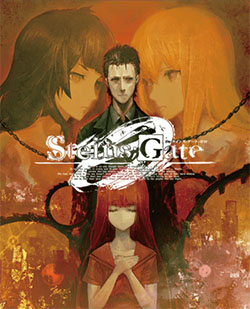

If you thought 'challenge' in games only meant memorizing boss patterns or landing that one pixel-perfect parry, Steins;Gate 0 will teach you otherwise. This is a visual novel that dresses like a detective sci-fi and behaves like a homework assignment handed down by a very dramatic quantum physics professor who also happens to enjoy melodrama. On PS4 it's presented with clean menus and controller-friendly navigation, but make no mistake: the real difficulty sits inside your skull and your willingness to be patient, meticulous, and emotionally honest. The game rewards careful reading, pattern-spotting across playthroughs, and the kind of stubborn curiosity that makes you click through the same scene twice because you suspect some tiny choice is the key to the right world line.
At its mechanical core, Steins;Gate 0 is glorified reading with decision nodes - but those nodes hide layered challenges. The primary player interaction comes through Okabe's phone: you either answer or ignore calls from the Amadeus AI, and you reply to RINE messages with text or stickers. Simple on the surface, but the choices are the strings that pull entire branches of narrative physics. Early on the story splits into two major branches which then fan into multiple endings and side stories. That single early branch point creates a branching architecture where one small decision can vault you into a radically different emotional and narrative landscape. To play effectively you need several non-obvious skills. First, reading comprehension and focus - this is a text-first experience and losing concentration on a paragraph can cost you subtle context that changes how you judge later choices. Second, meta-cognition: the game expects you to think about your playthroughs as experiments. Knowledge gained in one run is currency for the next; remembering who said what, when, and what that might imply about a hidden motive is how you get the more satisfying paths. Third, logical inference and detective work pay off. The localization team kept plenty of scientific and cultural flavor intact, so being able to parse hints about AI, cognitive science, and time travel theory (or at least using the in-game Tips and dictionary) helps you make smarter choices without constantly leaning on a guide. The RINE messaging system is a neat gameplay upgrade over the original game's text choices: you can preview the exact message you'll send, and the system auto-saves at points when you answer, which cleverly reduces save-scumming drudgery. RINE messages, however, generally do not change major branches; they mostly flavor scenes and deepen character bonds. The Amadeus calls are the true branching levers. Expect some opacity: critics noted that it can be difficult to discern which actions actually affect endings. That ambiguity is a feature as much as a drawback - it ups the tension and forces you to engage in trial-and-error exploration, but it can also be maddening if you want a clean, checklist-style run. Time commitment is another challenge. The game is long and deliberately paced, with many scenes that build atmosphere or character instead of advancing plot immediately. Some reviewers called parts 'padding', but from a challenge perspective that pacing is a training ground in patience - you'll be rewarded if you can resist skimming and instead absorb character beats that later become essential puzzle pieces. The game's branching structure also creates an endurance challenge: to unlock the true final route (notably the 'Milky-way Crossing' ending), you must finish specific major endings first. That means multiple long playthroughs, careful save management, and a willingness to backtrack and unspool previous choices. Expect to learn, re-learn, and then use that cumulative knowledge to wrestle the story into the world line you want. There are softer skill requirements too. Emotional resilience helps. This is darker, more serious sequel material - you'll be pushed into morally thorny spots where the correct choice isn't obvious and might hurt someone. That tension, intentionally crafted, becomes part of the 'difficulty' because it asks you to make ethically charged decisions while emotionally invested. Finally, language and cultural literacy matter more than usual for western players; the English localization is thoughtful and retains Japanese flavor. The built-in Tips and dictionary mitigate this, but players who enjoy diving into referenced science or kanji-flavored terms will get more out of the experience.
Visuals in Steins;Gate 0 are the kind that whisper 'we're a visual novel' rather than bombarding you with animation. Character art by Huke is sharp and expressive; sprites may not have many frames, but the dev team uses context-driven expressions and small details (like Okabe's visible fatigue) to communicate emotional states. Backgrounds are detailed enough to give Akihabara personality without distracting from the text box. On PS4 the game runs cleanly and benefits from higher resolution assets compared to handheld versions. The presentation is helped massively by Takeshi Abo's soundtrack: tracks are timed to emotional beats, underscoring scenes in ways that make the narrative stakes feel heavier. From a challenge perspective, the restrained animation forces you to read what's between the lines instead of relying on action cues - if you miss a line, there's no flashy cutscene to bail you out.
If you go into Steins;Gate 0 expecting twitch-based tests of skill, you will be disappointed - unless you count the twitch in your chest when Okabe says something heartbreaking. The real challenges here are mental and emotional: concentration, inference, memory across multiple playthroughs, and a willingness to engage with a morally messy, science-heavy story. The game's branching map rewards forensic thinking: take notes if you must, use the Tips system, and treat each run like a research trial. The PS4 release packages all of that in a polished, comfortable interface, with presentation and audio that punch above what a text-heavy game usually gets. This isn't casual fare. It demands time, mental bandwidth, and sometimes stubborn repetition to uncover its best endings. If you enjoy narrative puzzles, detective work, and slow-burn emotional payoff, Steins;Gate 0 on PS4 is a gratifying challenge. If you crave immediate gameplay feedback or hate replaying long stories, know that the difficulty curve here is patience and attention rather than reflexes. For those willing to do the homework, the payoff is one of the more thoughtful and character-rich visual novels modern consoles offer - and yes, the story will probably make you replay scenes just to see how you could have been smarter. Which, frankly, is the point.
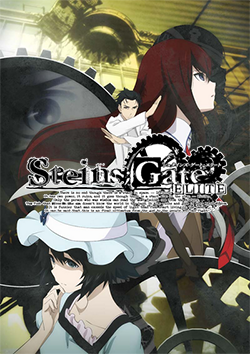 Steins;Gate: My Darling's Embrace on PS4
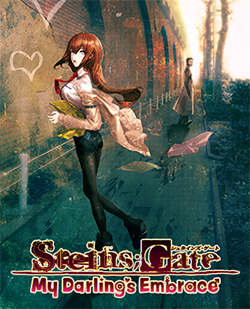 Robotics;Notes Dash on PS4
 Root Film on PS4
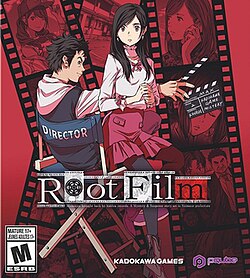 Tokimeki Memorial Drama Series Vol. 3 Tabidachi no Uta on PlayStation
 Oshiete! Popotan on PS2
 Princess Princess on PS2
 Robotics;Notes on PS3
 Memories Off 6: Next Relation on PS2
 Robotics;Notes Elite on PS4










 Another SquareThought Site