

 Sep 2018


Steins;Gate Elite is the sort of game that treats time travel like a relationship: messy, emotionally exhausting, and worth rewriting three times just to get it right. This PS4 release isn't a new story so much as a bold retelling - the classic Steins;Gate visual novel rebuilt as a "Full Animation Adventure" that stitches together the original game's script with footage from its anime adaptation (and fresh animation by White Fox) so the whole thing moves like an interactive film. If you came for the sci-fi paradoxes you'll stay for the people; Elite's strongest trick is how it magnifies character work that was already excellent in the 2009 original. In other words: it's still a tale about causality and gadgets, but now every awkward tsundere glare and small tragic smile actually animates, and that changes how the arcs hit you.
Mechanically, Steins;Gate Elite does what a visual novel is supposed to do - it hands you a script and at key beats lets you nudge events down different branches - but it dresses those mechanics in cinema. The game runs the anime footage alongside the original voiced script, the UI is intentionally unobtrusive, and the player's job is to read, advance, and occasionally choose. On PS4 you get smooth HD playback and the inclusion of an HD remaster of "Steins;Gate: Linear Bounded Phenogram," which is a nice meatball on the side for series fans. Where game design becomes character work is in how animation and timing change perception. Rintaro Okabe - Okarin, mad-scientist persona, chairman of the Future Gadget Laboratory - is easier to empathize with when his gestures and micro-expressions are visible. His theatricality used to live in bold text cues and voice acting; in Elite, the camera lingers, his nervous laugh becomes a visual tic, and his slow collapse into seriousness during the heavier beats feels earned. The game keeps his eccentricity, but the animation turns the persona into a worn costume you can see fraying during private moments. That makes his growth from jokey showman to someone carrying impossible knowledge much more visceral. Makise Kurisu's arc benefits the most from the remake's animated treatment. The original Kurisu was brilliant, dry, and sharp-edged in text; here, White Fox's subtle facial work and breathing room between lines add layers. You can watch skepticism soften into trust in a handful of frames, and that quiet progression - curiosity, guarded warmth, then complicated regret - reads as an arc that the player witnesses rather than simply reads. Because Elite stitches anime scenes with newly animated content for segments not adapted on-screen before, Kurisu's quieter beats avoid feeling truncated. The result is a Kurisu who moves the plot through intelligence but anchors it through human moments. Shiina Mayuri, the emotional fulcrum of the story, is where Elite pulls off its gut punch. One of Steins;Gate's defining techniques is to use repetition - events repeated across timelines - to build dread and grief. Seeing Mayuri's soft smile and playful gestures animated, then watching those same gestures in other iterations where fate twists them into tragedy, intensifies the heartbreak. The animation makes the stakes tangible: time loops don't just change text; they change how a person appears in light and motion. For players who've only read the visual novel, these looped images will feel familiar and now painfully immediate. Secondary cast members like Itaru "Daru" Hashida and Suzuha Amane are treated with similar care. Daru's comic relief gets physical payoffs - floppy shoulders, obvious hunger, the kind of body-language shorthand that turns a one-liner into sympathy. Suzuha's aching displacement and warrior's weariness read stronger when her quiet, offhand moments are given animation to hold them. Even the lesser scenes featuring Moeka and other peripherals hum with more context; an off-kilter gaze or an awkward hand movement can turn suspicion into tragedy without changing a single line of dialogue. Elite's branched structure is intact: choices still send you down different endings, and the moment-to-moment interactivity-pressing to advance the animation and text-creates a unique rhythm. The game is less about quick-time reflexes and more about pacing: being allowed to sit with a frame, to press and watch, to register the small things. For players who value character arcs over minigames, this is a perfect marriage of form and content.
If you like anime aesthetics, Elite's presentation is a love letter. The game is literally built from the Steins;Gate TV series footage and supplemented by White Fox's new animations for scenes that the anime never covered. The playback is clean on PS4 and the interface is designed to melt into the corners so the animation remains the star. That remastering work matters: background details that were suggested in sprite-based VN days are now full environments - the fluorescent hum of the lab, the dusty slant of Akihabara alleys - and these spaces influence the tone of character moments. Facial animation is the headline: tiny shifts in an expression make the difference between sarcasm and pain. There are inevitable seams where reused anime footage and new cuts meet, but the development team's work to deconstruct scenes (splitting multi-character animations into single-character plays to mimic VN pacing) largely pays off. The result is a visual novel that actually looks like a living, breathing movie, while retaining the intimacy of prose and voice acting.
Steins;Gate Elite is not merely a prettier wrapper for the original novel; it's a retranslation of the story into a medium that emphasizes motion and micro-expression. If you already love Steins;Gate, Elite rewards you with amplified emotional beats: Okabe's slow erosion of bravado, Kurisu's thawing guardedness, and Mayuri's tragic rotations around fate are clearer and more devastating because you can now witness them in motion. For newcomers, the payoff is similar-this release makes the characters feel present rather than schematic. The branching remains satisfying, the script retains its strong voice, and the animation elevates scenes that were already strong on paper. There are caveats: some purists will miss the silence and room for imagination afforded by static sprites; others will notice small continuity juggling acts required to marry anime and VN structure. But those are bumps on what is otherwise a carefully reconstructed emotional machine. On PS4, with HD polish and extra goodies like the Linear Bounded Phenogram remaster included, Elite represents one of the best ways to experience the Steins;Gate saga. It's cerebral, it's frequently heartbreaking, and it makes you care about a ragtag group of lab members enough to keep rewinding the universe until you get it right. Recommended for anyone who likes their science fiction with a side of human consequence and a generous helping of tear-soaked rewrites.
 Steins;Gate: My Darling's Embrace on PS4
 Robotics;Notes Dash on PS4
 Root Film on PS4
 Princess Princess on PS2
 Tokimeki Memorial Drama Series Vol. 3 Tabidachi no Uta on PlayStation
 Oshiete! Popotan on PS2
 Robotics;Notes on PS3
 Memories Off 6: Next Relation on PS2
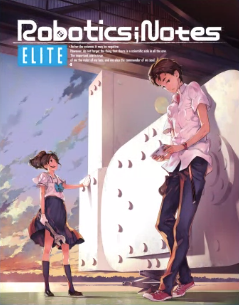
 Robotics;Notes Elite on PS4










 Another SquareThought Site