

 Jul 2016
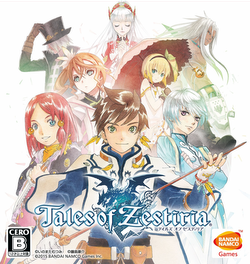

Tales of Zestiria on PS4 is an oddball cocktail: classic Tales series charm poured into an open-world bottle, shaken up with a new Fusionic Chain Linear Motion Battle System and topped with Armatization - basically a glittering anime sword-and-spell fiesta that occasionally trips on its own cape. If you care about challenge, this is less Dark Souls-style punishment and more training montage: you won't be killed by unfair cheap tricks so much as by your own sloppy inputs, poor resource choices, and a tendency to treat dodging like a recommended optional feature. The game's battle systems and exploration try to be seamless, and most of the challenge comes from learning their rules, juggling gauges and partner fusions, and adapting to topography that can either help you look heroic or make you look like you slipped on a decorative rock.
The core of Zestiria's challenge is its Fusionic Chain LMBS, an action combat engine that rewards rhythm, awareness, and the sort of timing that makes rhythm-game players smirk. Battles happen on the same map you explore - Real Map Battles - which means positioning and environment matter. Ponds, rocks and elevation aren't set dressing; they change movement and attack options. Preemptive strikes grant the advantage, so recon and crowd control are useful skills. The human characters use close-range artes while Seraphim specialize in mid-to-long-range magic, and the interplay between both is the game's mechanical playground. Learning to exploit that rock-paper-scissors relationship between standard attacks, artes and spells is the clearest path from "I press buttons" to "I am a walking elemental paradox." Timing is everything. The Spirit Chain (SC) gauge is your chaining resource: stagger enemies with precisely timed side-steps (they work like a defensive rhythm attack) and you'll fill the SC fast, enabling link attacks and conditional buffs. The Blast gauge is your safety blanket and panic button - a directional energy blast that knocks enemies back and heals injuries - but it's limited, so you either hoard it for clutch moments or become a walking spa for monsters. The SC system caps linked attacks at four, and the order is fixed, so planning the flow of linked combos before you pull the trigger (or smash the face button) is a real strategic layer. Once you master side-steps and stagger windows, challenging fights become about resource economy more than raw stats: who gets to use Mystic Artes, who Armatizes first, and which Seraphic ability wins the terrain war. Armatization is the headline mechanic and a delight to learn. Fuse Sorey or Rose with a Seraph and you get a hybrid form with boosted stats and new element-themed attacks - Lailah gives you fire swords, Mikleo gives water bows, Edna gives earth fists. It's not just cosmetic power-up; timing an Armatization can resurrect a downed human if their Seraph is still active, which makes managing your Seraph partners an actual survival skill. Swapping Seraphs between battles opens up tactical options: want ranged suppression? Put a Seraph who excels at long-range artes. Need big single-target damage for bosses? Armatize with the right partner and chain into a Mystic Arte. In short: adapt or die, but usually adapt and then flex. Beyond core combat, Zestiria layers on equipment with skill slots and Normin side-quests that unlock active abilities. Equipment management becomes a micro-game: accessories can be fused, pieces have four skill slots, and combinations yield extra effects. If you like tinkering, this is where challenge shifts to optimization - build for SC regen, Boost Mystic Arte frequency, or prioritize survivability for tough open-field encounters. Battle Acts, unlocked by meeting post-battle requirements, grant passive or active perks that change playstyle-run faster, act wilder, or get a bonus when you purify Hellion. Those systems reward attention to detail and willingness to grind for nuance. Exploration skills matter too. Field navigation isn't a simple "open world checklist" - many regions are controlled by Lords of the Land and require Seraph protection to unlock conveniences like warp points. Completing objectives to level up protection forces you into local battles and forces you to adapt combat strategies to an area's enemies and topography. Some traversal abilities come from specific Seraphs (teleportation across gaps, smashing obstacles, lighting dungeon lamps), so knowing when to switch partners is as much a puzzle as it is a combat decision. The game doesn't hold your hand: tutorials can be vague, teleportation is sometimes disabled by story beats, and hints are thin on the ground. If you prefer a GPS telling you exactly where to go next, prepare for aimless wandering now and then. If you prefer detective work and on-the-fly problem solving, Zestiria's exploration is a decent test of situational awareness. There are also non-mechanical friction points that add to the "challenge of living with the game." Camera behavior can be unreliable in both exploration and combat, which penalizes mistakes and can turn a tight dodge into an accidental faceplant. The AI of party members has moments of silliness - they might not always assist your carefully executed combo - which transforms some fights into babysitting duties. Frame-rate dips have been reported on console hardware, occasionally turning precise inputs into slightly laggy responses. All of these are less about being "cheap difficulty" and more about layering extra difficulty you have to learn to compensate for: anticipate poor camera angles, account for AI habits, factor small performance hiccups into your timing.
Graphically, Zestiria is a mixed bag on PS4. The art direction, character design and Ufotable-cutscenes shine: the world looks like an animated painting and character models have that expressive, anime-made-real energy. Outside of cutscenes, however, the engine occasionally stumbles - some environments feel dated and there are rough patches during open-world traversal. Frame-rate dips were noticed by reviewers, suggesting the seamless transition between exploration and combat sometimes overloads the system. For players focused on challenge, this matters because visual clarity is part of combat readability; when frame-rate and camera get twitchy, you have to add "hardware tolerance" to your list of skills. In short: the game looks great when it's trying hard, and a bit old-school when it's tired.
Tales of Zestiria on PS4 is a battle-systems-oriented RPG that asks you to learn more than punch-button reflexes. It rewards timing, resource management, partner swapping and positional thinking, and it layers exploration mechanics that force you to plan routes and unlock conveniences. If your idea of a good time is mastering a flexible combat toolkit - filling SC gauges, nailing side-step staggers, and deciding exactly when to Armatize to swing a fight - Zestiria will give you steady, approachable challenge with moments of real tactical delight. If you detest obscure tutorials, camera tantrums, and party AI that occasionally acts like it's off reading a book in the corner, the game will test your tolerance as much as your skill. Overall, it's a competent, occasionally brilliant action RPG; not flawless, but full of systems that will keep a mechanically curious player busy and satisfied. Consider it a competent shepherding course: enroll if you like learning systems, bring patience, and maybe a spare controller for the times the camera decides to play rogue seraph.
 Tales of Graces f Remastered on PS4
 Cris Tales on PS4
 Coloball 2002 on PS2
 Press Your Luck on PS3
 Constantine on PS2
 Nicktoons: Battle for Volcano Island on PS2
 Tales of Arise on Xbox Series X/S
 Ace Combat 7: Skies Unknown Deluxe Edition on Switch
 Puyo Puyo Tetris 2 on Xbox Series X/S
 Tekken 8 on PS5
 Tales of Arise on PS5










 Another SquareThought Site