

 Mar 2016
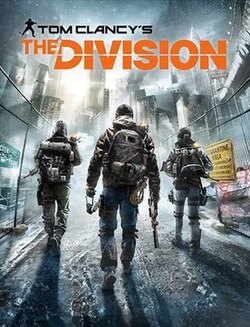

Tom Clancy's The Division arrived on PS4 as an ambitious 'shared-world' action RPG with the sort of production values that make you want to invite the console over for dinner. Built on Massive Entertainment's new Snowdrop engine, The Division grafts cover-based third-person shooting onto MMO-ish loot loops and a social PvP area called the Dark Zone. On paper it reads like a checklist of modern multiplayer aspirations: destructible urban environments, a systemic progression tree, gear rarity tiers, dynamic weather and day/night cycles, and a base of operations that ties narrative and gameplay progression together. In practice the game is a fascinating technical stew - sometimes perfectly seasoned, occasionally over-salted - but always interesting for anyone who likes to poke around the mechanics underneath the shiny veneer.
Mechanically The Division is an exercise in systems engineering with guns. Core combat sits on a robust third-person cover framework: you snap behind geometry, peek, and trade controlled bursts while managing cooldown-based skills like seeker mines and sticky bombs. The gunplay leans toward a 'realistic' Tom Clancy feel rather than arcade twitching - weapon classes have distinct statistics that affect recoil, rate of fire, damage falloff and handling. That stat-driven fidelity matters because the game's progression is overwhelmingly gear-centric. Equipment is color-coded across seven tiers (worn → standard → specialized → superior → high-end → gear set → exotic), and items are the primary vector for power increases. Currency, XP and crafting materials are earned via missions and loot drops; you can buy, find or craft gear, and crafted items inject predictability into the otherwise RNG-heavy economy. The RPG scaffolding is spread across multiple interfaces: the Base of Operations provides three wings (Medical, Security, Tech) where progression unlocks new talents, perks and facilities - and where story missions are routed to satisfy wing-specific goals. That separation is smart from a design perspective because it ties narrative beats to tangible, explorable systems. It's also where the game shows friction: the progression feels fractured because meaningful advancement requires toggling between the overworld, base screens and vendor menus, which makes it difficult to get an immediate read on overall character strength. Level ratings don't always map cleanly to the difficulty of an encounter, so 'I should be fine' can quickly become 'why is this NPC a bullet sponge?'. The Dark Zone is the technical tour de force and the social experiment. It's a separate networked space with its own progression and loot handling: higher-tier drops are flagged as contaminated and must be extracted by helicopter to become actual inventory. This design cleverly introduces persistent risk into PvE loot running and enables emergent PvP: any nearby player-controlled agents (and co-op partners) can turn rogue and attempt to steal your extracted gear. The extraction mechanic forces a choreography of tension - players must defend flare sites while monitoring for rogues and timing their helicopter windows - which makes the Dark Zone a consistent antidote to the open world's comparatively passive pacing. Early on the Dark Zone also exposed server and balance questions (your level/rank can drop for repeated deaths), but it demonstrates the game's strongest technical design intention: to fuse player-driven tension with loot-driven motivation. On the systems side, Snowdrop shines and shows its seams. The engine supports destructible set-dressing, weather-driven visibility modifiers and a day/night cycle that alters enemy behaviour. Storms reduce sightlines and make aiming harder; night can change patrol patterns. AI is competent in small-squad skirmishes and benefits from cover utilization, but encounter design tends to recycle enemy archetypes and can feel repetitive over time - a criticism levelled in early reviews and audible in the game's mission-to-mission rhythm. The game launched with some server-side oddities and balance quirks - named NPC respawn exploits (notably the Bullet King) allowed repeat loot farming until patched in version 1.0.2 - but Massive committed to iterative fixes and content support that addressed many early pain points. Post-launch updates shipped new zones, incursion content, and a sequence of expansions (Underground, Survival, Last Stand) alongside quality-of-life updates (Global Events, cosmetic customization and commensurate gameplay modes like Resistance and Skirmish).
From a technical graphics perspective The Division is the PS4 flex-piece: Snowdrop's volumetric lighting, particle work and material fidelity combine to make a convincingly diseased Manhattan. The engine does a good job with dynamic weather and volumetric fog, both of which aren't just pretty but also have gameplay ramifications (obscured sightlines, tougher aiming). The city grid is modeled with enough architectural grit - debris-laden streets, burnt-out cars, and interactive cover props - to sell the idea of an epidemiological apocalypse. Character models and weapon meshes are detailed and colorful across loot tiers, which helps convey item rarity without needing a tooltip. Where the visuals show their trade-offs is in content density and variety. The overworld's grid-like Manhattan layout reduces incidental environmental surprises, so technical fidelity isn't always matched by spatial variety: many areas reuse assets and encounter scaffolding, which fatigues the eye after extended play. Animation and AI-driven behaviors are good in direct firefights, but NPC variety and encounter choreography are predictable. Performance on PS4 is generally stable - Ubisoft's decisions around draw distance, particle budgets and physics allow the game to maintain a steady presentation, though heavy incursion fights or Dark Zone extractions can still spike CPU/GPU load, leading to transient frame dips on older hardware. Overall, The Division is an impressive technical achievement for a multiplatform launch, particularly given the systemic demands of a shared online world, dynamic weather, and destructible scene objects.
The Division on PS4 is a technical love letter to systemic design: a loot economy, cover-based shooting, a weather-influenced world and a high-risk PvP experiment in the Dark Zone. Its strengths are in the way systems interact - weapon stats matter because gear progression is everything, the Dark Zone's extraction mechanics produce real social tension, and Snowdrop's rendering and environmental systems add both atmosphere and mechanical consequence. Its weaknesses are largely systemic too: repetitive mission architecture, a fragmented progression UI, and the occasional online hiccup early on. Ubisoft's post-launch cadence smoothed many of the rough edges with patches and expansions, and despite a few missteps at launch The Division established itself as a commercial and technical success. If you like digging into numbers, fiddling with gear builds, and experiencing firefights where tactics beat trigger discipline, The Division is a solid PS4 pick - a game that rewards players who enjoy thinking like engineers of mayhem rather than mere button-pressing demolition experts.
 Tom Clancy's Rainbow Six Siege on PS5
 Tom Clancy's Rainbow Six Siege on Xbox Series X/S
 Combat Elite: WWII Paratroopers on PS2
 Disney's Chicken Little: Ace in Action on PS2
 Onimusha: Dawn of Dreams on PS2
 Crimson Sea 2 on PS2
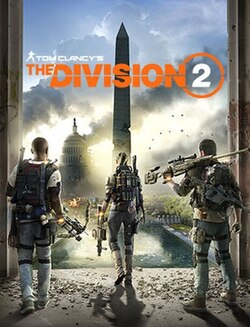 Avatar: Frontiers of Pandora on Xbox Series X/S
 Star Wars Outlaws on Xbox Series X/S
 Star Wars Outlaws on Switch 2
 Avatar: Frontiers of Pandora on PS5










 Another SquareThought Site