

 Mar 2019
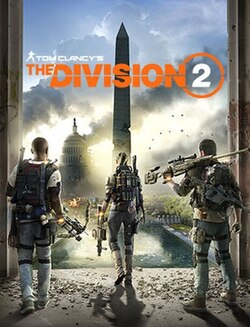

If you think a looter-shooter is just about pew-pew and orange pixels, Tom Clancy's The Division 2 will politely shove a tactical vest into your hands and insist you read the manual. Built in Massive Entertainment's Snowdrop engine and released on PS4 in March 2019, Division 2 is the sequel that learned how to be both a shooter and a systems game. It takes the gear-driven loop of its predecessor, amplifies enemy AI, and stitches it to a meticulously reconstructed Washington, D.C. using GIS and LiDAR data for map fidelity. The result is a live-service RPG that wears its technical decisions on its sleeve: normalization in Dark Zones, world tiers, Gear Score replacing level caps, and a skills/mods architecture that is as much about numbers as it is about explosions. This review focuses on the nuts and bolts - AI, systems, networking, audio/visual pipeline and performance on the PS4 - with a wink and a smirk reserved for the more absurdities of post-pandemic municipal planning.
The Division 2 is a cover-based third-person shooter that layers RPG mechanics over tactical gunplay. On PS4 you create an SHD agent, collect weapons sorted by rarity tiers, and flesh out builds with attachments, armor brands and talents. The weapon model is not just skin-deep: weapons have stat profiles and talents that influence burst, critical hit chance, armor penetration and even utility (for example, seeker mines or chemical launchers); attachments modify handling and recoil, and the game encourages build specialization via Gear Score once you hit level 30. SHD Tech replaces simple skill unlocks; it's a currency you earn through XP and progression that gates skills such as sentry guns, shields and drones. Each skill supports mods that swap functionality, so a gun turret can be tuned to output constant suppression or operate as a sticky proximity trap. From a systems perspective, that modularity keeps experimentation meaningful without turning every menu into an Excel spreadsheet - though you can absolutely make it one if that's your vibe. Massive reworked enemy AI to suit Washington's more open, varied geometry. Instead of funneling fights down narrow New York alleys, the engine asks enemies to use terrain: flank, reposition behind vehicles, throw smoke, and in some cases perform support roles such as healers or foam-sprayers that force you to change tactics mid-combat. Combat hits harder than the first game - both you and enemies die faster - and the hit reactions and animations were beefed up to sell impact. Cover is still central, but expect to be rewarded for movement and tactical use of skills: pop a shield, drop a drone, then push a flank before the enemy resets. The inclusion of new enemy archetypes and faction-specific behaviors (Hyenas as opportunistic raiders, True Sons as disciplined paramilitary foes, Black Tusk as a coordinated, tactical invader) translates into variable encounter design rather than palette-swap fights. The loot economy is a technical exercise in balancing reward and churn. Gear Score subsumes character level in the endgame, being calculated from combined weapon and armor stats to gate higher-tier content. The Deck of 52 bosses and 'invaded' missions by Black Tusk randomize endgame targets and loot tables, which helps replayability. Dark Zones implement normalization for fairness: when you enter you and others are put on equal footing so skill and tactics matter more than raw slotting. There's also the split loot state - contaminated loot that must be helicopter-extracted vs. non-contaminated loot you can pocket immediately - which creates meaningful risk/reward loops and player-driven emergent PvPvE moments. Occupied Dark Zones flip the aggression slider up: friendly fire can be on, AI gets tougher, and rogue notifications go dark, catering to players who want a less-regulated, higher-stakes environment. Network design and live-service architecture: at launch the PS4 experience was noted for being relatively stable compared to many contemporaries. Ubisoft structured the game as a live service with episodic DLC, seasonal content and raids (Operation Dark Hours, Operation Iron Horse) to keep the systems engaged. Matchmaking, clan XP contributions and cross-session invites are baked into the pipeline; the game's early fraud problems on PC storefronts were not a gameplay issue but did become a business-side headache. On PS4 the biggest practical friction points tend to be inventory management and UI complexity rather than latency; given The Division 2's cover-based demands, sub-100ms responsiveness is important but not aggressive enough to expose hardware limits on a stable PS4 configuration.
Snowdrop engine on PS4 is where The Division 2 earns a lot of its fan mail. Massive used GIS and LiDAR data to craft a near one-to-one map of Washington, D.C., and the result is a level-design-forward world: biomes shift across six distinct zones, interiors and exteriors feel grounded, and environmental storytelling is heavy-handed in the best way (ruined monuments, overgrown boulevards, and interiors like the Smithsonian Air and Space Museum). Draw distance on PS4 is respectable for the hardware class; the engine prioritizes object pop-in mitigation and vegetation LOD transitions that keep the illusion of a contiguous city intact. Lighting is often excellent in daytime scenes - high-dynamic-range highlights, believable shadowing - though certain weather and particle-heavy moments can stress the PS4 GPU and manifest in frame dips. Animations and audio are practical tech wins. Combat animations are more detailed than the first game, and flashiest moments (explosions, heavy weapon recoil, signature weapon use) have satisfying weight. Ola Strandh's score and the sound design feed the tension loop: gunshots have distinct, physically-informed signatures that help with situational awareness. On PS4 the audio mix is balanced for both TV speakers and headsets, but competitive players will still want a dedicated headset to parse directional cues in Dark Zones and raids. Performance-wise, the PS4 version shipped with the baseline expectation of stability rather than 60fps heroics. Ubisoft prioritized a stable experience at launch, and the console builds generally ran cleanly with occasional frame-rate drops during large firefights or when multiple particle systems and NPCs are active. Texture streaming and memory management are well-tuned for the platform, but if you're comparing fidelity to PC, the PS4 is the expected trade-off: compressed textures and some distant-LOD simplifications in exchange for a smooth, playable open world.
Technically, The Division 2 on PS4 is an impressive balancing act: it combines a robust systems stack (Gear Score, SHD Tech, world tiers, Dark Zone normalization) with improved AI, solid animation work and a living, data-driven rendition of D.C. The endgame is where the technical design shines - invaded missions, enemy faction behavior, loot systems and build space keep the loop engaging for long stretches. If you're a player obsessed with min-maxing, the game is a delight: numbers matter, and the tools to tune them are present and coherent. The criticisms are mostly about narrative thinness and the occasional visual/performance trade-offs inherent to the platform, but neither undermines the core gameplay loop. For PS4 owners looking for a tactical, gear-centric shooter with depth and a reliably maintained live-service backend, The Division 2 is a strong technical achievement and a worthwhile playground for build theorycrafting and cooperative mayhem.
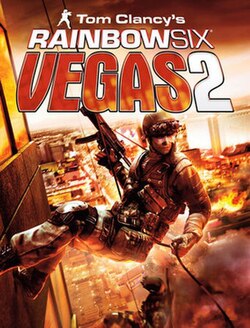 Tom Clancy's The Division on PS4
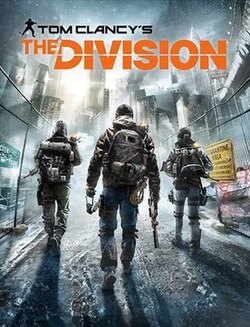 Tom Clancy's Rainbow Six Siege on PS5
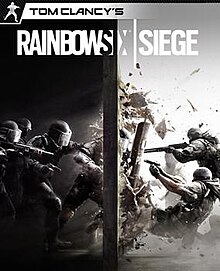 Tom Clancy's Rainbow Six Siege on Xbox Series X/S
 Combat Elite: WWII Paratroopers on PS2
 Disney's Chicken Little: Ace in Action on PS2
 Onimusha: Dawn of Dreams on PS2
 Crimson Sea 2 on PS2
 Star Wars Outlaws on Xbox Series X/S
 Star Wars Outlaws on Switch 2
 Avatar: Frontiers of Pandora on PS5










 Another SquareThought Site