

 Sep 2017


Tooth and Tail is the kind of strategy game that dresses like a cosy Saturday-morning cartoon but bites like a raccoon who's been denied dinner for a week. Set in a 19th-century world of anthropomorphic animals facing a food crisis, Pocketwatch Games' RTS keeps matches short, brutal, and highly strategic-think ten-minute revolutions instead of 12-hour sieges. The studio's stated aim was to strip away the miserable APM treadmill and the micromanagement purgatory of traditional RTS titles, while still offering a game that rewards planning, reading your opponent, and making crisp decisions under pressure. The result is a focused, controller-friendly experience that feels like deck-building met Commander-mentality: choose six units from a pool of twenty, pick a commander, and then prove you're better at managing hunger and logistics than the pig down the road.
If Tooth and Tail had a personality test it would read: "Do you like fast games, messy allegories about class war, and losing because you left your gristmill undefended?" The core competitive loop is compact and punishing. Before the match even starts you enter the draft phase-select one commander from four factions and six units from twenty options. This draft alone is the first skill gate. Successful players think like poker sharks: hand-read the available units, anticipate likely enemy drafts, and build a complementary suite that suits both your commander and the map. There is no mid-match shopping spree: what you draft is what you get, and that finality increases the premium on good decision-making. Resource management in Tooth and Tail is almost an exercise in elegant scarcity. Food is the single currency and it's intentionally finite. Farms, warrens, gristmills, and campfires are all tethered to locations on the procedurally generated map, most notably gristmills which gate where structures can be erected. You don't spam bases across the map-building is territorial. The need to secure and deny resource points forces you to plan strikes, time expansions, and evaluate risk vs reward. This puts map awareness and scouting at the top of the skills list: a player who sends a unit to peek around the corner and learns the enemy's base layout often wins before the other side can blink. The commander mechanic is a design masterstroke for a console RTS. You control a commander avatar rather than micromanaging every unit like it's a StarCraft fever dream. Commanders can burrow back to build structures-this dual role means your commander is both economy manager and frontline threat. That creates interesting choices: do you use your commander to harass enemy supply lines and risk a hole in your economy, or do you turtle and try to win by attrition? Positioning and timing become fundamental skills: a well-timed raid on an enemy gristmill can flip a match in seconds, and conversely, overcommitting to a raid without securing an escape route is how you learn humility. Unit control is streamlined to keep the action quick and readable, but don't mistake simplicity for lack of depth. Units are tiered-cost versus impact-and there's rock-paper-scissors nuance between types. Some units are defensive, some are glass-cannon attackers, and others fulfill niche roles like scouting or area denial. Since you can't produce literally everything, you must recognize power spikes (when a certain Tier 3 unit shows up on the field) and play around them. This ties directly into timing and 'tempo' skill: when to bank food, when to pump units at a warren, and when to commit to a decisive push. Matches are short by design, averaging around ten minutes in multiplayer. That brevity rewards iterative learning: you can have a dozen matches in an hour and test new strategies frequently. However, the same bite-sized format magnifies mistakes. A single misread-bad scouting, poor unit draft, or leaving a campfire exposed-can cost you an immediate loss. This creates a hectic, high-stakes practice environment where reflexive adaptation and quick mental bookkeeping matter more than micro-managing twenty units with laser focus. The learning curve and challenge profile are interestingly split between single-player and multiplayer. Campaign missions introduce the mechanics but spike in difficulty; some reviewers noted that tightly tuned AI missions can feel unfairly harsh. Single-player requires patience and adaptability because mission objectives and "heroic" optional goals often demand precise execution. Multiplayer, on the other hand, is where the game truly shines and where the skill ceiling opens up. Because the game is built for local split-screen and online ranked play, it rewards not only individual prowess but team coordination in 2v2. Teammates who can coordinate harass times, share scouting info, and synchronize pushes will trounce solo-minded players. Even though Tooth and Tail intentionally avoids the blistering APM requirements of classic RTS, it still demands a different suite of player skills: strategic drafting, resource denial, tactical timing, map control, and the discipline to stick to a plan. You'll also need psychological skills: reading your opponent's likely choices from a draft and baiting them into wasteful responses is a meta-game unto itself. For those who value concise, high-skill skirmishes over marathon base-micromanagement, Tooth and Tail is a masterclass in making every decision count.
Pocketwatch Games went for an art style that deliberately flirts with 'ugly until it's gorgeous' and lands on a modernized 90s pixel vibe. The visual language is simple but expressive-units read instantly and the battlefield is uncluttered, which matters when ten seconds can decide a match. Animations shift intensity with the moment, giving fights weight without bloating the HUD. The soundtrack, composed by Austin Wintory, matches the game's tempo: fast, punchy tracks for clashes and slower, revolutionary threads for quieter moments. Sound design includes an invented Russian-esque language for character chatter, which is charming and helps the world feel cohesive without dragging you into exposition. Overall, the game's aesthetic choices keep focus on gameplay clarity while delivering personality and atmosphere.
Tooth and Tail is a compact, cunning RTS that trades micromanagement treadmill for crisp, high-stakes decision-making. It rewards strategy, timing, and the kind of map sense that makes you feel both clever and perpetually one step away from humiliation. The multiplayer is the jewel-quick matches, satisfying power plays, and a surprisingly deep drafting meta-while the single-player can sometimes trip over difficulty spikes. If you want a strategy game you can play with a controller on the couch that still makes you feel like a general, Tooth and Tail is an excellent bite. Bring your wits, practice your scouting, and don't leave your gristmill alone unless you enjoy the taste of defeat.
 Gaelic Football '25 on Xbox Series X/S
 Together! The Battle Cats on Switch
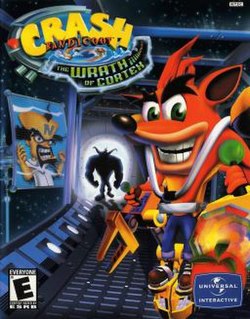
 Crash Bandicoot: The Wrath of Cortex on PS2
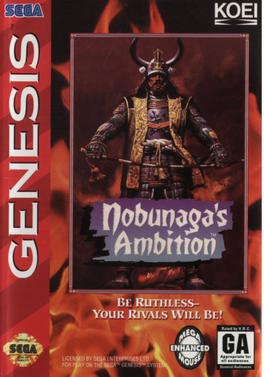
 Nobunaga's Ambition: Iron Triangle on PS2
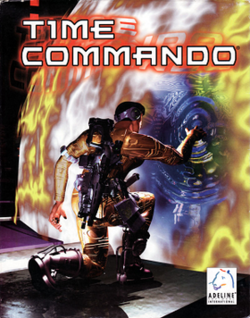
 Time Commando on PlayStation
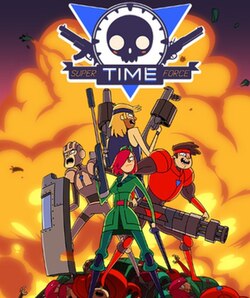
 Super Time Force Ultra on PS4
 Time Crisis on PlayStation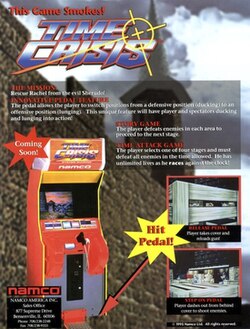











 Another SquareThought Site